
Palm Oil Wastewater Treatment System: Configuring The Chain From POME To Discharge
A palm oil wastewater treatment system is a chain: oil and solids removal first, anaerobic digestion for the bulk COD with biogas recovery, then aerobic or polishing stages to reach the discharge limit. No single unit does the whole job. The stages are ordered so each protects the next - pre-treatment shields the biology, anaerobic removes the load cheaply, and polishing closes the gap to the permit. Configure the chain around measured POME flow, COD and oil, not a generic flowsheet.
Why POME Needs A Chain, Not A Single Unit
POME combines a very high organic load with oil, suspended solids and seasonal swings. One reactor cannot remove oil, stabilize solids, digest soluble COD and polish nutrients at once. The system therefore separates these duties into stages, each designed for one job. The result is more robust and cheaper than forcing a single unit to do everything.
| Stage | Duty | Why it comes here |
| Oil / solids removal | Protect biology | Oil coats biomass |
| Equalization | Smooth seasonal swings | Steady feed |
| Anaerobic digestion | Bulk COD + biogas | Cheapest load removal |
| Aerobic / polishing | Residual COD + N | Reach permit |
Sizing The Anaerobic Core
The anaerobic reactor is the heart of the chain because it removes the largest share of COD and produces the recoverable methane. Its size follows the daily soluble COD load and the organic loading rate the chosen reactor can sustain. Feed preparation upstream and polishing downstream are sized around it, not the other way round.
Polishing To The Discharge Limit
Anaerobic effluent still carries ammonia, residual COD and color. An aerobic or anoxic-oxic stage, followed by clarification where needed, brings these down to the permit. The polishing stage should target only what remains - spending advanced treatment on the whole flow is wasteful.
| Polishing option | Targets | When to use |
| Anoxic-oxic | Nitrogen + residual COD | N limit applies |
| Activated sludge | Residual BOD | Standard discharge |
| Chemical P removal | Phosphorus | Tight P limit |
| Filtration | Suspended solids | Low solids limit |
A POME Chain In Practice
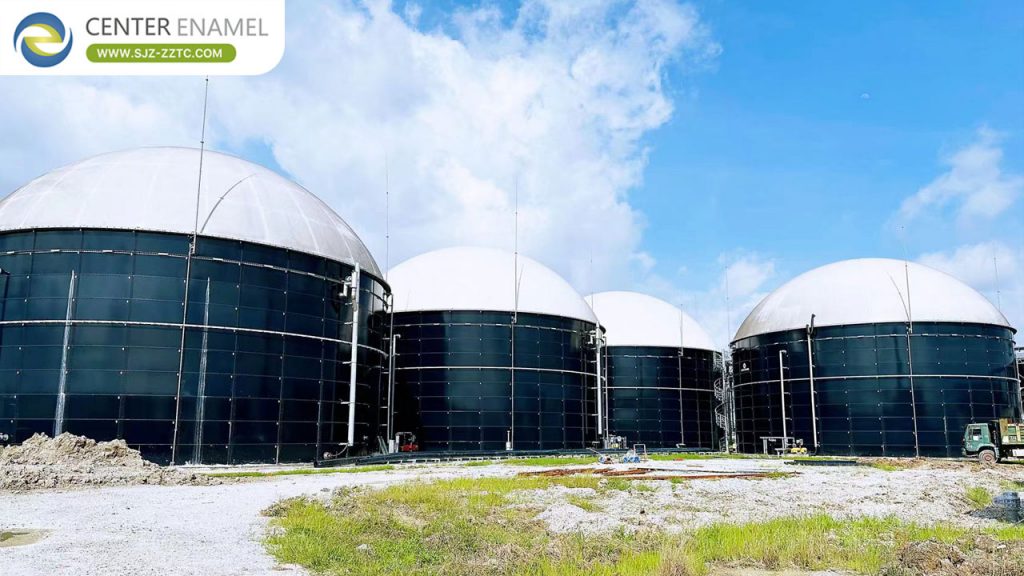
The library records a palm oil wastewater treatment plant in Dumai, Indonesia, built with three GFS tanks of 19.86 x 8.4 m and installed over 40 days. It is a real POME installation showing tank-based treatment. The source confirms the application, tank model, quantity and installation facts; the full treatment chain, influent and effluent values are Not Specified in the Available Source, so the stage sequence above is general guidance, not a reconstruction of that plant.
About Company
Shijiazhuang Zhengzhong Technology Co., Ltd (Center Enamel) is a comprehensive high-tech enterprise specializing in wastewater engineering, process section contracting, and equipment manufacturing. The company delivers biogas and wastewater projects through three main lines - EPC (turnkey) contracting, equipment supply, and process packages - covering livestock and municipal wastewater, biomass energy, industrial wastewater, and food waste. Its reactor portfolio spans CSTR, USR, UBF, UASB, IC, and EGSB, backed by in-house Glass-Fused-to-Steel tank manufacturing (enamel firing at 820-930 C) and certifications including ISO 9001, NSF/ANSI 61, and CE-EN 1090. With 35+ years of operation, a 150,000 m2 manufacturing base, and projects in 100+ countries, Center Enamel provides the single-responsibility engineering behind palm oil wastewater treatment systems configured as a chain - where each stage is sized to its duty and protects the next.
Configure a POME treatment system as a chain: remove oil and solids, equalize, digest the bulk COD anaerobically with gas recovery, then polish to the permit. Each stage has one job and protects the next.
Frequently Asked Questions
Q1: Why does POME need several stages? A1: No single unit can remove oil, digest high COD and polish nutrients at once.
Q2: What is the first stage? A2: Oil and solids removal, to protect the downstream biology.
Q3: Where does biogas come from? A3: The anaerobic stage, which removes bulk COD and yields methane.
Q4: What sizes the anaerobic reactor? A4: Daily soluble COD load and the sustainable organic loading rate.
Q5: Why equalize POME? A5: Seasonal flow and strength swings would otherwise destabilize the biology.
Q6: What does polishing remove? A6: Residual COD, ammonia and color to meet the discharge limit.
Q7: Is the chain a generic template? A7: No - stage sizing follows measured flow, COD and oil for the site.
Q8: Are the stage details from a named project? A8: They are general guidance; the reference plant's chain is Not Specified.
Suggested CTA
Share your POME flow, COD and oil data with an engineer to configure a treatment chain stage by stage.