
Pennisetum Purpureum Biogas Project in Malaysia | Advanced UASB Process & GFS Tanks
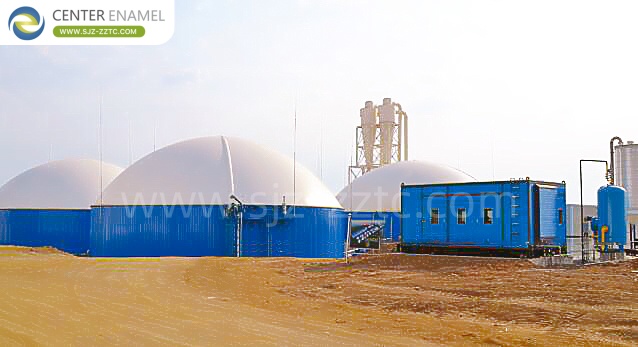
With the global energy transition and rising demand for clean biomass energy, Pennisetum Purpureum has become a high-yield, eco-friendly energy crop widely promoted across Southeast Asia. Malaysia, endowed with tropical monsoon climate and vast agricultural land, has expanded large-scale elephant grass planting to develop biogas projects, realizing waste recycling, rural energy upgrading and low-carbon agricultural development.
Center Enamel is a global leading EPC contractor and professional manufacturer dedicated to anaerobic technologies and GFS Tanks. With mature process portfolios including UASB Process, CSTR, USR and IC, independent enamel tank R&D capability and rich Southeast Asian engineering experience, the company delivers one-stop turnkey solutions for Pennisetum Purpureum Biogas Project. From process design, GFS Tanks fabrication, installation to commissioning and lifelong after-sales service, Center Enamel provides stable and cost-effective biomass energy systems for Malaysia and other Southeast Asian nations.
Introduction to Pennisetum Purpureum
Pennisetum Purpureum, commonly known as Elephant Grass or Napier Grass, is a fast-growing perennial tropical grass originated from Africa. It grows 2 to 4 meters tall, featuring strong adaptability, high biomass yield and excellent tolerance to infertile soil, perfectly adapting to Malaysia’s tropical climate. As premium livestock forage, it serves as major feed for cattle and animal breeding. Rich in carbohydrates, crude fiber and organic nutrients, it is also an ideal raw material for anaerobic biogas fermentation. Besides forage and bioenergy, it is widely used in soil conservation, slope protection, papermaking and organic fertilizer production, acting as a versatile biomass crop in Malaysia’s agriculture and renewable energy sectors.
Large-Scale Pennisetum Purpureum Cultivation in Malaysia
Malaysia is one of the core Southeast Asian countries with large-scale Pennisetum Purpureum cultivation. Planting areas are mainly concentrated in Peninsular Malaysia such as Johor and Perak, as well as Sabah and Sarawak. Elephant grass is widely intercropped in oil palm plantations, combining ecological coverage and forage supply.
Supported by year-round high temperature, abundant rainfall and fertile land, Malaysia forms a planting mode of smallholder scattered cultivation plus large commercial bases. Driven by livestock farming and renewable energy policies, Pennisetum Purpureum output keeps expanding. Apart from local breeding feed, surplus biomass is supplied to biogas plants and biomass power facilities. The Malaysian government encourages energy grass planting to optimize energy structure, reduce fossil fuel reliance and boost circular economy development.
Why Pennisetum Purpureum Can Generate Biogas
Pennisetum Purpureum contains abundant starch, carbohydrates, crude fiber and organic protein, with a balanced carbon-nitrogen ratio perfectly suitable for anaerobic fermentation. Under sealed oxygen-free conditions, it undergoes four complete anaerobic digestion stages to produce clean biogas.
In the hydrolysis stage, macromolecular organic matter is decomposed into small-molecule sugar and amino acids. The acidification stage converts organics into volatile fatty acids, hydrogen and carbon dioxide. The acetogenesis stage generates acetic acid, the core precursor of methane. Finally, methanogenic bacteria produce biogas containing 55%–70% methane and 30%–45% carbon dioxide. Malaysia’s hot and humid tropical climate accelerates microbial activity, ensuring stable and high biogas output throughout the year.
Benefits of Pennisetum Purpureum Biogas for Malaysia
- Optimizes rural and plantation energy structure, eases power shortage and reduces dependence on imported fossil fuels.
- Cuts operation costs for farmers and plantations; biogas replaces firewood and electricity, while biogas residue is processed into low-cost organic fertilizer.
- Reduces organic waste accumulation, greenhouse gas emissions and water pollution, protecting tropical ecological environment.
- Complies with Malaysia’s circular economy and carbon reduction policies, helping biogas enterprises meet environmental standards and obtain policy support.
Four Core Anaerobic Solutions of Center Enamel
Center Enamel provides four mature and customizable anaerobic technologies for Pennisetum Purpureum Biogas Project, among which UASB Process is highly suitable for Malaysian projects:
CSTR Process: Completely Stirred Tank Reactor, ideal for high-solid Pennisetum Purpureum raw materials. Uniform stirring prevents scum and sedimentation, suitable for large-scale centralized biogas plants.
UASB Process: Upflow Anaerobic Sludge Blanket, perfectly matched for low-solids wastewater mixed with elephant grass. It features low operating cost and high organic removal efficiency, widely applied in Malaysia’s medium-sized plantation and starch supporting biogas projects.
USR Process: Upflow Solids Reactor, simple structure, low investment and easy maintenance, ideal for small scattered rural biogas workshops.
IC Process: Internal Circulation Reactor, with 3–5 times higher load than traditional reactors, land-saving for industrial zones with limited space.
Pakistan Pennisetum Purpureum Biogas Project Case
A landmark Pennisetum Purpureum biogas project in Pakistan has been officially completed and operated, providing a replicable demonstration model for South and Southeast Asian biomass energy development. The project adopts canteen kitchen waste and Pennisetum Purpureum as main fermentation raw materials, equipped with advanced CSTR anaerobic solutions and complete professional engineering equipment.
By adopting precise mechanical stirring technology, raw materials are fully mixed with anaerobic microorganisms to improve organic degradation efficiency, achieving a stable daily biogas output of 100 cubic meters. As a key pilot project, it tests biogas production efficiency and long-term operation stability. After stable operation, Pakistan plans to build more large-scale biogas projects taking Pennisetum Purpureum as the main raw material. Center Enamel provides one-stop full-chain services including raw material pretreatment, anaerobic reaction, biogas purification and intelligent control.
Advantages of GFS Tanks in Malaysia Pennisetum Purpureum Biogas Projects
Glass-Fused-to-Steel (GFS) Tanks are core facilities for Malaysia’s Pennisetum Purpureum biogas projects, with outstanding adaptive advantages:
- Strong corrosion resistance: Fused at over 820°C, GFS Tanks withstand pH 1–14, resisting acid corrosion and microbial erosion during anaerobic fermentation.
- Excellent climate adaptability: Resist high temperature, heavy rainfall, high humidity and ultraviolet aging, perfectly fitting Malaysia’s tropical monsoon environment.
- Superior airtight performance: Sealed bolted structure prevents biogas and odor leakage, improving UASB Process fermentation efficiency and avoiding secondary pollution.
- Long service life: Lifespan exceeds 30 years with low daily maintenance cost, far better than traditional concrete tanks.
- Flexible and fast installation: Factory prefabricated components for on-site bolt assembly, short construction period and convenient later capacity expansion for plantation distributed projects.
Why Choose Center Enamel as Biogas Project EPC Contractor
- Delivers customized anaerobic solutions including UASB Process according to Malaysia’s tropical climate and Pennisetum Purpureum raw material characteristics.
- Possesses powerful R&D and manufacturing strength, with more than 200 enamel patents and Asia’s largest GFS tank production base.
- Complies with ISO 28765, AWWA D103, CE international standards; every tank passes 1500V high-voltage spark test for quality guarantee.
- Has rich Southeast Asian engineering experience, familiar with Malaysia’s plantation terrain, environmental regulations and tropical construction difficulties.
- Provides one-stop turnkey EPC services covering project design, equipment manufacturing, installation, commissioning and lifelong after-sales support.
Professional Installation Process of Center Enamel
- Adopts hydraulic jacking top-down installation, no large cranes or high scaffolding required, suitable for narrow rural and plantation sites in Malaysia.
- Realizes zero on-site welding; all tank components are factory prefabricated and bolt-connected, avoiding welding failures caused by tropical high humidity and rainy weather.
- Cancels the long concrete curing period, greatly shortening construction cycle and accelerating investment return.
- A dedicated Southeast Asian after-sales team provides regular maintenance and remote technical guidance to ensure long-term stable operation of Pennisetum Purpureum biogas projects.
Project Cases of Center Enamel
Case1: Malaysia Biogas Project
Tank Dimensions: φ22.93 × 12.325 m (H) — 1 Unit
Total Volume: 5,087 m³ — 1 Unit
Completion Date: 2025
Case2: Indonesia Biogas Project
Application: Anaerobic Reactors for Palm Oil Wastewater Treatment Plant
Tank Models: Ø17.58 × 8.4 m, Ø16.82 × 7.2 m
Number of Tanks: 3 GFS Tanks
Installation Date: 2013
In summary, Pennisetum Purpureum boasts great development potential as high-yield biomass raw material for Malaysia’s biogas industry. With professional UASB Process, diversified anaerobic technologies and high-performance GFS Tanks, Center Enamel delivers reliable EPC solutions for Pennisetum Purpureum Biogas Project. It helps Malaysia optimize energy structure, reduce carbon emissions and develop circular plantation economy. As renewable energy demand grows, elephant grass biogas will become a key green energy path for Southeast Asia, and Center Enamel will continue empowering global biomass energy development with professional technologies and mature engineering strength.