
Pharmaceutical Wastewater Solution: Configuring The Treatment Train
Configure a pharmaceutical wastewater solution by first fractionating the stream - separate the easy, high-COD bulk from the saline and inhibitory fraction - then match stages to it: equalization and pH control, anaerobic treatment (granular-sludge UASB, EGSB or IC) for the soluble high-COD bulk, aerobic polishing for residual COD and nitrogen, and advanced polishing (ozone, Fenton or activated carbon) only for what remains. The order and the load split, not a single reactor, decide whether the biology survives.
Fractionate Before You Size
Pharma effluent is rarely one homogeneous stream, so the first design move is to separate flows by strength and hazard. Segregate concentrated mother liquors from dilute wash water, and divert non-contact cooling water entirely. This lets the anaerobic step see a steadier, less inhibitory feed and avoids spending reactor volume on water that needs none. Equalization then damps the campaign swings that would otherwise wash out biomass.
| Stream | Action | Why |
| High-COD mother liquor | Anaerobic candidate | Recovers energy |
| Dilute CIP wash | Equalize + bio | Less hazardous |
| Non-contact cooling | Segregate | No treatment needed |
| Saline / inhibitory | Pre-treat / dilute | Protect biomass |
Pre-Treatment Protects The Biology
Before biology, pharma streams usually need pH adjustment, temperature control and, where salt or APIs are high, partial dilution or a dedicated pre-treatment (such as stripping, chemical oxidation or resin) to bring the inhibitory load into a range the biomass can acclimatize to. Skipping this step is the most common reason a pharma anaerobic reactor underperforms: the biomass is suppressed before it ever reaches steady state.
The Anaerobic Step - Granular Sludge
For the soluble, high-COD fraction, a granular-sludge reactor (UASB, EGSB or IC) is the workhorse because it removes most of the COD and yields biogas at a high organic loading rate on a compact footprint. The choice among them is about upflow velocity and loading, not brand: UASB for clarified moderate-strength liquid, EGSB and IC for very high-strength, well-clarified feed. (The reactor-type decision is covered in depth in the companion article on primary anaerobic reactors.)
| Reactor | Best feed | Role in pharma train |
| UASB | Clarified, moderate COD | Bulk COD + biogas |
| EGSB / IC | Very high COD, clear | Compact, high OLR |
| CSTR | High solids / mixed | If SS cannot be removed |
Aerobic Polish And Advanced Polishing
Anaerobic effluent still carries ammonia, residual COD and color, so an aerobic stage (often anoxic-oxic for nitrogen) follows, and a polishing step closes the gap to the permit. Advanced oxidation (ozone or Fenton) and activated carbon are powerful but costly, so they are targeted at the recalcitrant tail - color and specific metabolites - rather than used across the whole flow. The design rule is to spend the expensive steps on as little water as possible.
Decision Factors To Lock
The train is fixed by four inputs: the segregated COD load, the salinity and inhibitory profile, the discharge or reuse standard, and the footprint available. A higher salt limit pushes toward dilution or halophilic acclimation; a tight API limit pushes toward targeted polishing; a tight land budget pushes toward granular-sludge reactors over lagoons.
Project Reference - Pharmaceutical Wastewater Treatment In Jiangdong
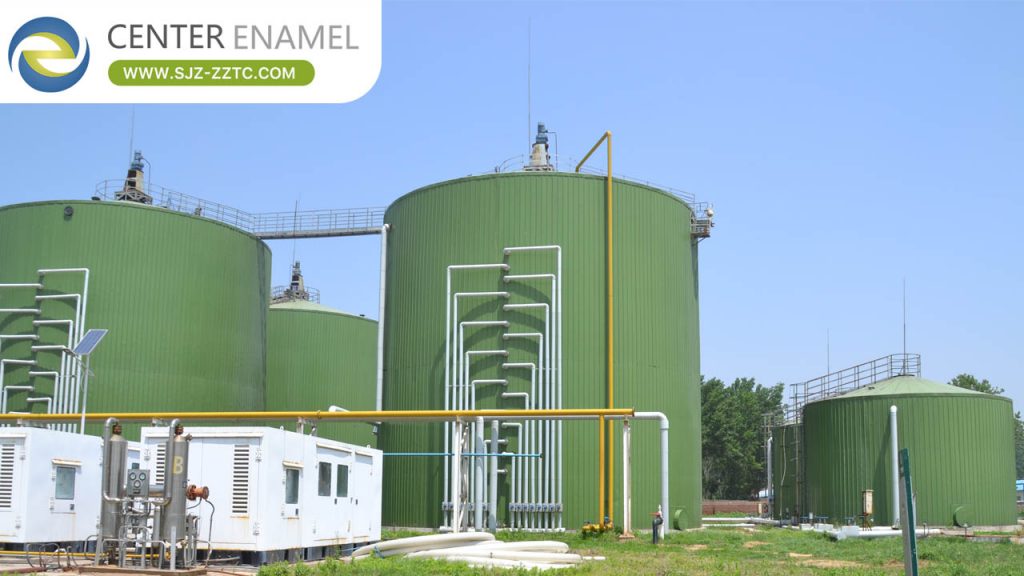
A pharmaceutical wastewater treatment facility in Jiangdong, Hangzhou, applies six granular-sludge anaerobic reactors (each 12.66 x 24 m) at a capacity of 1,000 m3/day, treating a mixed stream from acarbose extraction, domestic and other industrial sources, with a published COD removal efficiency of at least 70%. This is cited as a scoped, delivered application; further tank or performance details beyond location, process, capacity and this removal figure are not released, so no additional numbers are asserted.
| Attribute | Value | Note |
| Location | Jiangdong, Hangzhou, China | Published |
| Process | Granular-sludge anaerobic | 6 reactor sets |
| Capacity | 1,000 m3/day | Published |
| COD removal | >= 70% | Published |
| Reactor size | 12.66 x 24 m (each) | Published |
About Company
Shijiazhuang Zhengzhong Technology Co., Ltd (Center Enamel) is a comprehensive high-tech enterprise specializing in wastewater engineering, process section contracting, and equipment manufacturing. The company delivers biogas and wastewater projects through three main lines - EPC (turnkey) contracting, equipment supply, and process packages - covering livestock and municipal wastewater, biomass energy, industrial wastewater, and food waste. Its reactor portfolio spans CSTR, USR, UBF, UASB, IC, and EGSB, backed by in-house Glass-Fused-to-Steel tank manufacturing (enamel firing at 820-930 C) and certifications including ISO 9001, NSF/ANSI 61, and CE-EN 1090. With 35+ years of operation, a 150,000 m2 manufacturing base, and projects in 100+ countries, Center Enamel provides the single-responsibility engineering behind industrial and pharmaceutical wastewater projects such as the Jiangdong granular-sludge anaerobic reference, where a published COD removal of at least 70% on a mixed, inhibitory stream shows a staged pharma train at work - a scoped, evidenced application rather than a generic claim.
A pharmaceutical wastewater solution is built by fractionating the stream and staging anaerobic, aerobic and polishing steps so the biology is protected from salt and APIs - the order of the train, not a single reactor, delivers the permit.
Frequently Asked Questions
Q1: How do you treat pharmaceutical wastewater? A1: Segregate streams, pre-treat to protect biomass, then anaerobic + aerobic + targeted polishing.
Q2: Why segregate pharma streams first? A2: Strength and hazard vary by stream; segregation lets the anaerobic step see steadier, less inhibitory feed.
Q3: Which anaerobic reactor fits pharma effluent? A3: UASB/EGSB/IC for clarified high-COD liquid; CSTR only if solids cannot be removed.
Q4: How much COD can a pharma anaerobic step remove? A4: The Jiangdong reference shows >=70% COD removal across six granular-sludge reactors.
Q5: What polishing is needed after anaerobic? A5: Aerobic (often anoxic-oxic) for N and residual COD, plus ozone/Fenton/carbon for the recalcitrant tail.
Q6: Can salt in pharma wastewater be ignored? A6: No - high salinity inhibits anaerobic microbes; it is managed by dilution, acclimation or halophilic culture.
Q7: Does pharma wastewater yield biogas? A7: The soluble high-COD fraction does, via the anaerobic step, recovered on-site.
Q8: How do I start specifying a train? A8: Lock the segregated COD load, salinity, discharge standard and footprint, then stage the steps.