
Pharmaceutical Wastewater Treatment Project EPC Contractor: IC Process Solutions for Complex Industrial Effluent
The global industrial wastewater treatment landscape is undergoing a profound transformation. As the Asia-Pacific region, particularly China, solidifies its position as the world's largest industrial wastewater treatment market, the operational focus has shifted from project construction toward long-term performance management. This evolution is driven by increasingly stringent environmental regulations and the growing complexity of industrial effluent—especially from the pharmaceutical sector, where wastewater streams present some of the most formidable treatment challenges in the industry.
Regional Development Trends in Industrial Wastewater Treatment
The Asia-Pacific region continues to dominate the global industrial wastewater treatment market, with China leading in both treatment capacity and technological innovation. The operation and maintenance service segment's contribution continues to rise, marking a strategic shift from project construction to long-term operational management. Meanwhile, the North American market focuses on upgrading existing facilities, while Europe emphasizes high-value-added resource recovery technologies. Wastewater from the new energy industry chain—lithium batteries, photovoltaics, and hydrogen—has become the most notable emerging growth area due to its complex composition and high treatment difficulty, generating significant demand for customized solutions. The maturity of third-party treatment models in industrial parks continues to improve, driving consolidation in the professional operation market. In regions facing water scarcity, such as the Middle East, demand for advanced treatment and reuse of industrial wastewater remains strong, while manufacturing transfer in Southeast Asia drives local industrial wastewater treatment facility construction demand.
Amid this dynamic landscape, the pharmaceutical industry stands out as a particularly demanding sector. Pharmaceutical manufacturing generates wastewater characterized by high concentrations of toxic and non-biodegradable organic compounds, concentrated solvents, variable acidity levels, and antibiotic residues . Effectively managing this effluent demands not only advanced treatment technology but also a project delivery model that guarantees compliance and operational certainty—precisely the role fulfilled by a specialized Pharmaceutical Wastewater Treatment Project EPC Contractor.
IC Process: A Preferred Solution for High-Strength Industrial Wastewater
Among the various anaerobic treatment technologies available, the Internal Circulation (IC) process has emerged as a preferred solution for high-strength industrial wastewater treatment. The IC reactor represents the third generation of high-efficiency anaerobic reactors, distinguished by its internal circulation mechanism that enables exceptional volumetric loading rates and process stability .
The IC process is primarily designed for high-concentration, high-flow soluble industrial organic wastewater, covering brewery, beverage, starch, pharmaceutical, chemical, and papermaking high-strength wastewater. It is particularly suitable for land-constrained projects with high treatment efficiency requirements in large industrial wastewater treatment facilities. The IC process can serve as the primary process for high-strength wastewater with rapid COD/BOD removal, making it ideal for centralized industrial park WWTPs and large enterprise proprietary treatment systems—especially for wastewater with significant quality fluctuations and extremely high pollutant concentrations.
The technical advantages of the IC process are well-documented. The reactor's internal circulation system, driven by biogas production, eliminates the need for recirculation pumps while providing intense mixing between biomass and substrate . This results in COD removal efficiencies exceeding 90% and biogas production of approximately 0.35 m³ per kg of COD removed . In engineering-scale evaluations, IC reactors have demonstrated robust long-term performance, achieving overall COD removal of 83.1 ± 2.8% at influent COD concentrations of 12,550 ± 1220 mg/L over 360 days of continuous operation . Compared with conventional UASB reactors, the IC process offers a significantly smaller footprint—approximately one-tenth of the space requirement—and volumetric COD loading rates roughly twice that of UASB systems .
However, the IC process is not suitable for high-solids, high-viscosity wastewater. Proper pre-treatment and wastewater characterization are essential to ensure optimal performance.
Technical Specifications of the IC Process
| Parameter | Specification |
| Applicable COD Range | >1,000 mg/L (soluble organics) |
| Organic Loading Rate | 20–35 kg COD/(m³·day) |
| Typical COD Removal | 80–90% |
| Biogas Yield | ~0.35 m³/kg COD removed |
| Footprint | ~1/10 of conventional UASB |
| Suitable Wastewater Types | Brewery, beverage, starch, pharmaceutical, chemical, papermaking |
Pharmaceutical Wastewater Treatment Project EPC Contractor: The Center Enamel Advantage
For pharmaceutical manufacturers, wastewater compliance is not merely a regulatory obligation—it is an existential imperative. Any failure can lead to massive fines, facility shutdown, and profound reputational damage. This reality elevates the role of the EPC Contractor from supplier to strategic risk partner .
Center Enamel, as a leading Pharmaceutical Wastewater Treatment Project EPC Contractor, addresses this challenge through its integrated "Full Chain Service" EPC model. The company offers a seamless, single-point-of-responsibility solution that ensures project success from conceptualization to operational reality. This includes expert consultation and process design, critical material procurement, guaranteed on-site construction, and commissioning—all managed under one contract .
The pharmaceutical wastewater treatment technology deployed by Center Enamel encompasses a multi-barrier approach. Pre-treatment detoxification systems manage shock loads of concentrated solvents or highly alkaline/acidic waste streams. Advanced biological processes integrate specialized microbial cultures that can withstand toxicity, often requiring precise control within durable containment. Tertiary polishing incorporates advanced oxidation and membrane technologies for the final removal of non-biodegradable compounds .
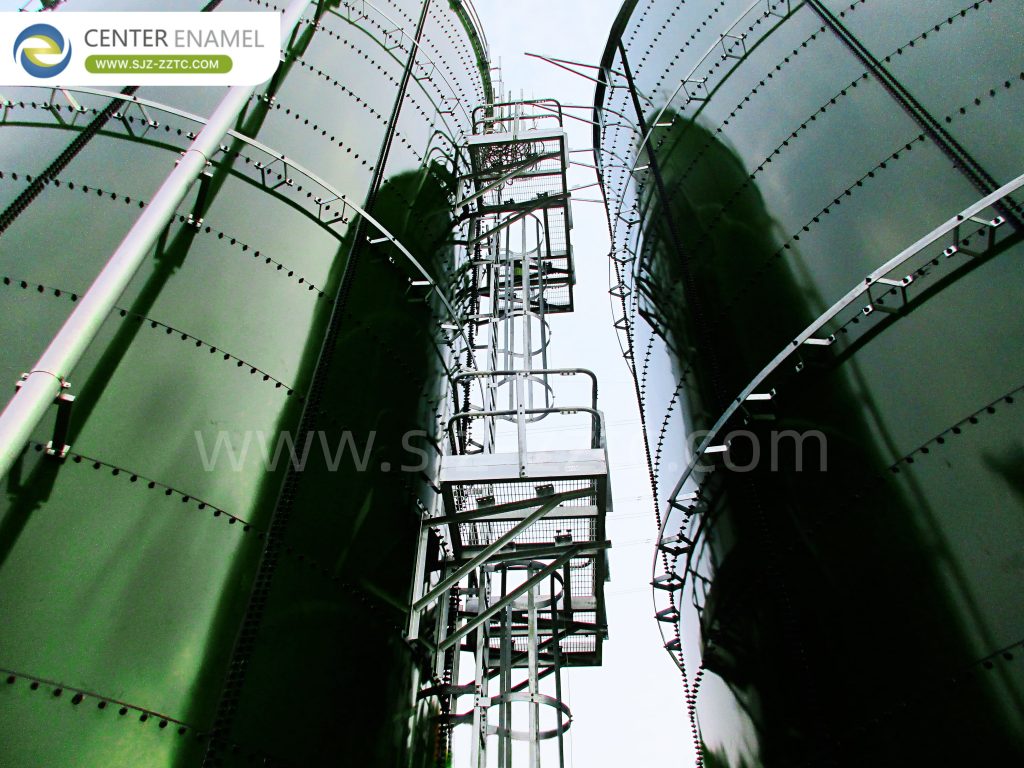
Central to these systems are Center Enamel's Glass-Fused-to-Steel (GFS) tanks, which serve as the essential foundation for processes involving extreme chemical stress, high temperatures, or concentrated biological activity. The vitrified glass coating forms an inert, impermeable barrier against the highly corrosive organic acids, gases such as hydrogen sulfide, and varying pH levels present in actively digesting pharmaceutical wastewater. This ensures exceptional structural integrity and a long operational life with minimal maintenance in a demanding environment .
| Feature | Benefit for Pharmaceutical Wastewater Treatment |
| GFS Tank Corrosion Resistance | Withstands pH 1–14 and aggressive chemicals |
| Gas-Tight Sealing | Maximizes biogas capture, prevents fugitive emissions |
| Modular Construction | Faster installation, minimal disruption to production |
| Service Life | Exceeds 30 years with minimal maintenance |
| Compliance | Meets AWWA D103, ISO 28765, NSF/ANSI 61 standards |
Pharmaceutical Wastewater O&M Cost Analysis
Operation and maintenance costs for pharmaceutical wastewater treatment rank highest among the five major wastewater types, with overall economic viability presenting significant challenges. The strong toxicity and poor biodegradability of pharmaceutical effluent require continuous addition of large quantities of oxidants, flocculants, and desalination agents during pretreatment—chemical costs far exceeding those of conventional wastewater treatment.
High-energy-consuming equipment such as advanced oxidation systems and reverse osmosis units must run continuously, with frequent corrosion damage leading to high repair and replacement costs. Toxic sludge, spent activated carbon, and filter residues are all classified as hazardous waste, involving complex compliance disposal procedures and high unit costs—solid waste disposal costs represent a significant proportion of total O&M expenditure. Frequent water quality fluctuations require dedicated personnel for 24/7 monitoring and parameter adjustment, resulting in elevated labor costs. Resource recovery benefits are minimal, with overall investment far exceeding returns for many pharmaceutical wastewater treatment projects.
This cost profile underscores the importance of selecting an EPC Contractor with proven expertise in pharmaceutical wastewater treatment. By designing systems that minimize chemical consumption, optimize energy efficiency, and maximize biogas recovery, Center Enamel helps pharmaceutical manufacturers achieve regulatory compliance while controlling long-term operational costs.
Global Project Experience and Market Presence
Center Enamel's global business covers over 100 countries and regions, with more than 30,000 successful overseas projects. Products are exported to all major regions including Europe, the Americas, the Middle East, Africa, Southeast Asia, and Latin America, supported by a well-established global localized service network.
Domestically, the company is organized into North, South, Central, East, and Southwest marketing regions, covering environmental, water utility, livestock, and petrochemical customers nationwide. Internationally, the company adopts a "standardized products + localized adaptation" model—adjusting tank corrosion protection, sealing, and pressure standards for different national water quality and environmental regulations. Notable global projects include large-volume GFS tanks in Italy, 20-meter tower water supply tanks in Colombia, coastal seawater treatment tanks in Costa Rica, and large municipal wastewater aluminum dome projects in Saudi Arabia. The company has established long-term stable strategic partnerships with many Fortune 500 companies.
In the pharmaceutical sector specifically, Center Enamel has delivered significant projects. The Zuoli Pharmaceutical wastewater treatment project in Zhejiang, China, utilizes IC process technology with a treatment capacity of 1,000 tons per day. The HEC Pharmaceutical Industry wastewater treatment project in Hubei, China, also employs IC process technology with a treatment capacity of 1,500 tons per day . These reference projects demonstrate the company's capability to handle the complex, high-strength wastewater characteristic of pharmaceutical manufacturing.
Representative Project Case: Pakistan Food Waste + Napier Grass Biogas Demonstration Project
Center Enamel served as the general contractor for this demonstration project, utilizing CSTR as the core anaerobic process with food waste and Napier grass as mixed fermentation feedstock. The system is equipped with a mechanical mixing system ensuring thorough mixing of feedstock and anaerobic microorganisms, achieving efficient organic degradation with stable daily biogas production of 100 m³. This project serves as the local official demonstration for validating gas production efficiency and long-term continuous operational stability. Following successful pilot operation, multiple large-scale Napier grass biogas projects are planned locally to promote biomass clean energy and support regional low-carbon development.
| Project Parameter | Specification |
| Location | Pakistan |
| Feedstock | Food waste + Napier grass |
| Core Process | CSTR (Continuous Stirred Tank Reactor) |
| Biogas Production | 100 m³/day |
| Project Type | Official demonstration project |
| Future Plan | Multiple large-scale biogas projects |
Aluminum Geodesic Dome Roof: Integrated Tank Solutions
The Aluminum Geodesic Dome Roof, independently developed by Center Enamel, represents a significant advancement in tank covering technology for wastewater treatment applications. Manufactured using high-strength aluminum alloy plates through integral stamping, the roof features a triangular grid spherical self-supporting structure, enabling large-span full coverage without internal support columns.
Made of aluminum alloy, the roof offers excellent weather resistance and corrosion resistance, capable of long-term protection against acid rain, salt spray, and UV radiation, making it suitable for various extreme outdoor climate conditions. The structural design complies with international AWWA D108 standards, with aluminum plate thickness, rib cross-sections, and joint connections all verified by finite element stress analysis, ensuring wind and snow load resistance that meets building code requirements across different global regions.
The weight of the Aluminum Geodesic Dome Roof is only one-third to one-half of a steel roof with the same span, significantly reducing the load on the tank top and allowing direct installation without tank wall reinforcement. The roof provides superior overall sealing performance, with double sealing between panels using specialized sealant strips and mechanical interlocking, enabling both airtight gas storage and enclosed odor control. This makes it particularly suitable for biogas collection and storage, wastewater tank odor control, and drinking water contamination prevention. The support-column-free design does not interfere with the installation and operation of internal equipment such as mixers and water distributors. The aluminum material does not support microbial growth, requiring no anti-corrosion maintenance over long-term use, resulting in low total life-cycle costs.
Flexible and Efficient Service Delivery System
Center Enamel's service delivery model combines its own cross-border construction teams with a global localized agent network. The modular GFS tank assembly approach offers short construction periods and dismantlable/reusable capability—suitable for overseas short-term projects, phased expansions, and relocation needs. Full-lifecycle after-sales O&M support ensures long-term stable client operations, providing pharmaceutical manufacturers and industrial clients with the operational certainty essential for regulatory compliance.
FAQ
Q1: What is the typical treatment capacity of an IC reactor for pharmaceutical wastewater?
IC reactors for pharmaceutical applications typically range from 500 to 2,000 m³/day per unit. Center Enamel's reference projects include 1,000-ton/day and 1,500-ton/day installations in Zhejiang and Hubei, China .
Q2: How does Center Enamel ensure compliance with pharmaceutical discharge standards?
The EPC model includes single-point responsibility for guaranteed compliance, integrating pre-treatment detoxification, IC anaerobic digestion, aerobic polishing, and tertiary membrane filtration as needed .
Q3: What is the expected service life of GFS tanks in pharmaceutical wastewater service?
GFS tanks offer a service life exceeding 30 years with minimal maintenance, owing to the vitrified glass coating's resistance to pH 1–14 and aggressive chemicals .
Ready to discuss your pharmaceutical wastewater treatment project? Contact Center Enamel today for a customized EPC solution tailored to your specific effluent characteristics and compliance requirements.
Let our engineering team help you navigate the complexities of pharmaceutical wastewater treatment. Reach out to Center Enamel for a consultation on how the IC process and GFS tank technology can deliver guaranteed compliance and long-term operational stability for your facility.