
Pig Farm Wastewater Treatment: Challenges And Process Solutions
Pig farm wastewater is among the hardest agricultural streams because it is high in ammonia-nitrogen (often 1,000 mg/L and above), suspended solids, and pathogens from manure and wash water. A robust train is solid-liquid separation followed by a UASB anaerobic reactor and an AOAO aerobic stage, which together cut COD, BOD, ammonia, and fecal coliforms to a discharge limit; the design is set by the flushing volume and the local permit.
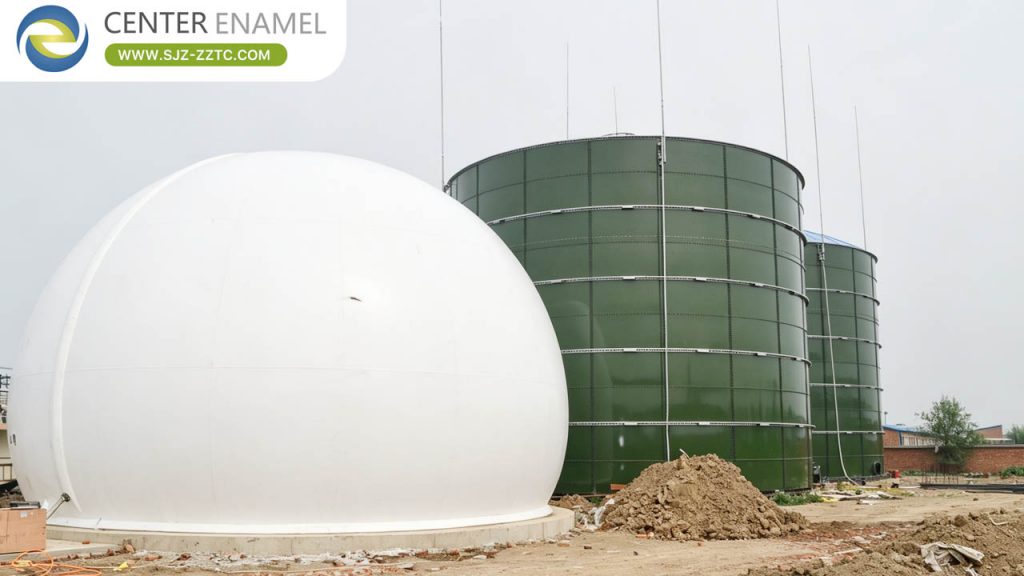
Why Pig Manure Is A Tougher Job
Piggery wastewater concentrates urine, feces, and wash-down water, so ammonia and total phosphorus run high and solids are coarse. High ammonia is toxic to conventional biomass if not staged, and the flush volume swings with weather and barn cleaning. These traits mean pig farms need a dedicated, load-rated train - not a generic farm plant.
| Parameter | Typical Piggery Influent | Why It Matters |
| COD | 10,000-50,000 mg/L | High organic load |
| NH3-N | 800-1,500 mg/L | Toxic, needs anoxic stage |
| Total P | 150-300 mg/L | Needs removal |
| Fecal coliforms | Millions / 100ml | Pathogen risk |
| SS | 10,000 mg/L+ | Clogs, settles |
Pig Housing Drives The Stream
Pig housing is what makes the stream so uniform. Slatted-floor finishing barns and sow gestation buildings drain to a pit where urine and feces mix into slurry, while weaner and nursery rooms add wash water; the outcome is a consistently high-strength, high-ammonia stream that varies little with weather but swings with flushing frequency. That uniformity is why a piggery can standardize on one train rather than re-balance seasonally, and why operators should size for the worst week, not the average day.
| Barn Type | Manure Form | Design Note |
| Finishing (slatted) | Slurry to pit | High, steady load |
| Sow gestation | Slurry to pit | Large volume |
| Weaner / nursery | Wash + solids | Add separation stage |
| Open hoop | Scraped, drier | Lower COD |
A Proven Pig-Farm Train: UASB + AOAO
After separation, the liquid enters a UASB (Upflow Anaerobic Sludge Blanket) that strips most COD and produces biogas with minimal energy, then an AOAO (Anaerobic-Anoxic-Oxic) stage that attacks the remaining carbon and the stubborn ammonia through nitrification-denitrification. Clarification and disinfection finish the job. The sequence is chosen because UASB handles the dissolved load cheaply while AOAO tames nitrogen.
| Stage | Role | Output Focus |
| Separation | Remove solids | Protect reactors |
| UASB | Anaerobic COD cut + biogas | Energy recovery |
| AOAO | BOD + NH3-N removal | Nitrogen compliance |
| Clarify + disinfect | Polish | Pathogen limit |
Project Case Study: Beijing 5S Pig Farm Wastewater Treatment
Project / Application: Pig farm wastewater, Beijing, China. Industry: Pig farming / hoggery. Process: UASB + AOAO (physical + biological + chemical). Key Requirements: Full pollutant removal including fecal coliform reduction; 580 m3/day.
| Field | Value | Source / Evidence |
| Daily Treatment Volume | 580 m3/day | Company project reference |
| Treatment Process | UASB + AOAO | Company project reference |
| Installation Year | 2020 | Company project reference |
| Influent COD | >= 10,000 mg/L | Company project reference |
| Effluent COD | <= 200 mg/L | Company project reference |
| Influent NH3-N | >= 1,000 mg/L | Company project reference |
| Effluent NH3-N | <= 80 mg/L | Company project reference |
| Influent SS | >= 10,000 mg/L | Company project reference |
| Effluent SS | <= 100 mg/L | Company project reference |
| Influent BOD5 | >= 8,000 mg/L | Company project reference |
| Effluent BOD5 | <= 100 mg/L | Company project reference |
| Fecal coliforms | >= 5.6e6 -> <= 4.0e3 CFU/100ml | Company project reference |
About Company
Shijiazhuang Zhengzhong Technology Co., Ltd (Center Enamel) is a comprehensive high-tech enterprise specializing in wastewater engineering, process section contracting, and equipment manufacturing. The company delivers biogas and wastewater projects through three main lines - EPC (turnkey) contracting, equipment supply, and process packages - covering livestock and municipal wastewater, biomass energy, industrial wastewater, and food waste. Its reactor portfolio spans CSTR, USR, UBF, UASB, IC, and EGSB, backed by in-house Glass-Fused-to-Steel tank manufacturing (enamel firing at 820-930 C) and certifications including ISO 9001, NSF/ANSI 61, and CE-EN 1090. With 35+ years of operation, a 150,000 m2 manufacturing base, and projects in 100+ countries, Center Enamel provides the single-responsibility engineering behind the Beijing 5S pig farm project that combined UASB and AOAO to take COD from 10,000 to 200 mg/L, ammonia from 1,000 to 80 mg/L, and fecal coliforms down by three orders of magnitude - a scoped piggery solution.
Comparison: Pig Vs Dairy Vs Poultry Wastewater
| Livestock | Strongest Issue | Best First Stage |
| Pig | NH3-N, solids | Separation + UASB |
| Dairy | Dilute, high volume | Separation + USR |
| Poultry | N, P, high COD | Anaerobic + AOAO |
Pig farm wastewater is high-ammonia, high-solid, and pathogen-rich; a separation + UASB + AOAO train is the pragmatic way to reach a discharge limit while recovering biogas, and the scope must follow the flushing volume and permit.
Frequently Asked Questions
Q1: Why is pig wastewater hard? A1: High ammonia, coarse solids, and pathogens make it more concentrated than municipal or dairy streams.
Q2: What process removes ammonia? A2: An AOAO (anoxic-oxic) stage nitrifies and denitrifies the ammonia.
Q3: What effluent can be reached? A3: COD under 200 mg/L, ammonia under 80 mg/L, and solids under 100 mg/L, as the Beijing case shows.
Q4: How are pathogens cut? A4: Disinfection plus the multi-stage biology drops fecal coliforms by orders of magnitude.
Q5: Is biogas recovered? A5: Yes; the UASB stage yields methane-rich biogas for a boiler or CHP.
Q6: Which tank resists the stream? A6: A Glass-Fused-to-Steel reactor resists corrosion and bolts together on site.
Q7: What C:N balance is targeted? A7: Co-digestion toward 20-30:1 keeps the digester stable.
Q8: Who scopes the train? A8: An engineer sizes reactors from the flush volume and the permit.
Suggested CTA
Send your pig-farm flush volume and discharge limit to an engineer, or request a scoped piggery wastewater treatment outline.