
Comprehensive Guide to Pig Farms Wastewater Treatment: Technologies, Processes, and Engineering Solutions
Discover comprehensive pig farm wastewater treatment technologies and engineering solutions by Shijiazhuang Zhengzhong Technology Co., Ltd. This guide covers wastewater sources, characteristics, advanced pretreatment, solid-liquid separation, anaerobic digestion, and the high-efficiency UASB plus two-stage AO biological process. Learn how custom-engineered Glass-Fused-to-Steel (GFS) tanks and robust wastewater management strategies help livestock facilities achieve strict environmental discharge standards, reduce operational costs, and recover renewable biogas energy efficiently.
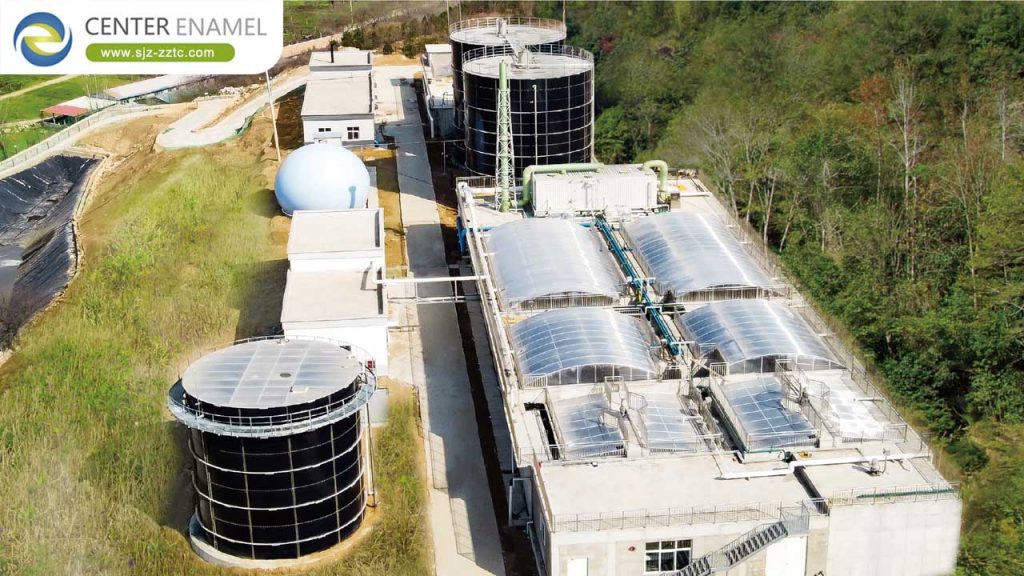
Introduction to Pig Farms Wastewater Sources & Characteristics
The sources of pig wastewater mainly include cleaning water from modern farming facilities. The manure removal process used in farms typically relies on dry manure removal or water flushing manure.
Water Flushing Wastewater: Features a heavy pollution load, with Chemical Oxygen Demand (COD) scaling as high as 20,000 mg/L and Ammonia Nitrogen (NH3-N) averaging 600 mg/L.
Dry Manure Processing Runoff: Exhibits a comparatively lower concentration, with COD ranging between 2,500 to 3,000 mg/L, though overall pollutant contents remain intensely concentrated.
In addition, pig farm wastewater contains massive quantities of organic matter, nitrogen, phosphorus, suspended matter (SS), and pathogenic bacteria, while releasing potent foul odors that critically impact the local ecosystem. Treating this waste stream to match strict local discharge standards is mandatory.
Core Characteristics of Pig Farm Wastewater
Understanding the precise nature of the waste stream is crucial for engineering a compliant system:
High Pollutant Load: Parameters including BOD5/COD> 0.3, NH3-N, phosphorus (P), and suspended solids (SS) are exceptionally high, carrying heavy amounts of undigested particulate matter like raw pig manure.
High Biodegradability: Classified as high-concentration organic wastewater. Because the ratio ofBOD5/COD> 0.3 (and can surge up to 0.6), the wastewater is easily biodegradable, responding exceptionally well to optimized biochemical processing.
Difficulty Analysis in Livestock Wastewater Management
Despite favorable biodegradability, managing piggery effluent presents severe engineering hurdles:
Unstable Water Quality & Flow: Fluctuations depend on farm scale, operational schedules, and cleaning cycles.
High Operating Costs: Conventional treatment strategies often suffer from high energy demands and unstable performance metrics, frequently failing to consistently meet modern regulatory discharge thresholds.
Advanced Wastewater Treatment Process & Technologies
1. Solid-Liquid Separation and Pretreatment
Because livestock wastewater carries massive amounts of suspended solids (SS), setting up a robust solid-liquid separation pretreatment phase is the foundation of successful operations. Removing bulk solid matter significantly reduces the organic loading rate for downstream processing units.
2. Anaerobic Digestion Technology
For liquid manure fractions, anaerobic digestion technology provides essential harmless treatment. It stabilizes heavy loads while recovering valuable renewable energy in the form of biogas.
3. UASB + Two-Stage AO Biological Process
To handle high-concentration organic nitrogen-containing wastewater, industry-standard configurations utilize the UASB (Upflow Anaerobic Sludge Blanket) + Two-Stage AO (Anoxic-Oxic) process:
UASB Phase: Guarantees a high initial COD removal rate.
Anoxic-Oxic (AO) Phase: Delivers targeted denitrification and phosphorus removal. Because anoxic effluents still contain residual reducing elements and partially degraded compounds, subsequent aerobic biological treatment polishes the water to ensure stable compliance with environmental discharge regulations.
Project Overview & Engineering Capabilities
Center Enamel Technology Co., Ltd. is a comprehensive high-tech enterprise specializing in wastewater project contracting, process engineering design, and proprietary water and wastewater treatment equipment manufacturing.
Scope of Work
EPC General Contracting: Complete end-to-end execution covering engineering design, equipment manufacturing, civil construction, and site commissioning.
Diversified Equipment Manufacturing: Centered around high-grade enamel assembly tanks (Glass-Fused-to-Steel / GFS tanks), providing structural integrity, exceptional corrosion resistance, and fast on-site installation.
Multi-Industry Application: Spanning livestock breeding operations, municipal sewage, biogas ventures, dairy processing, and high-concentration industrial effluent (pharmaceutical, brewing, paper, kitchen waste, and landfill leachate).
Project Data & Performance Table
| Parameter / Metric | Raw Wastewater Influent | Post-Treatment Effluent | Removal Efficiency / Standard |
| COD (mg/L) | Up to 20,000 | ≤ 100 - 150 | >95% |
| BOD(mg/L) | 5,000 – 10,000 | ≤ 20 - 30 | >98% |
| NH3-N (mg/L) | ~600 | ≤ 10 - 15 | >97% |
| Suspended Solids (SS) | Extremely High | ≤ 30 mg/L | High Performance |
| Energy Recovery | N/A | Biogas Yield Optimized | On-site CHP Integration |
Client Testimonials
"Partnering with Center Enamel Technology for our large-scale pig farm wastewater treatment plant completely transformed our operations. Their expertise in GFS tank construction and the UASB+AO process helped us easily pass strict environmental evaluations while turning waste manure into a sustainable source of on-site biogas energy."
— Agricultural Enterprise Project Director
Frequently Asked Questions (FAQ)
1. Why is solid-liquid separation mandatory for pig farm wastewater treatment?
Pig manure contains massive amounts of suspended solids ($\text{SS}$) and raw fibers that can clog pumps, pipeline networks, and overload biological reactors. Pretreatment via separation drastically cuts down particulate loads before biochemical treatment.
2. How does the UASB + AO process handle high ammonia nitrogen?
The UASB system breaks down bulk carbonaceous matter anaerobically, while the subsequent two-stage Anoxic-Oxic (AO) setup facilitates nitrification and denitrification pathways, converting ammonia nitrogen into harmless nitrogen gas.
3. What makes Glass-Fused-to-Steel (GFS) tanks ideal for pig farm biogas projects?
GFS tanks combine the strength of steel with the chemical inertness of glass, delivering superior corrosion resistance, gas-tightness for biogas containment, quick construction timelines, and long-term durability.