
POME to Biogas Brazil: GFS Tanks & Double Membrane Roof for Sustainable Biogas Solutions
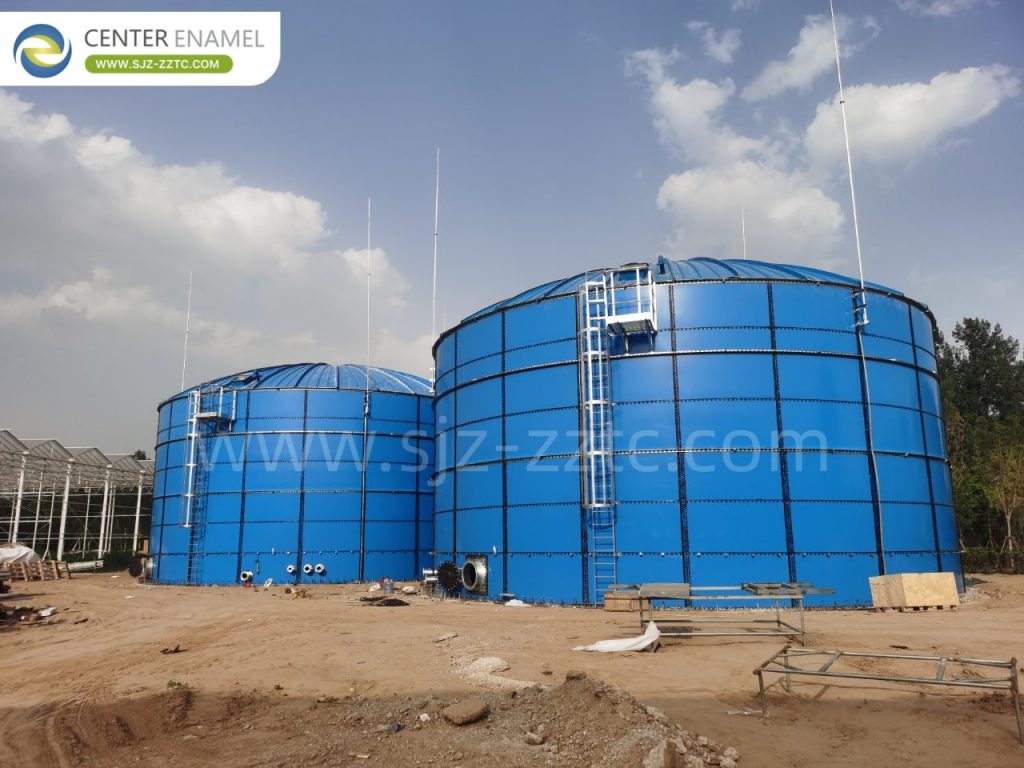
Brazil, currently the world's tenth-largest palm oil producer with approximately 600,000 metric tons annually, has been steadily expanding its palm oil sector. Production is largely concentrated in the Amazon region, primarily in the state of Pará, where over 85% of the country's production is located. This growth is supported by Brazil's unique regulatory framework: the Agro-ecological Zoning (ZAE) of Palm Oil requires that palm be cultivated only on previously degraded or anthropized lands, making the Brazilian industry a global reference in sustainable production.
However, alongside this expansion comes a familiar environmental challenge: Palm Oil Mill Effluent (POME). For every ton of fresh fruit bunches (FFBs) processed, a typical mill discharges approximately 0.7 to 1 cubic meter of POME. Fresh POME is hot (60–80°C), acidic (pH 3.3–4.6), and contains high levels of solids, oil, grease, and organic matter with extremely high chemical oxygen demand (COD) and biological oxygen demand (BOD) values. If discharged untreated, POME can contaminate rivers—particularly critical in the Amazon's ecologically sensitive areas—harm aquatic life, and release methane, a greenhouse gas 25 times more harmful than CO2. The pressing challenge for Brazilian mill operators is not only to meet the stringent standards of the National Environmental Policy (PNMA) but also to align with the country's climate commitments and capitalize on the growing international market for advanced biofuels.
POME to Biogas: A Sustainable Solution
Converting POME into biogas using modern Biogas Solutions offers a powerful solution that turns waste into energy. The high organic content of POME makes it an ideal substrate for anaerobic digestion, where microorganisms break down organic matter in the absence of oxygen, producing biogas primarily composed of methane and carbon dioxide. This biogas can be captured and used as a renewable energy source to generate electricity or power mill boilers.
Notably, Brazilian research institutions such as Embrapa have been actively developing technologies for biogas production from POME, and real-world projects demonstrate the feasibility of this approach. Globally, POME-to-biogas projects have been showcased at major climate events like COP30 in Belém, highlighting the sector's role in decarbonization. By capturing methane that would otherwise be released, these projects significantly reduce a mill's carbon footprint. Moreover, POME is classified under EU RED II Annex IX Part A as an advanced biofuel feedstock, offering strong regulatory and market value, while treated digestate can be safely applied to plantations as organic fertilizer.
The Comprehensive Biogas Conversion Process
Converting POME into biogas is a multi-stage process that requires careful engineering and specialized equipment to ensure efficiency and safety.
Wastewater Pretreatment
The journey begins with wastewater pretreatment, a crucial step to prepare the POME for anaerobic digestion. This phase is designed to remove large particles, impurities, and grease that could hinder downstream processes.
Mechanical Bar Screen: This equipment is the first line of defense, used to remove large suspended solids and floating objects from the wastewater. This step is critical to prevent blockages and protect the pumps and pipes in the subsequent treatment stages.
Horizontal Flow Oil Separator: POME contains a significant amount of oil and grease that can inhibit the biological processes in the digester. The horizontal flow oil separator is specially designed to remove these fats and oils, reducing the burden on the later treatment units by setting a reasonable retention time for separation.
Regulating Tank: The volume and characteristics of POME vary depending on the production cycle. The regulating tank is the heart of the pretreatment system, balancing these fluctuations. It plays a key role in homogenizing the wastewater, adjusting the pH, providing physical cooling, and initiating hydrolysis and acidification. This process ensures a stable and consistent feed for the subsequent biogas reactors, which is essential for optimal performance.
Primary Treatment: The Upflow Solids Reactor (USR)
The Upflow Solids Reactor (USR) is a highly effective anaerobic digestion technology for treating organic wastewater with solid content (TS) between 3% and 6%—making it an ideal match for raw POME. In the USR process, wastewater is distributed evenly at the bottom of a vertical, cylindrical, air-tight reactor tank through a specially engineered water distribution system. As the liquid flows upward, it passes through a dense bed of anaerobic solids, where microorganisms digest the organic material and produce biogas.
The treated effluent overflows through an outlet at the top, while excess sludge is periodically discharged from the bottom of the tank. Center Enamel determines reactor volume based on volumetric load, typically 3–5 kg COD/(m³·d) for POME under mesophilic digestion conditions (35–37°C). The USR process offers several advantages: high solids retention without the need for expensive external separation equipment, stable biogas production even with fluctuating feed conditions, and low energy consumption.
Center Enamel's Professional Design Solutions for POME Biogas Projects
As a premier EPC Contractor, Center Enamel provides professional, customized design solutions for POME-to-biogas projects across Brazil. Our engineering team conducts comprehensive site assessments to evaluate local conditions, including soil characteristics, water table levels, seismic activity, and climate patterns specific to each region—particularly important in the Amazon region of Pará and Roraima where remote locations and tropical conditions present unique challenges.
Based on these assessments, we develop tailored process designs that optimize biogas yield while minimizing operational costs. Our design philosophy integrates modular GFS Tanks with advanced Double Membrane Roof systems, ensuring seamless compatibility between all components. We also incorporate flexible biogas utilization pathways—whether for electricity generation, boiler fuel, or bio-CNG upgrading—allowing mill operators to choose the most economically viable option. All designs strictly adhere to international standards including AWWA D103, EN28765, and EuroCode, and are reviewed to comply with Brazil's rigorous environmental legislation under CONAMA resolutions and the National Environmental Policy. With over 36 years of experience and more than 500 successfully completed projects worldwide, Center Enamel brings proven engineering expertise to every Biogas Solutions project, delivering optimized systems that maximize energy recovery, minimize footprint, and ensure long-term operational reliability for Brazilian palm oil mills.
Key Technologies: GFS Tanks and Double Membrane Roof
Central to our Biogas Solutions are two core products: Glass-Fused-to-Steel (GFS) tanks and the innovative Double Membrane Roof.
Glass-Fused-to-Steel (GFS) Tanks
GFS Tanks are the premium choice for containment in the harsh environments of biogas production. The technology involves firing a special enamel at temperatures over 820°C, fusing it to the steel substrate. This creates a highly durable, inert, and corrosion-resistant coating that withstands the acidic (pH 1–14), abrasive nature of POME and raw biogas.
For Brazilian mill operators, GFS Tanks offer a multitude of advantages. Their modular, bolted design allows for rapid on-site assembly, significantly reducing construction time compared to traditional methods. They are engineered to withstand Brazil's humid tropical environment and are resistant to UV degradation, heavy rainfall, and high temperatures. With a service life exceeding 30 years and minimal maintenance requirements, they represent a long-term, cost-effective investment. Center Enamel's GFS tanks meet ISO 28765, AWWA D103-09, OSHA, and NSF/ANSI 61 standards.
Double Membrane Roof
The Double Membrane Roof is an industry-leading solution for biogas collection and odor control. It is a superior option for anaerobic digestion processes, where capturing the gas is as important as treating the liquid.
This system integrates an anaerobic digestion tank with a gas-tight cover on top. The outer membrane provides structural stability, while the inner membrane adjusts its height based on the volume of stored gas, ensuring a constant pressure is maintained. This design offers significant advantages over traditional gas holders: it is highly cost-effective, saves valuable floor space, and eliminates the need for separate, large gas-holding structures. For any Biogas Solutions project, the Double Membrane Roof is the preferred choice for efficiency and safety, with construction time often measured in just days.
Diverse Tank Roofing Options
We understand that each Biogas Solutions project has unique requirements. Therefore, Center Enamel offers a wide variety of tank cover solutions to suit different applications and client needs.
Aluminum Geodesic Dome Roof: This roof is a popular choice for its excellent corrosion resistance and expansive clear-span capability. It requires minimal maintenance and is a cost-effective option for odor control and weather protection.
Glass-Fused-to-Steel (GFS) Roof: Offering superior air-tightness, the GFS Roof is ideal for pressurized structures. Its cone shape with internal/external beams provides a robust and durable seal for odor control, particularly suitable for tank diameters below 23 meters.
Aluminum Alloy Trough Deck Roof: This is an economical solution for storing potable water, wastewater, and firewater. While it provides protection from the elements and offers odor control, it does not guarantee air-tightness.
Stainless Steel Roof: Known for its superior anti-corrosion performance and long service life, this option is another viable solution for demanding applications requiring air-tightness.
FRP Roof: This material is suitable for applications where air-tightness is not a requirement, such as drinking water, agricultural, or firewater storage. Its shape can be either domed or flat, offering design flexibility.
A Full Suite of Biogas Project Equipment
Beyond the main tank and cover systems, a complete POME-to-biogas operation relies on a range of critical ancillary equipment, all of which Center Enamel can supply as part of its EPC package.
Gas Holder: For the safe and temporary storage of the biogas produced, ensuring a steady supply for end-users like the boiler or generator.
Lagoon/Black Membrane: Used as an efficient, low-cost post-treatment step for the digested effluent before it can be safely applied to farmland as a nutrient-rich fertilizer.
Hot Water Boiler: Provides the necessary heating to maintain the optimal operating temperature (mesophilic or thermophilic) for the anaerobic digestion process.
Emergency Torch System: A crucial safety feature that safely burns off excess biogas in the event of a system shutdown or maintenance, preventing the release of unburned methane into the atmosphere.
Lifting Pump: Essential for moving POME through the various stages of the treatment and digestion process.
Dehydration and Desulfurization Tank: These units are vital for purifying the biogas by removing moisture and corrosive hydrogen sulfide (H2S), protecting downstream equipment like the generator.
Screw Sludge Dewatering Machine: Reduces the volume of the residual sludge, lowering disposal costs and producing a solid byproduct that can also be used as a soil conditioner.
Efficient Installation and Rapid Project Delivery
A key differentiator for Center Enamel is our efficient installation capability, which delivers significant value to our clients across Brazil. The modular design of our GFS Tanks and associated equipment dramatically reduces on-site construction time, accelerating project completion and speeding return on investment.
Key advantages include:
Streamlined Logistics: With an annual production capacity exceeding 250,000 GFS tank sheets, our manufacturing and supply chain are fully optimized for rapid delivery. Components are prefabricated inside our 150,000 m² production facility and shipped in standardized sea-freight containers to remote locations in Pará and Roraima.
Bolted Design Simplicity: No heavy welding or specialized equipment is required, minimizing the need for skilled labor and cutting installation time by weeks or months compared to traditional methods. On-site assembly requires only bolting, sealing, and basic mechanical fastening.
Expert Supervision: Our professional technical team oversees every assembly step, ensuring all bolted joints and seals meet strict quality standards, with commissioning support and hands-on operator training provided.
Remote Capability: As a leading manufacturer, we control quality from start to finish, guaranteeing seamless, fast, and safe installation even in Brazil's remote Amazon locations, adapting to tropical humidity, heavy rainfall, and local site conditions.
A One-Stop Solution for Brazil
Center Enamel is more than just an equipment supplier; we are a dedicated partner providing a one-stop solution for the Brazilian palm oil industry. As an experienced EPC Contractor, we take full responsibility for your Biogas Solutions project from the initial concept to final commissioning.
Our turnkey services cover site assessment, process design, equipment manufacturing (including GFS Tanks and Double Membrane Roof), civil works, installation, electrical and control systems, operator training, and ongoing after-sales support. This integrated approach ensures that all components work together seamlessly, eliminating the risks and complications of managing multiple, separate suppliers. By choosing Center Enamel, Brazilian mill operators gain a single point of contact, ensuring clear communication, streamlined project management, and a guaranteed result that meets local CONAMA environmental standards and supports Brazil's position as a global role model in sustainable palm oil production.
The conversion of Palm Oil Mill Effluent into biogas represents a significant opportunity for the Brazilian palm oil industry. By implementing an integrated Biogas Solutions project with a trusted partner, mills can overcome the challenge of POME disposal, generate renewable energy, and achieve their sustainability targets. With its proven technology, including corrosion-resistant GFS Tanks and efficient Double Membrane Roof systems, Center Enamel is the ideal partner to lead this energy transition, turning a waste problem into a source of green energy and long-term value.
FAQs
Q: How do GFS Tanks perform in Brazil's Amazon region with high humidity and heavy rainfall?
A: GFS Tanks are engineered for harsh tropical environments. The glass-fused-to-steel coating is highly resistant to UV radiation, humidity, and acid rain. With proper foundation design, GFS Tanks perform reliably for 30+ years in Brazil's hot, humid conditions in regions like Pará and Roraima, where the Amazon climate presents significant challenges for conventional storage systems.
Q: What is the typical timeline for a complete biogas project from Center Enamel in Brazil?
A: Center Enamel typically delivers a complete Biogas Solutions project—including design, manufacturing, shipping, installation, and commissioning—within 6 to 9 months, depending on project scale. Our bolted GFS Tank design and pre-fabricated components significantly reduce on-site construction time compared to traditional methods, which is especially valuable given Brazil's remote location access challenges and the distinct wet and dry seasons in the Amazon region.
Q: Why is the Double Membrane Roof the preferred choice for biogas storage in Brazil?
A: The Double Membrane Roof is an ideal solution for biogas projects because it offers superior air-tightness and is integrated directly on top of the digester tank. This design is highly cost-effective, saves valuable floor space by eliminating a separate ground-mounted gas holder, and ensures safe, efficient biogas collection and odor control even under Brazil's high humidity and heavy rainfall conditions.