
Poultry Farm Odour Control Using Commercial Biogas Plants
Intensive poultry farming operations generate vast amounts of organic waste, which naturally releases pungent gases as it decomposes. Unmanaged chicken manure produces strong odors characterized by high concentrations of ammonia ($NH_3$), hydrogen sulfide ($H_2S$), and volatile organic compounds (VOCs).
These emissions not only strain relationships with neighboring communities and trigger regulatory complaints, but they also create stressful environmental conditions inside poultry houses that can impair bird health and worker productivity. Traditional open storage and surface spreading only worsen these issues.
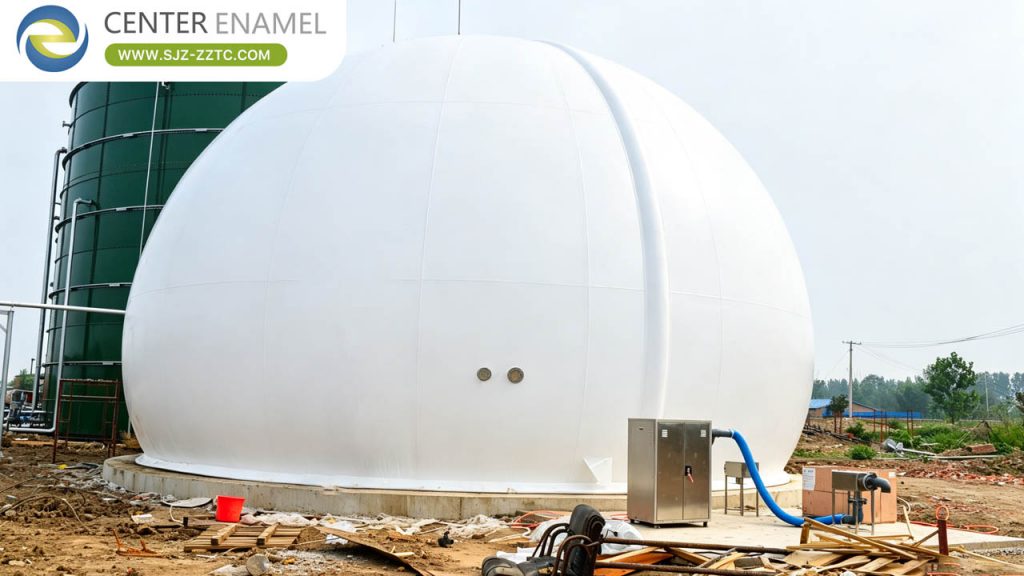
Installing a commercial biogas plant offers an advanced, closed-loop solution that tackles foul odors at their source while converting environmental liabilities into clean renewable energy and high-grade organic bio-fertilizers.
The Root Causes of Odours in Poultry Farms
To understand how biogas systems eliminate foul smells, it is essential to examine why traditional poultry operations struggle with air pollution:
- Uncontrolled Decomposition: Stacking raw poultry litter in open-air heaps allows aerobic and volatile anaerobic reactions to vent strong odors directly into the atmosphere.
- Ammonia Volatilization: High nitrogen levels in fresh chicken manure break down rapidly, releasing airborne ammonia that causes severe olfactory nuisance and eye irritation for farm workers.
- Hydrogen Sulfide ($H_2S$) Accumulation: Anaerobic pockets in wet litter produce toxic hydrogen sulfide, identifiable by its distinct rotten-egg odor.
How Commercial Biogas Plants Control Odour
Anaerobic digestion (AD) systematically alters the waste degradation pathway to suppress foul-smelling emissions:
- Sealed Containment: Unlike open manure lagoons or stockpiles, commercial biogas plants collect and process organic waste inside airtight, sealed concrete or steel digester tanks. This completely cuts off the release of fugitive gases into the surrounding air.
- Controlled Microbial Breakdown: Inside the bioreactor, specialized anaerobic microorganisms break down complex organic matter in an oxygen-free environment. This transforms volatile odorous compounds into stable, odorless methane and carbon dioxide.
- Desulfurization Units: Biogas upgrading systems incorporate biological or chemical desulfurization units to strip corrosive hydrogen sulfide out of the gas stream before it reaches combined heat and power (CHP) engines, preventing sulfur-based odor leaks.
- Odorless Digestate Byproduct: The residual material exiting the digester (digestate) has undergone complete biological stabilization. When separated into solid and liquid fractions, it lacks the raw, putrid smell of untreated manure, making land application virtually odor-free.
Comparative Data Table: Traditional Management vs. Biogas Odour Control
| Evaluation Parameter | Traditional Open-Air Storage | Commercial Biogas Plant (Anaerobic Digestion) |
| Gas Containment | Open piles and lagoons vent gases freely | Completely sealed, airtight bioreactor tanks |
| Ammonia ($NH_3$) Emissions | Extremely high; severe community complaints | Minimized; nitrogen is stabilized within the digestate |
| Odor & Pest Nuisance | Attracts flies, rodents, and vectors | Enclosed processing eliminates vector attraction |
| Byproduct Characteristics | Unstable, highly odorous raw manure | Pasteurized, low-odor organic bio-fertilizer |
Frequently Asked Questions (FAQ)
Q1: Does a biogas plant completely eliminate poultry farm odours?
A: While a commercial biogas plant captures and processes the vast majority of manure-related odors from storage and treatment, complete odor elimination also requires maintaining clean poultry housing floors, proper ventilation inside barns, and prompt manure transfer protocols.
Q2: How does anaerobic digestion stop ammonia from escaping into the air?
A: Anaerobic digestion stabilizes organic nitrogen within a closed system. Instead of volatilizing into free ammonia gas that pollutes the air, the nitrogen is retained safely within the liquid and solid digestate fractions, transforming into a stable nutrient-rich fertilizer.
Q3: Can digestate from a poultry biogas plant be spread on fields without causing a bad smell?
A: Yes. Because the digestion process breaks down volatile organic acids and pathogens, the resulting digestate has a mild, earthy scent compared to raw, pungent chicken manure, drastically reducing complaints from neighboring landowners during land application.