
Powering Cameroon: Pennisetum Purpureum to Biogas with GFS Tanks and Double Membrane Roof
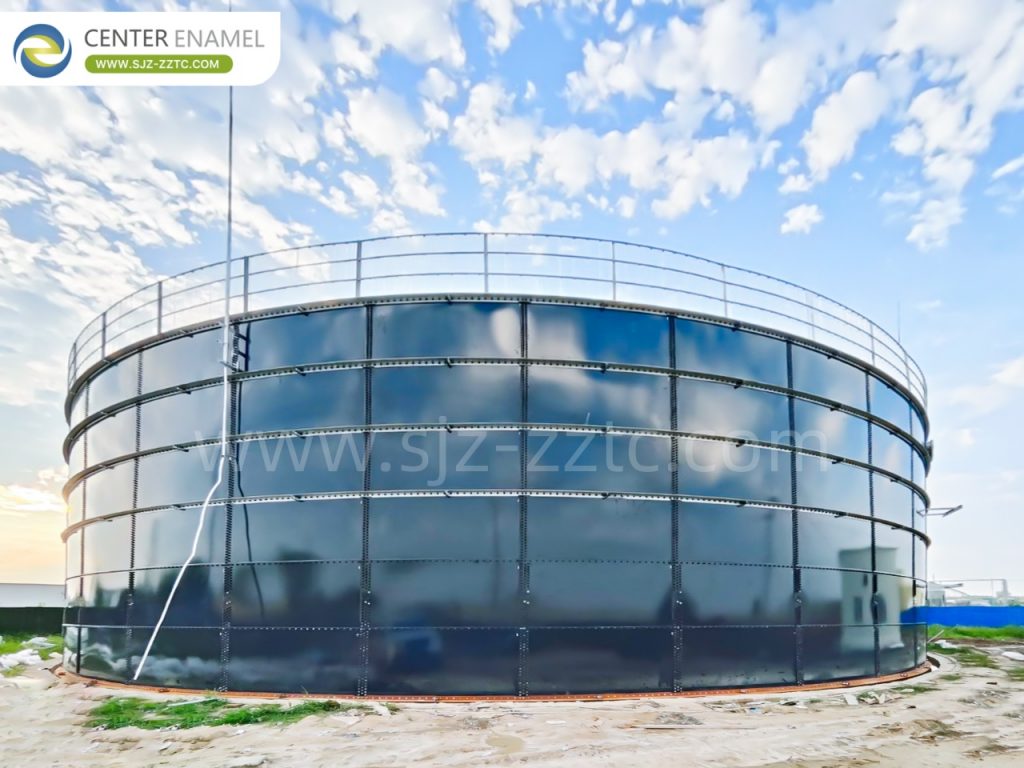
Cameroon is endowed with abundant agricultural resources, and among its most valuable assets is the resilient, fast-growing grass known as Pennisetum purpureum, or Napier grass. This versatile crop holds tremendous potential, not just as animal fodder, but as a powerful feedstock for renewable energy. By leveraging advanced technologies like the CSTR Process and robust GFS Tanks, this abundant biomass can be efficiently converted into biogas, offering a sustainable solution for Cameroon's growing energy needs and contributing to the nation's renewable energy transition.
Pennisetum Purpureum in Cameroon: A Thriving Agricultural Resource
Pennisetum purpureum, commonly known as Napier or elephant grass, is a perennial tropical grass native to Africa and is a cornerstone of Cameroon's agricultural landscape. It is widely cultivated by smallholder and commercial farmers as a high-yielding fodder crop for dairy cattle. Research indicates that Napier grass is the most valuable of the perennial grasses used as biogas feedstock, producing up to 75 tons of biomass per hectare per year under favorable conditions .
Its popularity stems from its remarkable adaptability—it thrives with low water and nutrient inputs, grows rapidly, and can be harvested multiple times a year. In Cameroon, it grows well across diverse ecological zones, from coastal rainforests to the highlands, making it an accessible and reliable resource for farmers throughout the country. This grass is particularly suited for biogas production due to its high lignocellulosic content, with cellulose and hemicellulose comprising approximately 80-92% of its composition—material that is readily degradable in anaerobic digesters .
From Grass to Gas: The Conversion and Its Advantages
The conversion of Pennisetum purpureum into biogas is achieved through anaerobic digestion, a biological process where microorganisms break down organic matter in an oxygen-free environment. This grass species is particularly suitable for biogas production due to its high lignocellulosic content. Research has shown that with appropriate pre-treatment—such as alkaline treatment—methane yields from Napier grass can be enhanced by up to 70% . Furthermore, using this grass as a feedstock offers significant environmental and economic advantages: it provides a sustainable method for managing agricultural residues, converts waste biomass into clean energy, reduces reliance on traditional fuels like wood and charcoal—helping to curb deforestation—and creates a closed-loop system where the digestate by-product can be used as a nutrient-rich fertilizer to enhance soil fertility for future crops. In Cameroon, where access to reliable energy in rural areas remains a critical challenge, biogas from Napier grass offers a decentralized, community-based solution .
The CSTR Process: The Engine of Biogas Production
At the heart of a high-efficiency biogas plant is the CSTR Process (Continuous Stirred-Tank Reactor). This advanced anaerobic treatment technology is the core processing unit that converts organic waste like Pennisetum purpureum into biogas and digestate . The CSTR Process involves feeding the prepared organic feedstock continuously or semi-continuously into a sealed reactor. What sets the CSTR Process apart is its mechanical stirring device, which ensures that the fermentation raw materials and anaerobic microorganisms are in a state of complete and thorough mixing. This constant agitation is crucial for maintaining a uniform temperature—typically in the mesophilic range around 35–45°C—and preventing the settling of solids, thereby allowing for the efficient degradation of high-concentration organic matter. This results in stable and high biogas yields, making it the preferred technology for large-scale commercial Biogas Solutions.
Center Enamel: Professional Design for Biogas Success
Center Enamel stands as a leader in providing professional, comprehensive design solutions tailored for modern biogas ventures. With a dedicated team of experts, Center Enamel offers complete turnkey services that cover every aspect of a biogas project, from initial feasibility studies and process design to equipment supply and final commissioning . The company's approach is rooted in delivering high-performance, durable infrastructure.
By integrating state-of-the-art technology with robust engineering, Center Enamel ensures that each installation is optimized for maximum gas yield, operational reliability, and long-term profitability, adhering to stringent international standards like ISO9001, NSF61, and EN1090 . Their design philosophy focuses on simplifying maintenance, enabling operators to manage their systems with ease and confidence, which is particularly valuable for agricultural communities in Cameroon. Center Enamel has already provided anaerobic digester tanks for wastewater treatment projects in Cameroon, demonstrating its commitment to supporting the nation's sustainable development goals .
Core Solutions: GFS Tanks and Double Membrane Roof
For biogas storage and digestion, Center Enamel champions the combination of GFS Tanks (Glass-Fused-to-Steel) with a Double Membrane Roof. GFS Tanks are a premium coating technology where glass is fused to steel at high temperatures (820°C-930°C), creating an inert, durable, and highly corrosion-resistant surface . This technology provides the strength and flexibility of steel with the outstanding corrosion resistance of glass, offering superior performance for the demanding conditions of anaerobic digestion where organic acids and hydrogen sulfide (H₂S) are present. GFS Tanks are engineered to withstand Cameroon's tropical climate, from the humid coastal regions to the drier northern areas, ensuring long-term operational safety .
Complementing this is the Double Membrane Roof. Under normal working conditions, this is the preferred solution for its cost and space efficiency. It significantly reduces the cost of the roof structure and, compared to traditional ground-mounted gas holders, minimizes the project's footprint and eliminates the need for extensive foundation construction, making it an ideal and economical choice for modern biogas plants in Cameroon .
Versatile Storage Tank Cover Solutions
Beyond the Double Membrane Roof, Center Enamel provides a diverse range of storage tank cover solutions to meet different project requirements and environmental conditions:
Aluminum Geodesic Dome Roof: Offers advanced corrosion resistance, expansive clear span capability, and cost-effective construction with minimal maintenance.
Glass-Fused-to-Steel Roof: Provides excellent air-tightness, making it suitable for pressurized structures and demanding applications requiring odour control .
Single Membrane Roof: Another viable option for anaerobic digestion and biogas applications, offering airtightness for biogas collection.
Aluminum Alloy Trough Deck Roof: An economical option for applications not requiring air-tightness, such as drinking water, wastewater, and firewater storage, effectively keeping out rain and wind.
Stainless Steel Roof: Known for its super anti-corrosion performance, long service life, and suitability for harsh environments.
FRP Roof: Ideal for situations where air-tightness is not required, such as drinking water or agriculture storage, and can be designed in a dome or flat shape.
Comprehensive Biogas Auxiliary Equipment
A successful biogas installation relies on a suite of specialized equipment that works in harmony. Center Enamel provides all the necessary auxiliary components to ensure a smooth and efficient operation:
Solid-Liquid Separator: Efficiently divides the digestate into solid waste and liquid fertilizer, simplifying post-treatment and creating valuable agricultural by-products.
Gas Holder: Provides a safe and flexible storage solution for the biogas produced, ensuring a stable supply for utilization.
Dehydration and Desulfurization Tank: Purifies the raw biogas by removing moisture and corrosive hydrogen sulfide, protecting downstream equipment like engines or boilers.
Lifting Pump: Ensures the reliable and consistent transfer of slurry between different processing units.
Screw Sludge Dewatering Machine: Significantly reduces the volume of final sludge, lowering disposal costs and simplifying waste management.
Efficient Installation of GFS Tanks
Center Enamel's GFS Tanks are designed for rapid and efficient installation, a key factor in the success of any biogas project:
Factory Prefabrication: The bolted tank structure is prefabricated in a factory, ensuring high-quality control in manufacturing .
Fast On-Site Assembly: Tanks can be assembled by a small team with minimal specialized tools, dramatically reducing on-site construction time compared to traditional welded tanks .
Modular Design: The modular design allows for easy future expansion, providing flexibility as the project grows.
Weather Resilience: Engineered to withstand Cameroon's diverse climate conditions, from tropical rainforest to semi-arid regions, ensuring long-term operational safety .
Cost Savings: This ease of construction and maintenance translates directly to cost savings and a faster return on investment for the client.
Center Enamel: Your One-Stop Biogas Solutions Provider for Cameroon
Center Enamel serves as a comprehensive one-stop solutions provider for clients in Cameroon, offering complete and integrated services for all their biogas needs:
Full EPC Services: Center Enamel can deliver a complete turnkey solution, from engineering, procurement, and construction to commissioning .
Manufacturing Excellence: As the largest manufacturer of GFS Tanks in Asia, with a production capacity of 250,000 sheets per year, they guarantee superior product quality and supply chain reliability .
Proven Local Presence: Center Enamel has already provided anaerobic digester tanks for wastewater treatment projects in Cameroon, demonstrating its commitment to delivering sustainable infrastructure in the region .
Global Expertise, Local Solutions: With over 100 countries served, Center Enamel brings a wealth of international experience to deliver robust, reliable, and sustainable biogas infrastructure that meets local requirements in Cameroon.
Uncompromising Quality: The company's rigorous adherence to international standards like AWWA D103, EN28765, and NSF61 ensures that all equipment meets the highest benchmarks for safety and performance .
Proven Success in the Field
Center Enamel's expertise is validated by a portfolio of successful global projects.
Biogas Project in Sweden
Tank dimensions: φ19.11m x 19.2m (H) (1 unit)
Total volume: 5,510 m³
Completion year: 2024
Biogas Project in Indonesia
Application: Anaerobic reactor for palm oil wastewater treatment plant
Tank models: Ø17.58m x 8.4m, Ø16.82m x 7.2m
Number of tanks: 3 GFS tanks
Installation date: 2013
Conclusion
The journey from Pennisetum purpureum to biogas is a sustainable pathway that holds tremendous promise for Cameroon's agricultural and energy future. By harnessing the power of the CSTR Process and the durability of GFS Tanks, agricultural waste can be transformed into a valuable renewable energy source. Center Enamel stands ready to be the partner in this green revolution, offering world-class technology, comprehensive services, and unparalleled expertise. Through its commitment to quality and innovation, Center Enamel is not just providing equipment but is powering a more sustainable and energy-secure future for Cameroon and beyond.
FAQ Section
Q1: Why is Pennisetum purpureum considered a suitable feedstock for biogas production in Cameroon?
A: Pennisetum purpureum is widely cultivated across Cameroon and thrives in diverse ecological zones from coastal to highland regions. Its high lignocellulosic content—with cellulose and hemicellulose comprising approximately 80-92% of its composition—makes it readily degradable in anaerobic digesters, and with proper pre-treatment, methane yields can be enhanced by up to 70% .
Q2: How does the CSTR Process handle the high fiber content of Pennisetum purpureum?
A: The CSTR Process uses mechanical agitation to create complete mixing, which prevents solids from settling and ensures effective contact between the fibrous material and anaerobic microorganisms . This continuous mixing, combined with proper pre-treatment strategies such as alkaline treatment, can significantly enhance methane yields from the lignocellulosic biomass .
Q3: What makes GFS Tanks suitable for Cameroon's diverse climate conditions?
A: GFS Tanks offer superior corrosion resistance, which is crucial for Cameroon's varied climate conditions, from the humid coastal rainforests to the drier semi-arid regions . The glass-fused-to-steel coating provides protection against high humidity, temperature fluctuations, and the corrosive organic acids and H₂S gas generated during anaerobic digestion . The modular design also allows for rapid installation, which is advantageous for projects in remote areas with limited construction infrastructure .