
Premium Anaerobic Solutions & GFS Tanks for Nepal Pig Farm Biogas Projects
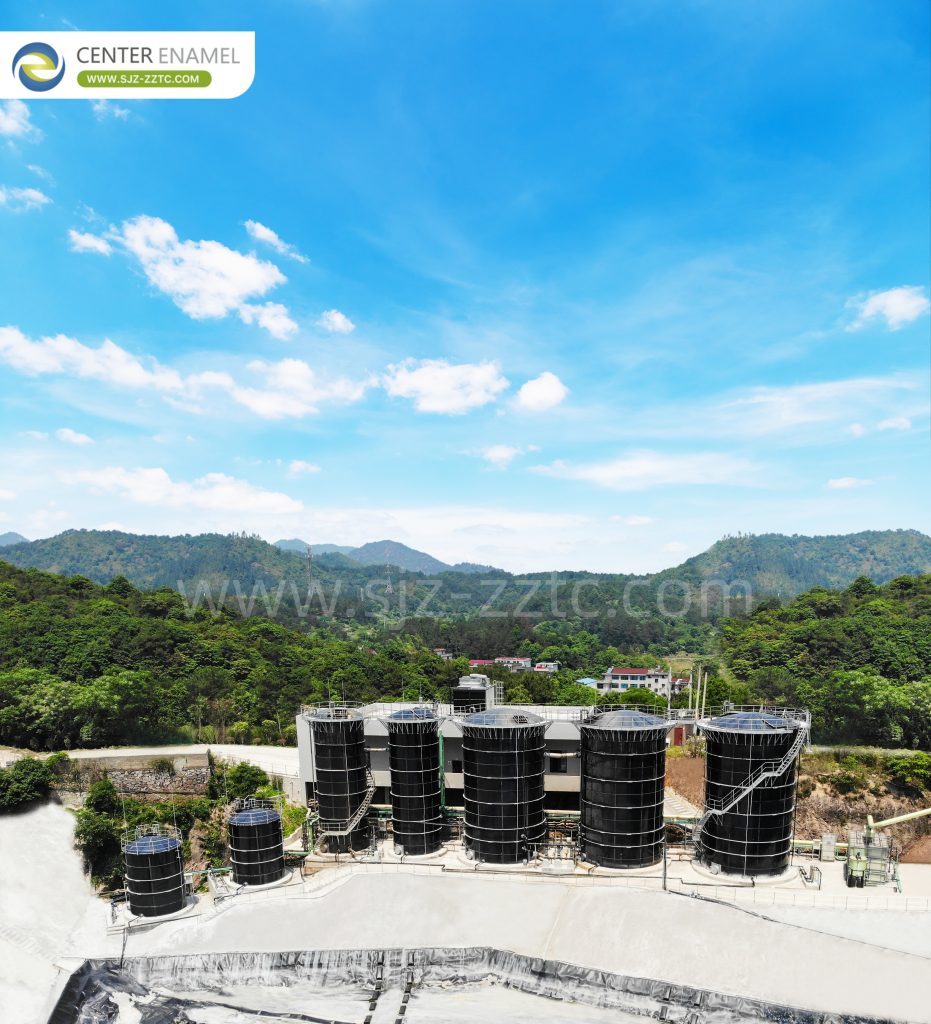
Nepal is a typical Himalayan agricultural country with a developed livestock breeding industry, and pig farming has become an important livelihood source for rural residents across hilly areas, plain valleys and southern lowlands. Pig farms are widely distributed in rural communities, small-scale breeding households and medium-sized specialized farms all over Nepal. With the continuous expansion of breeding scale, a large amount of pig manure, urine and breeding wastewater are produced every day.
Most Nepal pig farms lack standardized waste disposal facilities. Untreated pig manure is randomly stacked or directly discharged into rivers, farmland and mountain gullies, causing serious odor pollution, river eutrophication, groundwater contamination and pathogen propagation. It also releases massive greenhouse gases and damages the local ecological environment. Meanwhile, pig manure is rich in cellulose, protein and organic nutrients, which is high-quality raw material for Biogas Project, making the application of professional Anaerobic Solutions and durable GFS Tanks an inevitable choice for Nepal’s pig farm pollution control and renewable energy construction.
Why Pig Farm Biogas Projects Are Viable in Nepal
First, Nepal’s subtropical mountain climate maintains mild and stable temperatures all year round, which is very suitable for microbial anaerobic digestion, helping maintain stable biogas output and reducing extra heating costs.
Second, the pig breeding industry provides continuous and sufficient manure supply, laying a stable raw material foundation for large and medium-sized Biogas Project operation.
Third, Nepal faces severe power shortage and unstable grid power supply in rural areas. On-site biogas power generation and heating can effectively ease energy pressure and realize rural energy independence.
Fourth, the Nepalese government actively promotes renewable energy, rural circular economy and organic waste recycling, providing policy subsidies and technical support for livestock biogas projects.Fifth, increasingly strict environmental regulations require pig farms to standardize waste discharge, and building biogas projects helps farms meet environmental compliance standards and enhance social responsibility.
Biogas Production Principle from Pig Manure
Pig manure generates biogas through strict oxygen-free anaerobic digestion, which is divided into four core biological stages:
- Hydrolysis: Complex organic substances such as protein and cellulose in pig manure are decomposed into simple soluble small molecules.
- Acidification: Acidogenic bacteria convert small molecular organics into volatile fatty acids, hydrogen and carbon dioxide.
- Acetogenesis: Intermediate products are further decomposed into acetic acid, the key precursor for methane production.
- Methanogenesis: Methanogenic microorganisms decompose acetic acid to produce methane and carbon dioxide, forming available biogas.
The purified biogas can be used for farm power generation, boiler heating and rural daily cooking. The digested biogas residue and slurry are processed into high-quality organic fertilizer, realizing waste recycling and circular agricultural development.
Four Main Anaerobic Solutions for Nepal Pig Farm Biogas Project
Center Enamel provides four mature Anaerobic Solutions tailored to Nepal’s mountainous terrain, scattered pig farms and pig manure characteristics:
CSTR (Completely Stirred Tank Reactor)
CSTR is the preferred process for large-scale intensive pig farms in Nepal. High-torque mechanical stirring fully mixes pig manure and microbial sludge, preventing sedimentation and crusting. It operates stably with strong impact load resistance and maintains continuous and stable biogas output.
USR (Upflow Solids Reactor)
USR is optimized for high-suspended-solid pig manure. It features simple structure, low operating cost and strong raw material adaptability, perfectly suitable for scattered small and medium pig farms in Nepal’s rural hilly areas.
UASB (Upflow Anaerobic Sludge Blanket)
UASB is a classic anaerobic process for pig farm wastewater treatment. Wastewater flows upward through dense granular sludge to efficiently degrade organic pollutants. It is easy to maintain, occupies small land space and fits medium-sized pig farm wastewater biogas projects.
IC (Internal Circulation) Process
IC is a high-rate advanced anaerobic technology. It uses self-produced biogas to drive internal liquid circulation, with a volumetric load 3–5 times higher than traditional reactors. It saves land and has high treatment efficiency, ideal for large-scale integrated pig farm biogas projects in Nepal’s southern plain industrial zones.
Core Equipment for Nepal Pig Farm Biogas Project
To support Anaerobic Solutions operation, Center Enamel provides a complete set of core and supporting equipment for Nepal pig farm Biogas Project.GFS Tanks are the core anaerobic fermentation equipment, sintered at over 820°C with molecular fusion of glass enamel and steel plates. They resist corrosion in pH 1–14 range, adapt to Nepal’s high humidity, mountain monsoon climate and acidic pig manure erosion, with excellent seismic resistance and UV aging performance.
Supporting equipment includes FBE Tanks for regulating and treated water storage, double membrane gas holders for airtight biogas collection and storage, and aluminum dome roofs that resist humid mountain air to avoid facility rainwater dilution and corrosion. All equipment forms a complete turnkey biogas system.
Why Center Enamel Is the Preferred EPC Contractor
- Offers one-stop turnkey services including project design, equipment manufacturing, installation, commissioning and after-sales support, reducing client coordination costs.
- Delivers customized Anaerobic Solutions according to Nepal’s mountain terrain, pig manure features and scattered farm distribution.
- Owns Asia’s largest GFS tank manufacturing base and over 200 patented enamel formulas, ensuring durable equipment in complex Nepalese climate.
- All products comply with ISO 28765, AWWA D103-09, OSHA, NSF/ANSI 61 and international standards; every steel plate passes 1500V high-voltage spark testing.
- Has rich South Asian project experience, fully adapting to Nepal’s construction conditions and climate environment.
Professional Installation Process of Center Enamel
- Adopts hydraulic jacking top-down installation, no high-altitude scaffolding required, suitable for Nepal’s mountainous, narrow and remote farm construction sites.
- All tank components are factory prefabricated with zero on-site welding, assembled entirely by high-strength bolts.
- Effectively avoids welding failure risks caused by Nepal’s high humidity, dust and rainy monsoon climate.
- Bolted structure eliminates long concrete curing time, realizing fast commissioning and rapid project operation.
Classic Successful Biogas Project Cases
Case1: Canada Biogas Project
Tank Dimensions: φ8.4 × 7.2 m (H) — 2 Units
Total Volume: 798 m³
Completion Year: 2024
Case2: Indonesia Biogas Project
Tank Application: Palm Oil Wastewater Treatment Plant
Tank Model: Ø19.86 × 8.4 m
Number of Tanks: 3 GFS Tanks
Installation: 7 personnel, 40 days
Installation Date: November 2009
Nepal’s pig breeding industry produces abundant manure resources, bringing both pollution pressure and huge potential for Biogas Project. Professional Anaerobic Solutions and high-performance GFS Tanks are core to realizing waste recycling and clean energy utilization. Center Enamel provides diversified anaerobic processes, complete supporting equipment and professional EPC services, helping Nepal pig farms solve pollution problems, improve energy self-sufficiency and boost sustainable rural circular economy development.