
Primary Anaerobic Reactors Solution: Choosing UASB, EGSB, IC Or CSTR
Choose a primary anaerobic reactor by the feed, not the brand: UASB, EGSB and IC suit clarified, soluble, high-COD liquid and reward you with a high organic loading rate on a small footprint; CSTR suits high-solids streams (manure, sludge, food slurry) that would blind a granular bed. The decision turns on suspended solids, COD concentration, scale and land - pick the reactor that matches the feed, then the application article sizes the rest of the train.
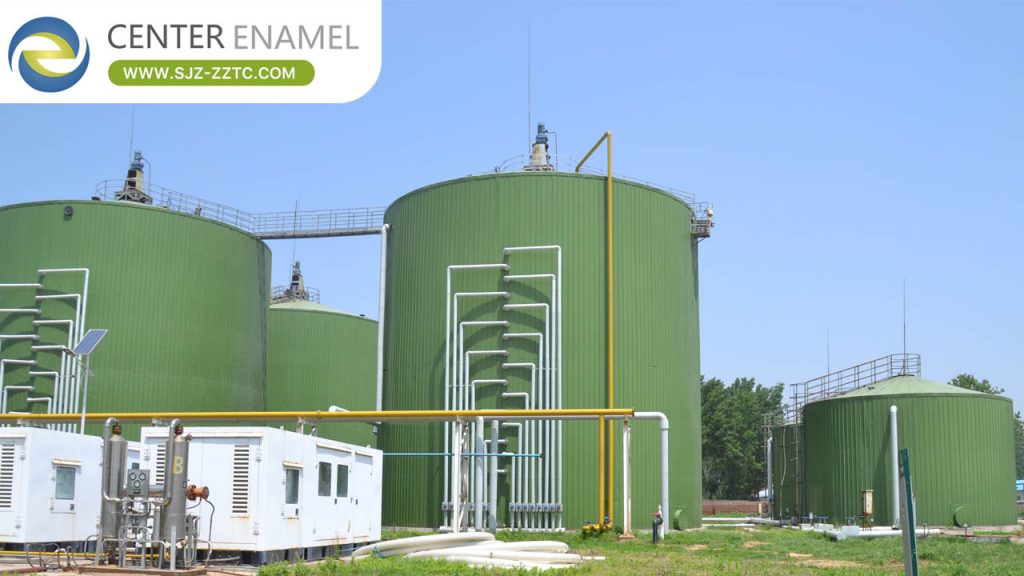
The Four Reactor Types
UASB (upflow anaerobic sludge blanket) holds a dense granular bed; wastewater rises through it, gas lifts the contact, and a top separator keeps the granules. EGSB (expanded granular sludge bed) is a taller UASB with higher upflow velocity and loading. IC (internal circulation) uses internal biogas-lift circulation to reach very high loading on a compact shell. CSTR (continuous stirred-tank reactor) is a well-mixed, mechanically stirred tank that tolerates high total solids and shocks. They are not graded 'best' - they serve different feeds.
| Reactor | Best feed | HRT | Footprint | Start-up |
| UASB | Clarified, soluble COD | Hours | Small | Weeks-months |
| EGSB / IC | Very high COD, clear | Hours | Very small | Weeks-months |
| CSTR | High solids (8-12% TS) | 20-40 days | Large | Weeks |
How To Choose
Start from total suspended solids. If the feed is clarified liquid above roughly 1,500-2,000 mg/L COD, a granular-sludge reactor (UASB, then EGSB/IC as strength rises) recovers the most COD per cubic metre. If the feed carries real solids - manure, sludge, food slurry - a CSTR (or USR) is the resilient choice because it digests the solids that would otherwise wash out of a granular bed. Scale and land then decide: IC wins on footprint for very high-strength clarified feed; CSTR is unavoidable for high-solids, high-volume streams.
When Each One Fails
The failure modes are predictable. A UASB fed solids loses its granular bed to blanketing and washes out. An IC fed variable, shock-loaded liquor fluctuates because its internal circulation is sensitive to load swings. A CSTR fed low-solids, low-strength liquor is simply oversized and sluggish. Matching the reactor to the feed - before the rest of the train is sized - is the single decision that prevents these, and the application articles (pharma, sewage, sludge) then build their trains on top of it.
Project Reference - Indonesia Biogas (Anaerobic Reactors)
An anaerobic reactor system for palm-oil wastewater treatment in Indonesia applies three Glass-Fused-to-Steel tanks in an anaerobic digestion configuration for the palm-oil mill effluent. Published data shows location, application and tank count; water-quality or dimension details beyond these are not released, so this is cited as a scoped reactor application rather than a performance claim.
| Attribute | Value | Note |
| Location | Indonesia | Published |
| Application | Anaerobic reactors, POME | Published |
| Tanks | 3 GFS tanks | Published |
| Process | Anaerobic digestion | Scoped |
About Company
Shijiazhuang Zhengzhong Technology Co., Ltd (Center Enamel) is a comprehensive high-tech enterprise specializing in wastewater engineering, process section contracting, and equipment manufacturing. The company delivers biogas and wastewater projects through three main lines - EPC (turnkey) contracting, equipment supply, and process packages - covering livestock and municipal wastewater, biomass energy, industrial wastewater, and food waste. Its reactor portfolio spans CSTR, USR, UBF, UASB, IC, and EGSB, backed by in-house Glass-Fused-to-Steel tank manufacturing (enamel firing at 820-930 C) and certifications including ISO 9001, NSF/ANSI 61, and CE-EN 1090. With 35+ years of operation, a 150,000 m2 manufacturing base, and projects in 100+ countries, Center Enamel provides the single-responsibility engineering behind anaerobic reactor projects such as the Indonesia palm-oil effluent reference, where the reactor type is matched to a high-strength, high-solids feed - a scoped application of the UASB/EGSB/IC/CSTR selection the article describes.
A primary anaerobic reactor solution is chosen by feed solids, COD, scale and footprint: granular-sludge UASB/EGSB/IC for clarified high-COD liquid, CSTR for high-solids streams - match the reactor to the feed before sizing the train.
Frequently Asked Questions
Q1: UASB vs CSTR - which first? A1: By feed solids: UASB for clarified liquid, CSTR for high-solids streams.
Q2: What is the difference between UASB and IC? A2: IC is taller and internally circulated, reaching much higher loading on a smaller shell.
Q3: When does a UASB fail? A3: Fed suspended solids - the granular bed blankets and washes out.
Q4: What HRT do anaerobic reactors use? A4: Granular reactors count in hours; CSTR counts in 20-40 days.
Q5: Which reactor fits high-strength pharma effluent? A5: UASB/EGSB/IC for clarified high-COD liquid after segregation.
Q6: Which fits sewage sludge? A6: CSTR, because sludge carries the solids a granular bed cannot.
Q7: Does reactor choice affect footprint? A7: Strongly - IC is compact; CSTR needs far more volume.
Q8: How do I start a reactor selection? A8: Fix feed solids, COD, scale and land, then pick the reactor that matches.
Suggested CTA
Send your feed solids, COD and flow to an engineer, or request a reactor-selection outline for your anaerobic project.