
Producing Biogas from Waste Methanisation: A Comprehensive Guide to Organic Waste Valorization
As global communities accelerate their transition toward net-zero emissions and circular economies, managing municipal and industrial discards has shifted from simple disposal to resource recovery. One of the most powerful technologies in this domain is methanisation—commonly known as anaerobic digestion.
Producing biogas from waste methanisation transforms unwanted organic materials into high-yield renewable energy and nutrient-rich bio-fertilizer. This process captures fugitive greenhouse gases, generates baseload green electricity, and diverts thousands of tons of waste away from environmentally harmful landfills.
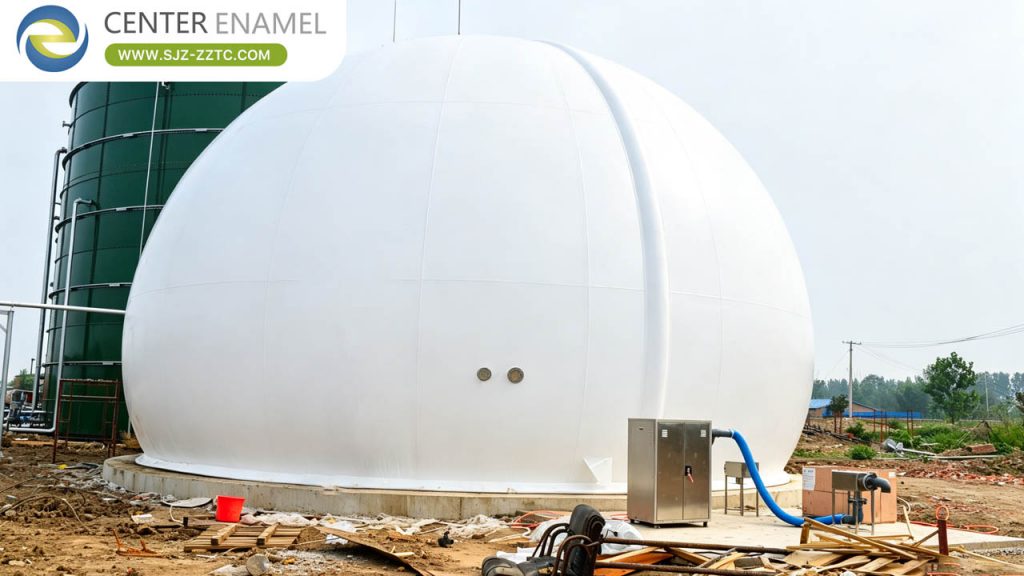
What is Waste Methanisation?
Methanisation is a biological process where specialized consortiums of microorganisms break down biodegradable organic matter in a strictly oxygen-free (anaerobic) environment. Inside sealed industrial reactors, complex organic molecules are converted step-by-step into combustible biogas—primarily composed of methane (CH4) and carbon dioxide (CO2).
The biochemical conversion follows four sequential phases:
- Hydrolysis: Extracellular enzymes break down complex carbohydrates, fats, and proteins into soluble monomers (simple sugars and amino acids).
- Acidogenesis: Acid-forming bacteria convert soluble monomers into volatile fatty acids (VFAs), alcohols, and carbon dioxide.
- Acetogenesis: Acetogenic bacteria transform the intermediate VFAs into acetic acid (acetate), hydrogen, and carbon dioxide.
- Methanogenesis: Strict anaerobic archaea consume the acetate and hydrogen, synthesizing high-purity methane gas.
Key Feedstocks for Industrial Methanisation
An efficient methanisation facility can process a wide variety of organic waste streams, each requiring tailored engineering configurations:
- Municipal Solid Waste (MSW): Segregated organic household waste and food scraps collected from urban centers.
- Industrial Food Processing Waste: High-strength organic by-products from breweries, dairy plants, and slaughterhouses, offering exceptional methane potential.
- Agricultural Slurry and Residues: Animal manure combined with crop residues or silage straw to balance nutrient profiles.
- Municipal Sewage Sludge: Solid residues recovered from wastewater treatment plants, providing a consistent baseline substrate.
Technological Configurations: Wet vs. Dry Methanisation
Depending on the total solids (TS) concentration of the incoming waste stream, facilities utilize different reactor technologies:
- Wet Methanisation (Continuous Stirred-Tank Reactors - CSTR): Designed for pumpable liquid slurries with a total solids content below 12%. Internal mechanical mixers keep the material suspended and ensure uniform heat distribution.
- Dry Methanisation (High-Solid Batch or Continuous Systems): Engineered for stackable, fibrous, or high-solid organic waste (20% to 40% TS) without requiring water dilution, minimizing reactor volume and energy input for heating.
Comparative Data Table: Waste Methanisation Technologies
| Technology Parameter | Wet CSTR Methanisation | Dry Stackable Methanisation | Covered Lagoon Methanisation |
| Feedstock Total Solids (TS) | Low to Moderate (4% to 12% TS) | High Solids (20% to 40% TS) | Dilute Liquids (1% to 3% TS) |
| Primary Application | Food waste slurries, manure, sludge | Yard waste, municipal solid waste, straw | Large-scale dilute animal manure |
| Operational Control | High biological and temperature control | Moderate control; batch or plug-flow | Low thermal control; weather dependent |
| Energy Footprint | Moderate (requires mixing & heating) | Low (optimized solid handling) | Very Low capital and operational cost |
Frequently Asked Questions (FAQ)
Q1: What is the difference between methanisation and standard composting?
A: Composting is an aerobic process that requires oxygen and releases carbon dioxide and water vapor into the air, producing soil conditioner. Methanisation is an anaerobic (oxygen-free) process that captures methane gas in a sealed reactor to generate renewable energy while retaining essential nutrients in the residual digestate fertilizer.
Q2: What happens to the biogas produced during waste methanisation?
A: Raw biogas is cleaned to remove moisture and corrosive hydrogen sulfide (H2S). It can then be burned directly in Combined Heat and Power (CHP) engines to generate electricity and heat, or purified via upgrading skids into biomethane (Renewable Natural Gas) for pipeline injection.
Q3: How do methanisation plants handle non-organic contamination in municipal waste?
A: Modern commercial facilities utilize advanced front-end pre-treatment systems—including industrial depackagers, hydro-cyclones, screens, and macerators—to sort, wash, and eject plastics, glass, metals, and other inert debris before the organic fraction enters the reactor.