
Professional Anaerobic Solutions and GFS Tanks for Cambodia Pig Farm Wastewater Treatment Project
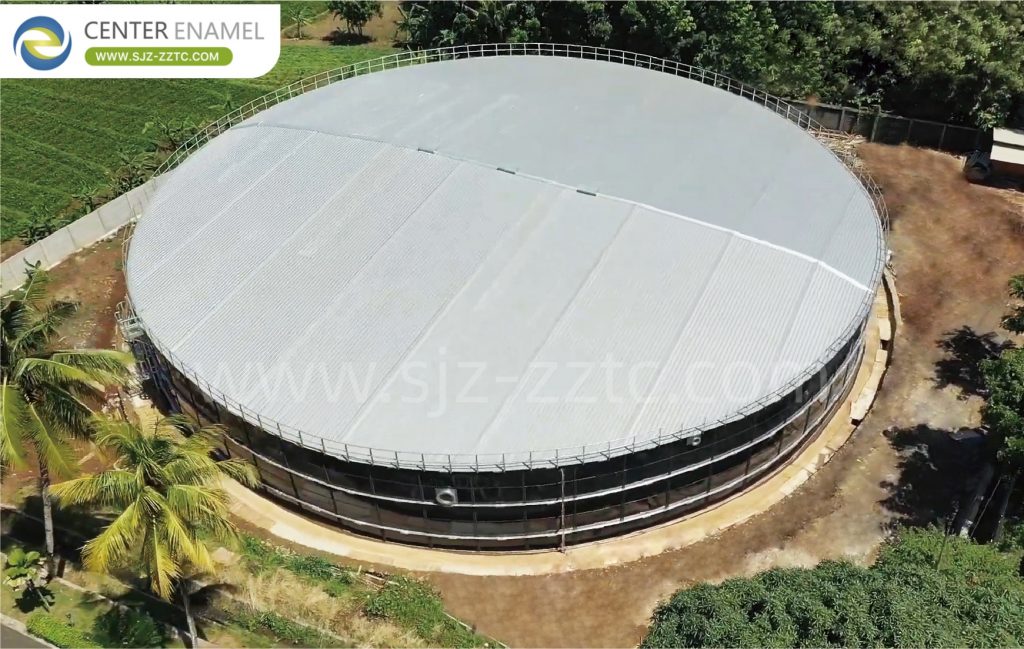
In Cambodia, pig farming is a vital agricultural sector supporting rural employment, domestic meat supply, and agricultural economic growth. With rapid economic development and increasing urbanization, the industry has accelerated from scattered small-scale breeding to intensive and large-scale commercial operations, especially in Phnom Penh, Prey Veng, and Kandal. As modern pig farms expand, pig farm Wastewater Treatment Project has become a critical environmental and operational issue.
Cambodia has strengthened livestock wastewater management in recent years, implementing the Law on Environment and Natural Resources and the 2023–2028 National Circular Economy Strategy to strengthen water pollution control and ecological protection. The Ministry of Environment strictly limits COD, ammonia nitrogen, suspended solids, and total phosphorus in aquaculture wastewater. Farms that discharge untreated or substandard wastewater face fines, mandatory rectification, or even suspension.
Meanwhile, the government encourages resource recycling and biogas recovery, making anaerobic treatment systems the preferred solution for compliance, cost reduction, and green transformation.
As a trusted international provider, Center Enamel delivers tailored Anaerobic Solutions and reliable GFS Tanks for Cambodia pig farm Wastewater Treatment Project. We help local pig farms achieve stable emission compliance, efficient biogas energy recovery, and sustainable circular agricultural development.
Characteristics and Hazards of Pig Farm Wastewater in Cambodia
Pig farm wastewater in Cambodia consists mainly of manure, urine, pen washing water, and residual feed, with typical high-strength organic characteristics:
- Extremely high COD and BOD levels, causing severe oxygen depletion in water bodies
- High ammonia nitrogen and total phosphorus, leading to eutrophication in rivers and lakes
- High suspended solids (SS), easily causing sedimentation, clogging, and equipment wear
- Pathogens, parasites, and odor substances that threaten ecological and public health
- Corrosive components that damage ordinary concrete and metal storage structures
Without proper treatment, wastewater seeps into groundwater, contaminates drinking sources, degrades soil, and emits strong odors. It also violates Cambodia’s environmental regulations and restricts the long-term development of pig farming. A professional pig farm Wastewater Treatment Project has become essential for sustainable operations.
Core Anaerobic Solutions for Cambodia Pig Farm Wastewater Treatment
Center Enamel provides targeted Anaerobic Solutions customized for Cambodia’s tropical climate, high humidity, flat farmlands, and high-solid wastewater features. These solutions efficiently degrade pollutants while recovering biogas energy.
1. CSTR Anaerobic Solution
The Completely Stirred Tank Reactor uses mechanical stirring to ensure full mixing of wastewater and anaerobic sludge, preventing crusting and sedimentation. It offers strong shock resistance, stable biogas production, and ideal suitability for high-solid pig manure wastewater widely used in Cambodia.
2. UASB Anaerobic Solution
Upflow Anaerobic Sludge Blanket technology uses granular sludge to achieve high-efficiency organic removal with a small footprint, low operating cost, and stable performance, suitable for liquid-rich pig farm wastewater.
3. USR Anaerobic Solution
Upflow Solid Reactor features a simple structure, no mechanical mixing, and low maintenance cost, making it suitable for small and medium-sized pig farms in rural and remote areas.
4. IC Anaerobic Solution
Internal Circulation technology provides ultra-high volumetric loading rate and fast treatment, saving land resources for large-scale intensive pig farms and centralized breeding zones.
Based on farm scale, wastewater characteristics, land availability, and biogas demand, Center Enamel optimizes process combinations such as CSTR + UASB or USR + post-treatment to maximize efficiency and economic benefits for Cambodia pig farm Wastewater Treatment Project.
Key Equipment: GFS Tanks for Stable and Long-Life Operation
As the core reactor for Anaerobic Solutions, GFS Tanks (Glass-Fused-to-Steel Tanks) are the optimal choice for pig farm Wastewater Treatment Project in Cambodia.
Advantages of GFS Tanks
Excellent corrosion resistance: Fused at over 820°C, GFS tanks resist pH 1–14, enduring organic acids, ammonia, and hydrogen sulfide in pig wastewater without rust or leakage.
Superior weather adaptability: Bolted assembly structure delivers excellent seismic performance; resistant to strong ultraviolet radiation, high temperature, and humidity in Cambodia.
Fast and flexible installation: Factory-prefabricated plates are bolted on site without welding, greatly shortening construction time and adapting to narrow or remote sites.
Long service life: Durable enamel coating ensures over 30 years of usage with minimal maintenance, reducing long-term costs.
Center Enamel also provides complete supporting equipment: double-membrane gas holders, biogas desulfurization and dehydration units, FBE epoxy tanks, solid-liquid separators, and intelligent control systems, forming a full wastewater treatment and biogas utilization system.
Why Center Enamel Is the Preferred Partner for Cambodia Pig Farm Projects
Proven Southeast Asian experience: Deep understanding of Cambodia’s climate, regulatory policies, transportation conditions, and breeding characteristics, ensuring stable operation in tropical and high-humidity environments.
Customized professional Anaerobic Solutions: Full-process design covering pretreatment, anaerobic digestion, biogas recovery, and effluent post-treatment, tailored to each pig farm Wastewater Treatment Project.
Leading GFS Tanks manufacturing capacity: Asia’s largest GFS tank production base; main drafter of China’s GFS tank industry standard, ensuring product quality, precision, and on-time delivery.
Strict international quality certification: Products comply with ISO 28765, AWWA D103-09, OSHA, and NSF/ANSI 61 standards; each plate passes 1500V high-voltage spark test to ensure zero defects.
Efficient installation and full lifecycle service: Hydraulic jacking technology enables top-down installation without large cranes; full services cover design, production, installation, commissioning, training, and after-sales support.
Remarkable economic and environmental benefits: Solutions reduce treatment costs, generate clean biogas for on-farm use, and produce organic fertilizer from digestate, forming a sustainable breeding-planting circular model.
Efficient Installation Process Adapted to Cambodia’s Conditions
Center Enamel’s installation technology is optimized for Cambodia:
Hydraulic jacking system: Suitable for narrow spaces and remote sites
Zero on-site welding: Avoids humidity-induced weld defects
Short construction period: Much faster than concrete tanks, enabling early operation
Professional team: Experienced in Southeast Asian projects ensuring safe, high-quality construction
Successful Project Cases by Center Enamel
Case 1:Hoggery Wastewater Treatment Project in Guangdong Province, China
Process: Pre-process +USR+AOAO
Processing treatment capacity: Manure cleaning by water submerging: 300m³/ day
Case 2: Beijing Pig Farm Wastewater Treatment Project
Installation: 2020
Location: Beijing
Daily treatment volume: 580m³/day
Treatment Process:UASB+AOAO.
Cambodia’s pig farming industry is moving toward intensification, standardization, and green development, and pig farm Wastewater Treatment Project has become essential infrastructure. Center Enamel, with professional Anaerobic Solutions, high-performance GFS Tanks, and rich overseas engineering experience, is the most reliable partner for Cambodia pig farm Wastewater Treatment Project.
We help pig farms achieve environmental compliance, recover clean biogas energy, reduce operational costs, and build eco-friendly circular breeding systems. For any investment or upgrade in pig farm wastewater treatment in Cambodia, Center Enamel provides safe, durable, and economical total solutions that create long-term environmental and economic value.