
Professional Biogas Project Contractor: High-Performance GFS Tanks and Integrated Solutions
The global livestock manure treatment policy system, with the US and EU as typical representatives, is shifting from end-of-pipe treatment to full-process nutrient management. The US establishes a manure management framework covering the entire livestock production process through Comprehensive Nutrient Management Plans. The EU, through the Nitrates Directive, strictly limits manure application amounts, with Germany and the Netherlands using tax instruments to mandate nitrogen and phosphorus recovery rates, and Denmark demonstrating distinctive features in livestock regulation and ecological compensation. The Netherlands uses a management mechanism linking manure treatment with phosphate quotas. China has issued a series of environmental regulations, with the current legal system providing comprehensive regulation of pollution from large-scale livestock operations.
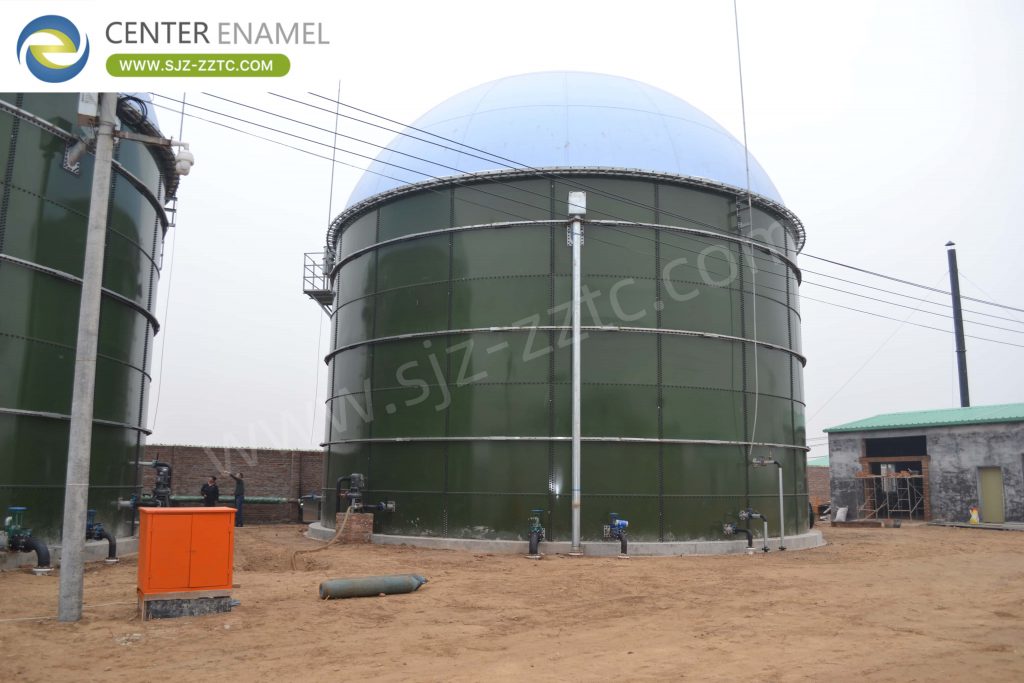
As regulatory environments worldwide tighten, the demand for sophisticated waste management infrastructure has reached an all-time high. Clients increasingly require a seasoned Biogas Project Contractor capable of navigating these complex compliance frameworks while delivering high-efficiency results. By integrating policy-compliant designs, modern facilities can secure their long-term operational success.
What Are the Applicable Scenarios for UASB?
Suitable for soluble medium-to-high concentration organic wastewater, covering light industrial wastewater from brewing, sugar refining, starch, papermaking, food processing, printing and dyeing, etc. Suitable for wastewater where organics are predominantly soluble with low suspended solids content, not suitable for high-solids, high-viscosity wastewater. Can be used alone as the primary treatment process or as a pretreatment for high-strength wastewater to reduce downstream aerobic load. Suitable for municipal wastewater anaerobic pretreatment and low-solids livestock wastewater treatment. With its low cost and stable operation advantages, it is suitable for long-term continuous, large-flow industrial wastewater treatment projects.
Choosing the correct process technology is vital for the scalability and performance of environmental projects. When paired with high-quality infrastructure, the UASB process provides a stable foundation for managing diverse wastewater streams effectively. This technical precision ensures that systems remain productive even under continuous, large-scale industrial requirements.
Livestock Wastewater Operation and Maintenance Cost Analysis
O&M costs are relatively low with excellent input-output ratio-the highest cost-effectiveness among the five wastewater types. Core treatment units are primarily physical separation, anaerobic digestion, and ecological polishing-no high-end precision equipment or expensive chemicals. Equipment is simple with low failure rates and low maintenance costs. Anaerobic digestion produces stable biogas for plant heating and power generation, offsetting energy costs. Ecological treatment units have virtually no ongoing O&M costs. Only periodic cleaning of sedimentation tanks and polishing ponds is required, with low labor costs. Manure solids, sludge, and digestate can be sold as resources, further reducing net treatment costs.
Operational cost efficiency is the ultimate driver of project viability, making the choice of containment technology a strategic decision. By utilizing GFS Tanks, facility operators benefit from minimal maintenance requirements and superior resistance to harsh, corrosive agricultural environments. This structural reliability significantly extends the lifespan of the treatment unit and protects your capital investment.
Indonesia Palm Oil Biogas Project
Specifically designed for high-concentration palm oil wastewater treatment with 3 GFS fermentation tanks, each 19.86 m diameter × 8.4 m height. Installation began November 2009 with only 7 construction personnel, completing all tank assembly in 40 days-highly efficient and time-saving. Tanks are fitted with dual-membrane gas storage covers for POME anaerobic digestion-degrading organics and recovering biogas energy while eliminating palm industry pollution. This is an early benchmark POME biogas treatment project in Southeast Asia.
Real-world performance serves as the definitive proof of engineering excellence and operational efficiency. Successful deployments highlight how high-quality equipment and professional management can transform industrial challenges into energy-positive assets. Such benchmark projects continue to guide the development of high-performance facilities globally.
Center Enamel's Global Market Presence
Center Enamel's global business covers over 100 countries and regions, with 30,000+ successful overseas projects. Products are exported to all major regions including Europe, the Americas, the Middle East, Africa, Southeast Asia, and Latin America, with a well-established global localized service network.
Domestically, the company is organized into North, South, Central, East, and Southwest marketing regions, covering environmental, water utility, livestock, and petrochemical customers nationwide. Internationally, the company adopts a "standardized products + localized adaptation" model-adjusting tank corrosion protection, sealing, and pressure standards for different national water quality and environmental regulations-with multiple global landmark projects: large-volume GFS tanks in Italy, 20 m tower water supply tanks in Colombia, coastal seawater treatment tanks in Costa Rica, large municipal wastewater aluminum dome projects in Saudi Arabia, etc. The company has established long-term stable strategic partnerships with many Fortune 500 companies.
Maintaining a robust global presence requires a commitment to quality and the flexibility to adapt to local standards. Serving diverse markets with high-standard storage solutions builds trust and reliability in the environmental engineering sector. This extensive experience ensures that every project receives a solution tailored to its specific climatic and regulatory context.
Flexible and Efficient Service Delivery System
Center Enamel's own cross-border construction teams + global localized agent network-modular GFS tank assembly with short construction periods and dismantlable/reusable capability-suitable for overseas short-term projects, phased expansions, and relocation needs-full-lifecycle after-sales O&M support ensuring long-term stable client operations.
Efficiency in service delivery is the key to minimizing project downtime and streamlining the construction phase. An agile construction team, combined with a modular product approach, provides the flexibility needed to meet tight deadlines and evolving site requirements. This integrated service model supports the client through every stage of the project’s lifecycle.
Aluminum Geodesic Dome Roof
Aluminum Geodesic Dome Roof independently developed by Center Enamel is manufactured using high-strength aluminum alloy plates through integral stamping. It features a triangular grid spherical self-supporting structure, enabling large-span full coverage without internal support columns. Made of aluminum alloy, the roof offers excellent weather resistance and corrosion resistance, capable of long-term protection against acid rain, salt spray, and UV radiation, suitable for various extreme outdoor climate conditions. The structural design complies with international AWWA D108 standards, with aluminum plate thickness, rib cross-sections, and joint connections all verified by finite element stress analysis, ensuring wind and snow load resistance that meets building code requirements across different global regions.
The weight of the Aluminum Geodesic Dome Roof is only one-third to one-half of a steel roof with the same span, significantly reducing the load on the tank top and allowing direct installation without tank wall reinforcement. The roof provides superior overall sealing performance, with double sealing between panels using specialized sealant strips and mechanical interlocking, enabling both airtight gas storage and enclosed odor control, suitable for biogas collection and storage, wastewater tank odor control, and drinking water contamination prevention. The support-column-free design does not interfere with the installation and operation of internal equipment such as mixers and water distributors. The aluminum material does not support microbial growth, requiring no anti-corrosion maintenance over long-term use, resulting in low total life-cycle costs.
Frequently Asked Questions (FAQ)
Why hire a professional Biogas Project Contractor for your facility?
A professional contractor ensures end-to-end management, from custom site design and equipment supply to international-standard construction and O&M support. By providing integrated solutions, they mitigate technical risks, ensure regulatory compliance, and guarantee the long-term operational efficiency of your biogas energy plant.
What are the key advantages of GFS Tanks in biogas projects?
GFS tanks feature specialized enamel coatings fused to steel, offering unmatched corrosion resistance against acidic slurry and biogas. Their modular design allows for rapid assembly, reduced labor costs, and long-term durability in harsh environments, making them the superior choice for modern, sustainable wastewater and fermentation storage.
How does Center Enamel manage global construction and support?
We utilize a combination of dedicated cross-border construction teams and a localized agent network to deliver consistent quality worldwide. By adhering to strict regional standards (like CE or NSF) and offering full-lifecycle after-sales support, we ensure that every project is installed efficiently and maintained for stable, long-term operation.