
Professional EPC Contractor and Biogas Solutions for Australia Municipal Wastewater Treatment Project
As a developed country with high urbanization and strong environmental awareness, Australia generates massive volumes of municipal wastewater daily from residential communities, commercial zones, public services and light industries across major cities including Sydney, Melbourne, Brisbane and Perth. With rapid urban expansion, population growth and stricter environmental regulations, Australia faces prominent pressures in wastewater disposal, including overloaded treatment plants, non-point source pollution, excess sludge accumulation, high energy consumption and greenhouse gas emissions. Traditional treatment modes focusing only on pollutant removal can no longer support Australia’s goals of carbon neutrality, water ecological security and circular economy construction.
As a leading global EPC service provider for water environment and renewable energy, Center Enamel delivers integrated, customized solutions for Australia Municipal Wastewater Treatment Project based on proven Biogas Solutions and high-performance GFS Tanks. By combining efficient anaerobic treatment, energy recycling, A2O polishing and stable equipment support, we help Australia achieve harmless disposal, resource utilization and low-carbon operation of municipal wastewater, promoting sustainable urban water management and green energy transition.
Source of Municipal Wastewater
Municipal wastewater is a complex mixed flow generated by urban daily activities and public services, mainly consisting of domestic sewage, commercial wastewater, institutional drainage and lightly polluted industrial wastewater. It contains abundant organic matter, nitrogen, phosphorus, suspended solids, surfactants and trace pollutants, featuring high biodegradability, stable composition and continuous large-volume output.
Typical sources include:
- Residential drainage: Kitchen wastewater, toilet flushing, laundry and bathing sewage from urban and rural households.
- Commercial wastewater: Sewage from restaurants, hotels, shopping malls, office buildings and public toilets.
- Public service drainage: Wastewater from schools, hospitals, stations, stadiums and urban greening irrigation systems.
- Light industrial infiltration: Low-strength wastewater from food processing, electronics assembly, textile and other light industries accessing municipal pipe networks.
These characteristics make municipal wastewater not only a pollution source but also a valuable biomass resource. With Biogas Solutions, organic components can be converted into clean energy through anaerobic digestion, while treated effluent can be further polished by A2O process for reuse in urban landscaping, industrial cooling and river ecological recharge, forming a closed-loop resource system.
Municipal Wastewater Production Status and Treatment Challenges in Australia
Australia has a high urbanization rate of over 85%, with concentrated populations in coastal metropolitan areas. The country produces millions of tons of municipal wastewater daily, supported by a relatively complete pipe network and treatment infrastructure. Major plants widely adopt A2O (Anaerobic-Anoxic-Oxic) process, activated sludge, biofilm and MBR processes, basically meeting centralized treatment demands.
However, Australia faces multiple practical challenges:
- Overloaded facilities: Rapid suburban growth and new town development exceed capacity expansion, leading to partial overloading and substandard effluent risks.
- Sludge management pressure: High sludge output from traditional processes increases disposal costs and secondary pollution risks.
- High energy consumption: Aerobic treatment systems including conventional A2O consume large amounts of electricity, increasing urban carbon footprint.
- Non-point source pollution: Rural and peri-urban areas lack complete pipe networks, causing scattered pollution to rivers and groundwater.
- Resource underutilization: Most plants focus on purification rather than energy and nutrient recovery, wasting organic resources.
Against this background, Municipal Wastewater Treatment Project integrated with Biogas Solutions and optimized A2O has become the optimal solution for Australia to upgrade water environment governance, reduce carbon emissions and improve energy self-sufficiency.
Treatment Process of Municipal Wastewater with Biogas Solutions and A2O
The resource-oriented treatment of municipal wastewater combines purification, energy recovery and deep nutrient removal, centered on anaerobic digestion, Biogas Solutions and A2O polishing:
- Pretreatment: Remove floating debris, sand and large suspended solids through grids, grit chambers and regulating tanks to protect subsequent equipment.
- Anaerobic Digestion: Use high-efficiency reactors to decompose organic matter in oxygen-free conditions via hydrolysis, acidification, acetogenesis and methanation, producing biogas (55%–70% methane).
- Biogas Purification: Conduct desulfurization, dehydration, decarbonation and compression to obtain high-purity biogas for on-site power generation, heating or Bio-CNG.
- A2O Deep Treatment: Apply the mainstream A2O (Anaerobic-Anoxic-Oxic) process to further remove nitrogen, phosphorus and residual organics, ensuring effluent meets strict discharge standards and reuse requirements.
- Sludge & Digestate Utilization: Digestate is processed into organic fertilizer; excess sludge is reduced, stabilized and recycled.
This pathway achieves “treatment + energy + resource” triple benefits, aligning with Australia’s green infrastructure strategy.
Benefits of Municipal Wastewater Treatment Project for Australia
Large-scale application of Municipal Wastewater Treatment Project brings comprehensive value to Australia:
- Ecological Environment Improvement: Effectively cut water pollutants, reduce river and groundwater contamination, control odor and sludge risks, and cut methane emissions from organic decomposition.
- Energy Security Enhancement: Biogas Solutions provide on-site renewable power, lower plant energy costs, reduce fossil fuel dependence and support carbon neutrality targets.
- Circular Economy Promotion: Form “wastewater collection → treatment → biogas production → power generation → A2O effluent polishing → effluent reuse → digestate fertilizer” closed-loop system.
- Urban Governance Upgrade: Help cities meet strict environmental codes, enhance public health and improve urban ecological image.
- Rural & Suburban Revitalization: Extend decentralized systems to underdeveloped areas, improve water quality, create local jobs and balance regional development.
Advanced Treatment Processes for Municipal Wastewater Treatment Project
Center Enamel provides a full range of advanced technologies as the core of Biogas Solutions for Australia’s Municipal Wastewater Treatment Project, adaptable to different scales and conditions:
A2O (Anaerobic-Anoxic-Oxic) Process
As the mainstream municipal wastewater treatment process, A2O efficiently removes nitrogen, phosphorus and organic pollutants through anaerobic, anoxic and oxic zones. It features stable operation, low cost and high compatibility, widely used as the post-treatment unit after anaerobic digestion to ensure final effluent quality.
CSTR (Continuous Stirred-Tank Reactor)
Equipped with mechanical stirring, CSTR ensures complete mixing, prevents stratification and crusting, and resists shock loading. Ideal for high-concentration and high-sludge municipal wastewater, it guarantees stable biogas production, suitable for large-scale urban plants.
UASB (Upflow Anaerobic Sludge Blanket)
Based on high-activity granular sludge, UASB delivers high organic loading and excellent COD removal. Suitable for pretreated wastewater and leachate, it features small footprint, low energy use and stable operation, ideal for supporting systems with pretreatment.
USR Process (Upflow Solid Reactor)
Designed for high-suspended solids wastewater, USR has simple structure, low investment and strong anti-clogging performance. It requires no complex pretreatment and has low O&M cost, perfect for small and medium-sized projects in suburbs and rural areas.
IC (Internal Circulation)
A high-load, high-efficiency reactor with internal circulation, IC offers efficiency 3–5 times higher than traditional methods, compact layout and high gas yield. Suitable for large centralized treatment in megacities to meet massive disposal and energy demands.
Advantages of GFS Tanks in Municipal Wastewater Treatment Project
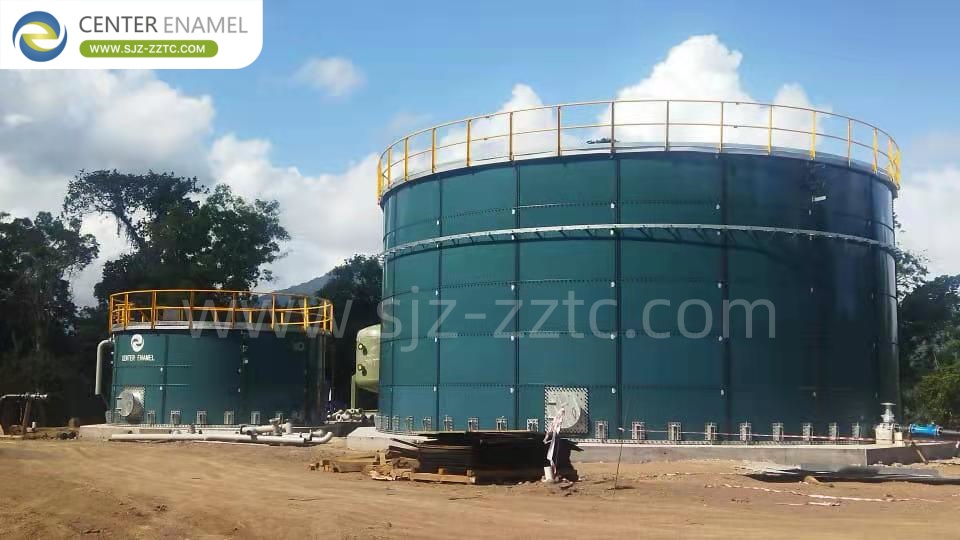
GFS Tanks (Glass-Fused-to-Steel Tanks) are core equipment supporting stable operation of Municipal Wastewater Treatment Project and Biogas Solutions, highly adaptable to Australia’s climate:
- Superior Corrosion Resistance: Enamel layer resists acid, alkali and salt, enduring corrosive wastewater and biogas, ensuring long service in humid, coastal environments.
- Excellent Airtightness: Special sealing structure prevents biogas leakage, ensuring safe storage and collection for energy recovery.
- Modular Bolted Design: Factory-prefabricated and assembled on site, enabling fast construction, no on-site welding and reduced risks.
- Long Service Life: Service life exceeds 30 years; smooth surface resists scaling and adhesion, lowering maintenance cost.
- Flexible Expansion: Can expand with wastewater volume and biogas demand, supporting long-term project development.
- Wide Compatibility: Suitable for digestion, storage, mixing, A2O unit equalization and other sections, matching all major treatment processes.
Why Choose Center Enamel as EPC Contractor for Municipal Wastewater Treatment Project
As a trusted global EPC provider for water environment and waste-to-energy, Center Enamel offers full-chain services for Australia Municipal Wastewater Treatment Project with unique strengths:
- Strong R&D and Manufacturing: Over 200 enamel patents, strict quality control, complying with ISO, AWWA and other international standards.
- Full Turnkey EPC Services: Covering design, manufacturing, transportation, installation, commissioning, training and after-sales, delivering one-stop solutions.
- Customized Engineering: Tailor systems including A2O configuration and anaerobic digestion parameters based on wastewater characteristics, climate, site and scale to maximize treatment efficiency and biogas yield.
- Rich Overseas Experience: Deep understanding of Australian policies and construction environments, with proven project records for smooth delivery.
- High Efficiency and Cost-Effectiveness: High biogas recovery, low failure rate and operating cost, ensuring stable long-term returns.
- Comprehensive After-Sales Support: Global service network provides timely guidance, maintenance and upgrades for stable operation.
Center Enamel Professional Installation of GFS Tanks
Center Enamel has established a standardized installation system adapted to Australia’s conditions, ensuring quality and efficiency:
- Hydraulic Jacking Top-Down Installation: No high scaffolding, high safety, suitable for narrow urban, industrial and rural sites.
- Modular Bolted Assembly: Eliminates on-site welding, reduces quality risks from climate and human factors.
- Professional On-Site Team: Experienced engineers provide full guidance and training, ensuring construction efficiency.
- Strict Acceptance Testing: Comprehensive airtightness, pressure and corrosion resistance tests to meet plant standards.
Typical Successful Project Cases
Case 1: Saudi Arabia Municipal Wastewater Treatment Project
Tank Dimensions: φ24.06 × 4.85 m (H) — 5 Units
Total Volume: 11,020 m³
Completion Date: 2024
Case 2: Indonesia Municipal Firewater Project
Application: Firewater Storage
Project Location: Indonesia
Tank Dimensions: φ7.64 × 34.8 m (H) — 1 Unit
Total Tank Volume: 1,594 m³
Completion Date: 2018
Municipal Wastewater Treatment Project integrated with Biogas Solutions and mainstream A2O process is a strategic solution for Australia to address urban water pollution, optimize energy structure and build a circular economy. Center Enamel, as a professional EPC contractor, provides reliable, efficient and sustainable solutions through leading treatment processes, high-quality GFS Tanks and full-cycle engineering services. With rich experience, customized design and strong support, we help Australia improve water ecology, reduce carbon emissions and achieve long-term sustainable urban development.