
Professional EPC Contractor for Kitchen Waste: Advanced Biogas Technology and GFS Tanks
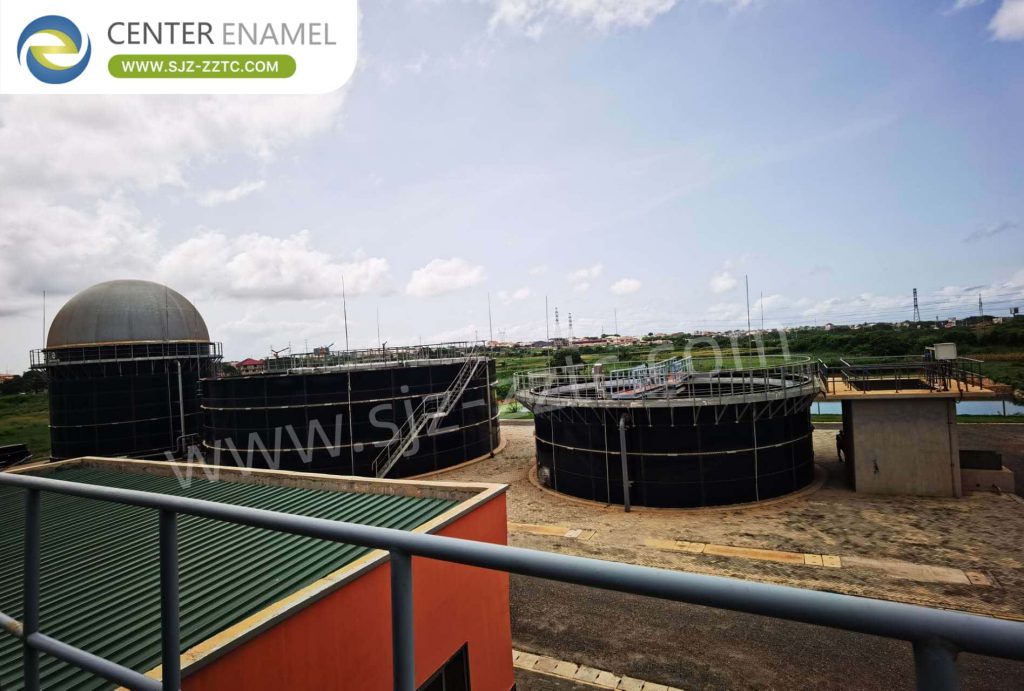
The Asia-Pacific region, particularly China, has become the world's largest industrial wastewater treatment market, with the operation and maintenance service segment's contribution continuing to rise, marking a shift from project construction to long-term operational management. The North American market focuses on upgrading existing facilities, while Europe emphasizes high-value-added resource recovery technologies.
Wastewater from the new energy industry chain (lithium batteries, photovoltaics, hydrogen) has become the most notable emerging growth area due to its complex composition and high treatment difficulty, generating significant demand for customized solutions. The maturity of third-party treatment models in industrial parks continues to improve, driving consolidation in the professional operation market. The Middle East has strong demand for advanced treatment and reuse of industrial wastewater due to water scarcity; manufacturing transfer in Southeast Asia drives local industrial wastewater treatment facility construction demand.
To navigate these evolving market trends, industries require a partner that bridges the gap between complex engineering and reliable execution. Acting as a professional EPC Contractor, we provide the oversight necessary to turn ambitious environmental goals into operational reality. By integrating state-of-the-art technology, we ensure every project meets the rigorous demands of modern industrial wastewater treatment.
CSTR Reaction Process
CSTR operates in continuous feed, continuous reaction, and intermittent/continuous sludge discharge mode, with a concise and coherent process flow. High-solids organic wastewater, after pretreatment to remove large-particle impurities, is fed at a constant rate into the sealed anaerobic reactor via feed pumps. Continuous mechanical stirring maintains uniform mixing throughout the reactor, creating a stable anaerobic environment. Within the reactor, acidogenic bacteria and methanogens decompose macromolecular organic matter in stages, first hydrolyzing and acidifying polysaccharides, proteins, and lipids into volatile fatty acids, then further degrading them into methane and carbon dioxide biogas. Throughout the reaction, no material stratification occurs, pollutants are continuously degraded, treated supernatant overflows from the upper portion of the reactor, aged sludge is periodically discharged from the bottom, and biogas is uniformly collected for resource utilization, maintaining stable sludge concentration and reaction equilibrium for consistent treatment performance.
While the CSTR process provides a robust reaction core, the efficiency of this system is heavily dependent on the specific characteristics of the influent waste. Understanding the complexities of your waste stream allows for precise process engineering and improved biogas yields. This analytical foundation is crucial for any successful project utilizing advanced Biogas Technology.
Key Water Quality Characteristics of Food Waste
Prominent "four highs"-high COD, high oil and grease, high salinity, high suspended solids-with extremely high pollution load and complex composition. COD typically 15,000-80,000 mg/L, with oil separation wastewater exceeding 100,000 mg/L. Animal/vegetable oil content is extremely high at 5,000-20,000 mg/L-oil easily adheres and accumulates on pipe and equipment walls, causing blockages and membrane fouling. High salinity with sodium chloride content of 5,000-15,000 mg/L from seasonings and salt residues. High suspended solids rich in food residue particles, bone fragments, and fibrous impurities. Rich in proteins and amino acids, readily decomposing, emitting odors, and breeding flies. pH is slightly acidic to neutral, BOD/COD approximately 0.4-0.5-good biodegradability but oils and salts pose microbial inhibition risks. Water quality varies with collection volume, season, and dietary habits-higher summer volumes with higher oil content.
Managing such challenging waste requires infrastructure that can withstand harsh chemical environments for decades. By utilizing high-durability GFS Tanks, we ensure that our reactors remain leak-proof and corrosion-resistant despite continuous exposure to aggressive pollutants. Structural integrity is the first step toward lasting operational success.
Indonesia Palm Oil Biogas Project
Specifically designed for high-concentration palm oil wastewater treatment with 3 GFS Tanks fermentation tanks, each 19.86 m diameter × 8.4 m height. Installation began November 2009 with only 7 construction personnel, completing all tank assembly in 40 days-highly efficient and time-saving. Tanks are fitted with dual-membrane gas storage covers for POME anaerobic digestion-degrading organics and recovering biogas energy while eliminating palm industry pollution. This is an early benchmark POME biogas treatment project in Southeast Asia.
Achieving successful benchmarks like these relies on a seamless production and delivery ecosystem. Our manufacturing base ensures that we maintain complete control over quality and logistics for every project we undertake globally. This integrated approach is what sets us apart as a leader in industrial environmental infrastructure.
Center Enamel's Smart Manufacturing Base Scale
Center Enamel's core intelligent manufacturing base is located in Hebei Province, China, covering a total area of over 150,000 m², with Phase I mature manufacturing facility and Phase II high-end environmental equipment industrial park-dual-base synergy ensures stable production capacity. The base includes dedicated R&D office buildings, proprietary material laboratories, and finished product testing centers, with full-process quality control systems meeting ISO, NSF, CE, and other international standards.
The facility operates to green manufacturing standards, certified as a Provincial Green Factory-balancing efficient production with energy conservation and emission reduction. The company has 6 marketing service centers across China, establishing a nationwide production-sales network ensuring stable global order delivery. The base is adjacent to expressway networks and major logistics hubs, with complete container shipping capabilities-supporting simultaneous large-scale tank projects globally. The base employs over 500 staff, with multiple parallel automated production lines-facility scale and production capacity firmly placing it among the global top tier of GFS Tanks equipment manufacturers.
Comprehensive project delivery is not just about equipment; it is about providing a full-chain solution that minimizes client risk. By managing everything from initial design to final post-construction support, we simplify the path to project commissioning. This commitment to efficiency is at the heart of our mission as a trusted EPC Contractor.
Full-Industry-Chain Integrated Delivery Capability
Center Enamel is the only company globally integrating proprietary enamel frit R&D, self-manufactured tanks, and EPC general contracting-full-process self-control from solution design, equipment production, cross-border logistics, overseas construction, to post-construction O&M-significantly reducing client coordination and time costs.
To ensure optimal biogas recovery and environmental odor control, final system components must meet the same high engineering standards as the tanks themselves. A secure sealing solution is essential for capturing every bit of energy while maintaining facility safety. Our membrane technology completes the anaerobic environment, providing the final layer of reliable performance.
Single and Double Membrane Roof Cover Solution
Single and Double Membrane Roofs are proprietary airtight tank cover systems for anaerobic digestion and biogas storage projects, specifically developed for biogas collection and odor containment, representing a benchmark lightweight sealing solution for fermentation tanks. The single-layer membrane roof features a simple structure with economical cost, meeting basic biogas containment needs. The double-layer membrane roof consists of inner and outer corrosion-resistant membrane materials, with pressurized air in the interlayer forming rigid support, providing outstanding thermal insulation that reduces biogas condensate formation inside the tank, with enhanced wind and snow load resistance suitable for high-altitude and windy outdoor sites. The membrane material is specialized aging-resistant and biogas-slurry-corrosion-resistant PVDF membrane, which will not leak or degrade from long-term contact with biogas or hydrogen sulfide. The flexible structure accommodates tank settlement and slight deformation without cracking or gas leakage.
The lightweight design eliminates heavy steel support trusses, significantly reducing the load on the tank and foundation, saving construction costs. The roof integrates biogas outlets, safety pressure relief valves, and access channels, fully enabling closed gas collection for anaerobic fermentation tanks, recovering biogas for power generation and heating while blocking odor diffusion to meet environmental odor control requirements. It is widely used in large-scale livestock biogas projects, municipal sludge anaerobic digestion, and food waste fermentation projects, compatible with large-volume glass-fused-to-steel anaerobic tanks, with fast construction and simple maintenance requiring only periodic membrane seal integrity checks, offering significant overall engineering advantages.
FAQs
1.How does Center Enamel function as a comprehensive EPC Contractor?
We offer a full-industry-chain service, integrating R&D, manufacturing, design, and turnkey construction. As your EPC Contractor, we manage every stage from initial site assessment to final O&M, significantly reducing your project coordination efforts and ensuring seamless delivery of high-quality environmental solutions.
2.What advantages does your Biogas Technology offer?
Our Biogas Technology is based on high-efficiency CSTR processes, engineered to handle high-solids, high-oil organic waste. Combined with our corrosion-resistant GFS Tanks, we provide a stable, scalable anaerobic environment that maximizes biogas yield, minimizes operational costs, and ensures long-term continuous energy production for diverse industrial applications.
3.Why are GFS Tanks ideal for high-corrosion environments?
Our GFS Tanks feature proprietary double-sided enamel coating technology, providing superior resistance to acid, alkali, and high-salinity wastewater. They are mass-produced in our automated facility to guarantee uniform quality and modular assembly, offering a service life exceeding 30 years with minimal maintenance compared to traditional concrete alternatives.