
Professional EPC Contractor for Textile Wastewater Treatment with Premium GFS Tanks
The global regulatory landscape for industrial wastewater is undergoing a paradigm shift, moving decisively from simple compliance discharge towards mandatory resource recovery and the ambitious goal of zero liquid discharge. This transformation is driven by escalating environmental awareness, water scarcity in key regions, and the circular economy principles that demand every drop of water and every ounce of organic matter be treated as a valuable resource. For industries with complex and highly polluting effluents, such as textile manufacturing, navigating this new reality requires not just advanced technology but a comprehensive, integrated approach to project delivery.
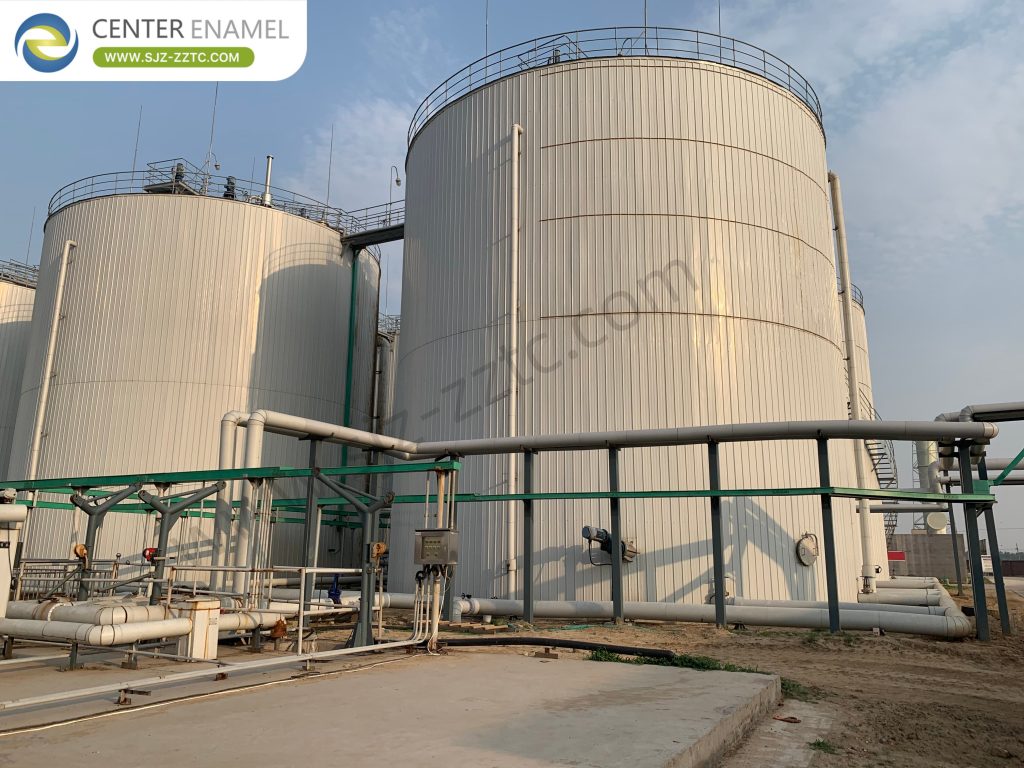
This is where the role of a professional EPC Contractor becomes indispensable. By taking full responsibility for engineering, procurement, and construction, a seasoned EPC Contractor ensures that Textile Wastewater Treatment facilities are designed and built to meet the most stringent international standards. Central to these high-performance systems are robust GFS Tanks, which provide the durable, corrosion-resistant, and gas-tight containment essential for processes like anaerobic digestion, which is often the cornerstone of treating high-strength textile effluents. This article explores the global policy drivers, technological solutions, and practical implementations that define modern industrial wastewater management, highlighting the critical role of expert contracting and premium storage infrastructure.
Global Policy Framework for Industrial Wastewater Treatment
Understanding the regulatory environment is the first step in designing a compliant and future-proof treatment strategy. Global industrial wastewater treatment policies are escalating from "compliance discharge" to mandatory "resource recovery" and "zero liquid discharge." The EU, through its Circular Economy Action Plan, requires member states to increase industrial wastewater reuse rates and extends carbon footprint accounting to the full life cycle of wastewater treatment. China continuously updates and tightens industrial water pollutant discharge standards, with increasingly stringent limits on total nitrogen, total phosphorus, and characteristic pollutants for industries such as chemicals, pharmaceuticals, and printing and dyeing.
Some water-scarce regions and highly polluting industries are mandated to adopt zero or near-zero liquid discharge technologies. Germany has established a differentiated pretreatment technical standard system by industry, requiring industrial wastewater to meet specific quality requirements before discharge into municipal wastewater treatment plants, implementing strict source control. Navigating this complex and evolving policy landscape is a core competency of a leading EPC Contractor, ensuring that Textile Wastewater Treatment projects not only meet current regulations but are also adaptable to future tightening.
GFS Tanks Adaptable to Extreme Climates
The physical environment where treatment plants are located presents unique challenges that demand robust and adaptable infrastructure. GFS Tanks can undergo customized wind and seismic design based on project site climate and geological conditions, with environmental adaptability far superior to concrete tanks. Concrete tanks are cast-in-place monolithic structures, with seismic and wind resistance entirely dependent on on-site construction quality. In remote areas, typhoon-prone zones, and earthquake belts, construction quality is difficult to control. Under strong earthquakes or typhoons, concrete tanks are prone to cracking and base settlement damage, with subsequent reinforcement costs equivalent to rebuilding.
GFS Tanks undergo collection of local seismic intensity, maximum wind pressure, and foundation bearing capacity data before construction, with customized thickened steel panels, stiffening ribs, and anchored base components-all factory-prefabricated to standardized specifications. The bolted panel structure has excellent stress distribution capability, making it less prone to overall fracture under seismic and typhoon impacts, and minor foundation settlement will not cause through-cracking. Structural parameters can be flexibly adjusted for mountainous, coastal typhoon-zone, and high-seismic-zone projects, providing long-term protection against extreme natural climate damage. For any Industrial Wastewater Treatment project, especially those executed by a professional EPC Contractor in challenging environments, this adaptability ensures operational continuity and asset protection over decades of service.
UASB Reaction Process for Textile Wastewater Treatment
With the infrastructure secured, the core biological process dictates the system's efficiency and energy recovery potential. After pretreatment through screens and equalization tanks to remove impurities and balance water quality and flow, wastewater is uniformly fed into the reactor through the bottom distribution system. The wastewater rises at a constant rate through the high-concentration granular sludge bed at the bottom, where anaerobic microorganisms rapidly degrade most organic matter, converting it into biogas, clean water, and a small amount of sludge. Gentle hydraulic mixing maintains sludge suspension, expanding microbial contact area.
Remaining pollutants continue to degrade in the mid-section suspended sludge layer, with the mixed liquor finally entering the top three-phase separator for gas, solid, and liquid separation. Biogas is collected upward for utilization, sludge settles back to the reaction zone, treated effluent overflows from the top, and aged sludge is periodically discharged-fully automated continuous operation. When an EPC Contractor integrates UASB reactors constructed from high-quality GFS Tanks into a Textile Wastewater Treatment system, the result is a powerful, energy-positive solution that maximizes biogas yield while minimizing operational complexity and footprint, effectively turning a pollution challenge into a renewable energy source.
Key Water Quality Characteristics of Textile Wastewater
A deep understanding of the specific effluent characteristics is crucial for designing an effective treatment train. The key water quality characteristics of textile wastewater include high color, high alkalinity, high COD, high suspended solids, and large water quality fluctuations-making it the most prominent color pollution category in industrial wastewater. COD typically ranges from 1,000-10,000 mg/L, with desizing and scouring wastewater exceeding 10,000 mg/L. Extremely high color-dyeing wastewater color can reach hundreds to thousands of dilution multiples, containing various dyes (reactive, disperse, acid) with deep, difficult-to-decolorize colors.
High pH-mercerizing and scouring wastewater pH can exceed 12 (strongly alkaline). High temperature-dyeing process discharge can reach 50-70°C. BOD/COD approximately 0.25-0.4-moderate to poor biodegradability, with dyes and sizing agents being recalcitrant organics. Contains surfactants, sizing agents (PVA, starch), fiber impurities, dye auxiliaries, and inorganic salts (sodium sulfate, sodium chloride). Water quality varies dramatically with dye type and process changes-distinct intermittent discharge characteristics. Effective Textile Wastewater Treatment requires robust anaerobic pretreatment, often using UASB reactors, to reduce organic loads before downstream polishing. As a specialized EPC Contractor, we design systems that handle these fluctuations while recovering biogas, turning a complex pollution problem into an energy opportunity.
Over a Decade of Global Installation Experience
The theoretical knowledge and engineering expertise of an EPC Contractor are validated through practical, on-the-ground experience across diverse conditions. Center Enamel possesses unmatched global practical experience among domestic peers-over a decade covering multiple regions and all industry sectors. In 2009, the company completed the first overseas GFS Tank installation-sending a team to Niger, Africa for drinking water storage tank installation. In 2015, it broke industry ground with China's first GFS Tank export and installation to the US-passing strict US acceptance standards.
All installed projects have operated stably for many years, covering livestock biogas, POME, municipal wastewater, and drinking water storage applications. Construction has covered Southeast Asia, Africa, the Americas, and other regions-accumulating specialized solutions for complex sites including mountainous terrain, coastal salt spray, tropical high temperatures, and high-standard European and American facility conditions-maturely addressing global special construction requirements. This extensive track record makes the company a trusted EPC Contractor for challenging Textile Wastewater Treatment and other industrial projects worldwide.
Full-Industry-Chain Integrated Delivery Capability
Seamless project execution requires control over every link in the value chain. Center Enamel is the only company globally integrating proprietary enamel frit R&D, self-manufactured tanks, and EPC general contracting-full-process self-control from solution design, equipment production, cross-border logistics, overseas construction, to post-construction O&M-significantly reducing client coordination and time costs. This integrated capability is the hallmark of a top-tier EPC Contractor, ensuring that every aspect of a Textile Wastewater Treatment project, from initial concept to long-term operation, is managed with precision and accountability.
Aluminum Geodesic Dome Roof for Tank Systems
Beyond the primary tank structure, advanced roofing solutions play a vital role in overall system integrity, gas collection, and odor control. The Aluminum Geodesic Dome Roof independently developed by Center Enamel is manufactured using high-strength aluminum alloy plates through integral stamping. It features a triangular grid spherical self-supporting structure, enabling large-span full coverage without internal support columns. Made of aluminum alloy, the roof offers excellent weather resistance and corrosion resistance, capable of long-term protection against acid rain, salt spray, and UV radiation, suitable for various extreme outdoor climate conditions.
The structural design complies with international AWWA D108 standards, with aluminum plate thickness, rib cross-sections, and joint connections all verified by finite element stress analysis, ensuring wind and snow load resistance that meets building code requirements across different global regions. The weight of the Aluminum Geodesic Dome Roof is only one-third to one-half of a steel roof with the same span, significantly reducing the load on the tank top and allowing direct installation without tank wall reinforcement. The roof provides superior overall sealing performance, with double sealing between panels using specialized sealant strips and mechanical interlocking, enabling both airtight gas storage and enclosed odor control, suitable for biogas collection and storage, wastewater tank odor control, and drinking water contamination prevention. The support-column-free design does not interfere with the installation and operation of internal equipment such as mixers and water distributors. The aluminum material does not support microbial growth, requiring no anti-corrosion maintenance over long-term use, resulting in low total life-cycle costs. This roofing solution is an ideal complement to GFS Tanks in Textile Wastewater Treatment plants, particularly for anaerobic reactors where biogas capture and odor containment are critical.
Frequently Asked Questions
Q: What are the advantages of hiring a professional EPC Contractor for industrial wastewater projects?
A: A professional EPC Contractor provides single-source responsibility, streamlining communication and reducing project risks. They manage the entire project lifecycle-from design and procurement to construction and commissioning-ensuring seamless integration of all components like GFS Tanks and biological systems. This approach minimizes delays, controls costs, and guarantees that the final facility meets all performance and regulatory requirements for effective Textile Wastewater Treatment.
Q: Why are GFS Tanks particularly suitable for textile wastewater treatment applications?
A: GFS Tanks offer exceptional corrosion resistance to the high alkalinity, high salinity, and complex chemical cocktails found in textile effluents. Their glass-fused-to-steel coating provides a durable, impermeable barrier that prevents chemical attack and ensures a long service life. Their modular design allows for rapid installation and future expansion, making them a cost-effective and reliable choice for anaerobic reactors and other critical tanks in a Textile Wastewater Treatment plant.
Q: What role does the Aluminum Geodesic Dome Roof play in a wastewater treatment system?
A: The Aluminum Geodesic Dome Roof provides a lightweight, corrosion-resistant, and self-supporting cover for tanks. Its primary functions include capturing biogas for energy recovery, containing and controlling unpleasant odors, and preventing rainwater and debris from entering the tank. Its maintenance-free aluminum construction ensures long-term durability, making it an ideal complement to GFS Tanks in modern Textile Wastewater Treatment facilities managed by leading EPC Contractors.