
Professional Papermaking Wastewater Treatment Project EPC Contractor for India
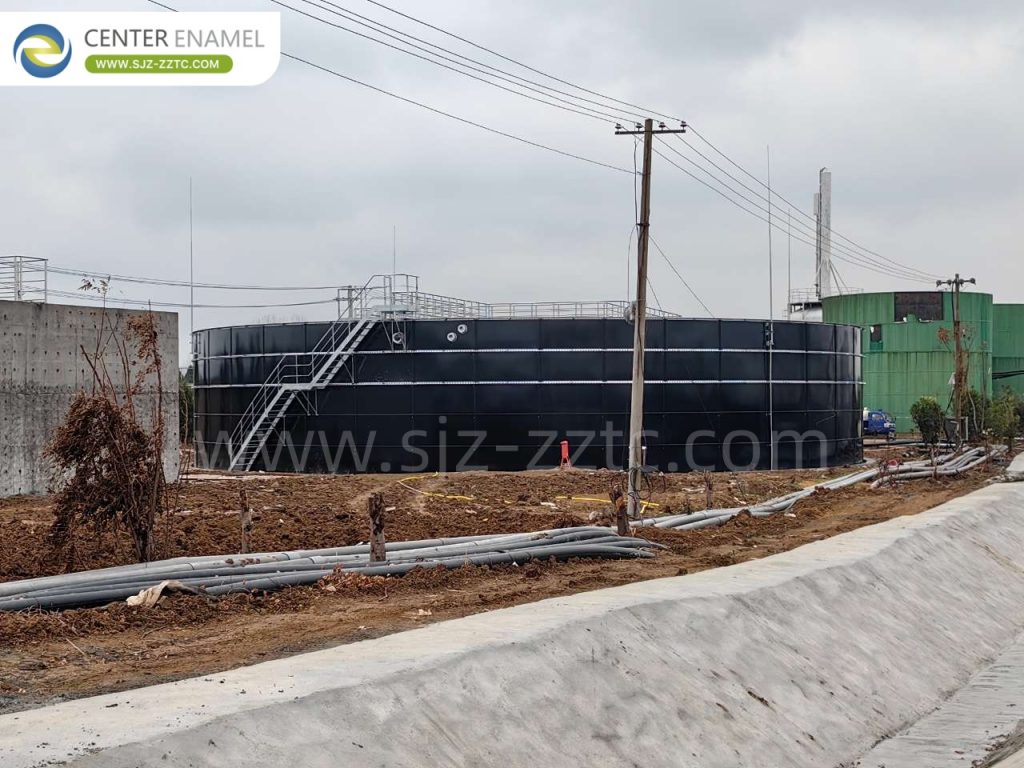
India’s pulp and papermaking industry is among the fastest-growing manufacturing sectors in South Asia, driven by rising population, increasing literacy, booming e-commerce, and strong demand for packaging paper, printing paper, tissue paper, and specialty paper products. The industry currently has more than 600 mills, with a large share relying on agro-residues and recycled fibers, contributing significantly to industrial employment and economic output. With a compound annual growth rate of around 6.3% in recent years, India is becoming a key paper production hub in the region. Major production regions span across multiple states, supporting both large-scale integrated plants and numerous small and medium-sized mills.
However, rapid industrial expansion has brought severe wastewater management challenges. Papermaking is extremely water-intensive in India, with water consumption per ton of paper far exceeding global best practices, resulting in massive high-concentration organic wastewater discharge. Papermaking wastewater features ultra-high COD, heavy color, high suspended fibers, wide pH fluctuations, and residual chemical additives, which severely threaten rivers, groundwater, and agricultural water sources if improperly treated.
Meanwhile, India’s environmental regulations are becoming increasingly stringent, imposing strict limits on BOD, COD, TSS, and color for effluent discharge. In addition, factors such as tropical climate, high humidity, and varying site conditions further raise requirements for treatment stability, corrosion resistance, and operational reliability. Therefore, a standardized, efficient, and reliable Papermaking Wastewater Treatment Project has become essential for Indian paper mills to ensure compliance, reduce operational risks, and achieve sustainable production.
As a leading global Papermaking Wastewater Treatment Project EPC Contractor, Center Enamel delivers customized solutions integrating advanced Anaerobic Technologies and the mature UASB Process, supporting India’s papermaking industry in efficient wastewater treatment and energy recycling.
How Papermaking Wastewater Is Generated
Papermaking wastewater is mainly generated in three key production processes, with complex composition and high treatment difficulty:
Pulping and Bleaching Wastewater: Including cooking black liquor, washing wastewater, screening wastewater, and bleaching effluent. It contains large amounts of lignin, cellulose, alkaline residues, and chemical additives, with extremely high COD, deep color, and strong corrosiveness, representing the most polluting stream.
Papermaking Process White Water: Generated during sheet forming, pressing, and drying, rich in fine fibers, fillers, and sizing agents. Although organic concentration is relatively low, suspended solids are extremely high, and direct discharge causes fiber loss and eutrophication risks.
Waste Paper Recycling Wastewater: Produced in waste paper pulping, deinking, and cleaning, containing ink particles, adhesives, microfibers, and chemical residues. It has poor biodegradability and may inhibit microbial activity in conventional treatment systems.
These characteristics require robust, corrosion-resistant, and high-load wastewater treatment systems, which align perfectly with the technical advantages of Center Enamel.
Advanced Anaerobic Technologies and Core UASB Process
For high-concentration organic papermaking wastewater, anaerobic biological treatment is the core technology for efficient COD removal and biogas recovery. Center Enamel integrates a full set of Anaerobic Technologies and prioritizes the mature UASB Process to adapt to India’s papermaking wastewater characteristics:
1. UASB Process (Upflow Anaerobic Sludge Blanket)
As the core technology in our solutions, the UASB Process is globally proven and widely applied in papermaking wastewater treatment. Wastewater flows upward from the bottom through a dense blanket of granular anaerobic sludge, where organic pollutants are fully degraded. A three-phase separator at the top efficiently separates biogas, treated water, and sludge, ensuring high treatment efficiency and stable sludge retention.
The UASB Process offers high organic loading rate, low energy consumption, low sludge production, and stable biogas recovery, making it highly suitable for medium-to-large scale papermaking wastewater projects in India. It shows strong resistance to shock loading and adapts well to fluctuating water quality in paper mills.
2. IC Reactor (Internal Circulation)
A high-rate anaerobic technology ideal for large-scale mills. Biogas-driven internal circulation enhances mass transfer, with loading rates 3–5 times higher than conventional reactors, saving space and improving efficiency.
3. CSTR Reactor (Completely Stirred Tank Reactor)
Equipped with high-torque mechanical stirring to prevent sedimentation and crusting, suitable for high-fiber and high-solid wastewater streams, ensuring stable operation and consistent biogas production.
4. USR Reactor (Upflow Solid Reactor)
Designed for high-solid wastewater without complex separators or stirring devices, featuring simple operation, low investment, and strong adaptability for small and medium-sized mills.
Center Enamel conducts professional water quality testing and process simulation for each Indian Papermaking Wastewater Treatment Project, selecting the optimal anaerobic combination with the UASB Process as the core to ensure stable operation and maximum biogas recovery.
Core Advantages of Center Enamel as EPC Contractor
As a professional Papermaking Wastewater Treatment Project EPC Contractor, Center Enamel provides full-cycle, high-reliability services tailored to the Indian market:
Strong R&D and Proprietary Technology: With over 200 patented enamel formulas and in-house enamel frit production, our coatings deliver superior chemical resistance ideal for corrosive papermaking wastewater.
Asia’s Largest GFS Tank Manufacturing Base: Modular, standardized production ensures stable quality and on-time delivery even for remote sites in India.
Strict International Standard Certification: Products comply with ISO 28765, AWWA D103-09, OSHA, and NSF/ANSI 61. Each plate passes a 1500V high-voltage spark test to ensure zero coating defects.
Excellent Adaptability to India’s Environment: Designs optimized for high temperature, high humidity, coastal salt spray, and remote site conditions ensure long-term stable operation.
Full-Cycle Turnkey EPC Service: One-stop solution covering process design, manufacturing, transportation, installation, commissioning, and after-sales support, maximizing customer ROI.
Advanced Installation TechnologyHydraulic jacking system enables top-down installation without heavy cranes; all-bolted assembly eliminates on-site welding risks in humid conditions.
Key Equipment: GFS Tank Supporting Stable Operation
GFS Tank (Glass-Fused-to-Steel Tank) serves as the core equipment for anaerobic reactors, equalization tanks, and effluent storage tanks:
Extreme Corrosion Resistance: Fused above 820°C, forming a molecular bond resistant to pH 1–14, enduring acidic, alkaline, and chemically aggressive papermaking wastewater.
Structural & Weather Stability: Flexible bolted joints provide superior seismic performance; resistant to strong UV, high humidity, and coastal salt spray, with service life over 30 years.
Fast Installation: Factory-prefabricated plates are bolted on site, shortening construction period significantly compared with concrete tanks.
Efficient Installation Process for Center Enamel
Factory Prefabrication: All components precision-manufactured and tested in-house.
Modular Transportation: Compact parts suitable for land and sea transport across India’s terrain.
Hydraulic Jacking Installation: Safe construction without large cranes or high-altitude scaffolding.
Bolted Assembly: Fast, stable, and minimally affected by climate.
Quick Commissioning: No long curing period, enabling early operation and return on investment.
Successful Project Cases for Center Enamel
Case1: Yunnan Papermaking Wastewater Treatment Project
Tank Dimensions: φ9.94 × 18 m (H) — 1 Unit
Total Tank Volume: 1,396 m³ — 1 Unit
Completion Date: 2024
Operational Status: Construction Completed and Fully Operational
Case2: Jiangxi Papermaking Wastewater Treatment Project
Application Field: Papermaking Wastewater
Project Location: Jiangxi
Tank Dimensions: φ15.29 × 28.2 m (H) — 2 Units
Total Tank Volume: 10,350 m³
Completion Date: 2023
Operational Status: Construction Completed; Now Operational
India’s rapidly growing papermaking industry faces strict environmental regulations and complex wastewater treatment challenges, making professional Papermaking Wastewater Treatment Project critical for sustainable development. As a trusted Papermaking Wastewater Treatment Project EPC Contractor, Center Enamel integrates advanced Anaerobic Technologies and the proven UASB Process, supported by durable GFS Tank equipment.
We help Indian paper mills achieve stable compliance discharge, biogas energy recycling, and cost reduction, becoming a long-term partner for the green and low-carbon development of India’s papermaking industry.