
Professional Wastewater Treatment Solutions and EPC Contractor Services by Center Enamel
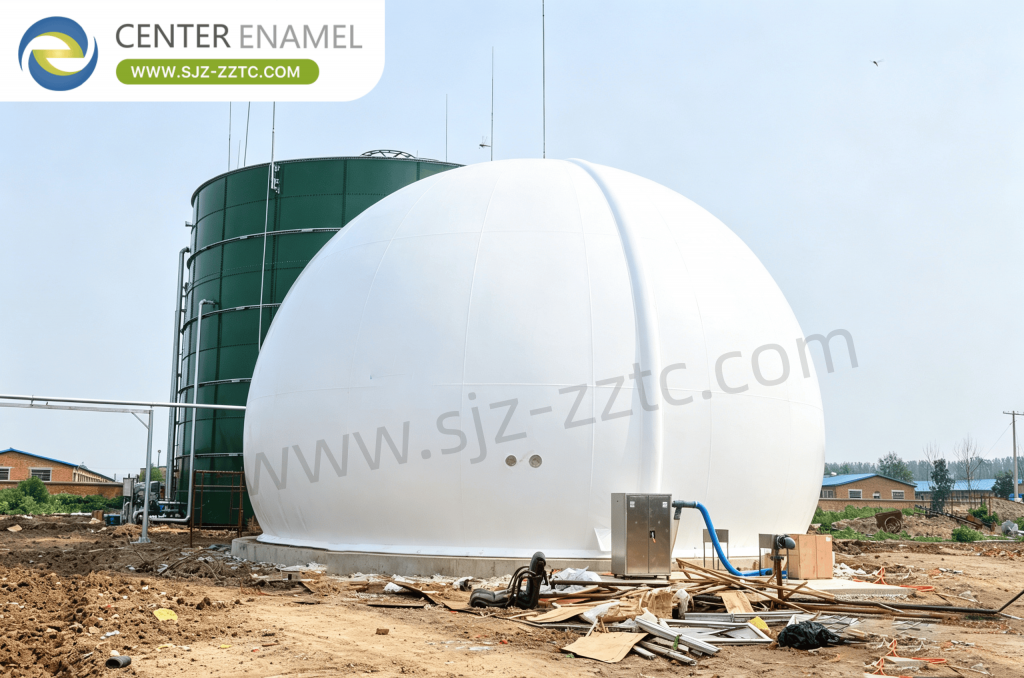
The competitive landscape shows divergence, with leading companies building integrated service capabilities through technical integration and capital operations, and industry concentration gradually increasing. Chinese companies continue to consolidate their advantages in mid-tier equipment exports. International giants target high-end customers and complex industrial wastewater markets, while local players occupy the mid-to-low-end and industrial park centralized treatment markets with service responsiveness and cost advantages. In the anaerobic process segment, UASB, EGSB, and IC anaerobic reactors, with advantages of high loading rates, small footprints, and stable operation, are widely used in high-concentration organic wastewater pretreatment in food processing, pharmaceutical fermentation, alcohol brewing, chemical, and other industries. These reactors use steel tank shells, and their corrosion resistance and gas-tightness directly determine long-term operational stability. The application value of glass-fused-to-steel tanks in such scenarios is increasingly prominent.
As global industrial needs become more specialized, the demand for comprehensive system integration is rising. Modern facilities require more than just individual components; they need fully realized project life-cycles. This evolution pushes the market toward providers that can handle both the technical design and the complex execution of industrial environmental projects.
Performance Benefits of the CSTR Reactor
Excellent adaptability, with outstanding treatment results for high-solids, high-viscosity, high-suspended-solids organic wastewater, thoroughly solving the shortcomings of traditional anaerobic processes such as stratification, crusting, and low sludge utilization. The full-mix agitation mode ensures thorough contact between microorganisms and pollutants, with homogeneous and stable reaction conditions and excellent resistance to water quality and hydraulic shock loads-stable compliance even with significant influent fluctuations. The simple process structure, without complex media or three-phase separators, results in low equipment cost, short construction period, and low maintenance difficulty, with no need for frequent cleaning of clogged components and low O&M costs. The process simultaneously achieves wastewater treatment and biogas energy recovery. Sludge acclimation is fast, quickly adapting to various specialty organic wastewaters, with high process error tolerance and strong universal applicability.
The effectiveness of these reactors is best demonstrated when they are integrated into a larger, well-managed environmental framework. Understanding the specific pollutant profile of a facility is a prerequisite for selecting the right process equipment. By addressing the fundamental toxicity of organic waste, we can ensure that every treatment system remains both compliant and sustainable.
Environmental Toxicity and Pollution Characteristics
Pollutants are primarily natural organics with no synthetic toxic chemicals-low acute chemical toxicity, but biological pollution and eutrophication risks are significant. High-concentration oil discharged to natural waters forms a surface film blocking oxygen exchange, causing aquatic organism suffocation; oil adheres to gills and body surfaces, directly harming fish. High salinity causes osmotic imbalance in freshwater organisms, inhibiting growth and reproduction. High-concentration organics decompose consuming dissolved oxygen, causing oxygen depletion and black-odor conditions. Food waste decomposition breeds pathogens, flies, and parasite eggs-posing public health risks. Long-term discharge causes oil scaling and pipe blockages, corrosion of sewer systems. Digestate with high nitrogen/phosphorus causes rapid eutrophication and algal blooms. Overall pollution is primarily organic pollution and ecological damage, with no heavy metal or persistent organic accumulation risks-environmental recovery periods are relatively short.
These toxic risks underline the necessity of proven, large-scale implementation to mitigate environmental damage. Successful projects act as templates for future industrial developments, validating the chosen engineering path. With a reliable partner, these challenges become manageable milestones within a successful project delivery.
Indonesia Palm Oil Biogas Project
Specifically designed for high-concentration palm oil wastewater treatment with 3 GFS fermentation tanks, each 19.86 m diameter × 8.4 m height. Installation began November 2009 with only 7 construction personnel, completing all tank assembly in 40 days-highly efficient and time-saving. Tanks are fitted with dual-membrane gas storage covers for POME anaerobic digestion-degrading organics and recovering biogas energy while eliminating palm industry pollution. This is an early benchmark POME biogas treatment project in Southeast Asia.
To replicate such success consistently, companies must adhere to rigid quality standards throughout the build process. Standardized quality control is not just about the final output, but about ensuring every component functions reliably from the start. A structured oversight approach is the hallmark of a trusted professional in this sector.
Standardized Installation and Quality Control
Demonstrating high-standard installation quality through long-term stable global project performance, Center Enamel has established full-chain quality control standards across four dimensions: factory protection, on-site assembly construction, completion inspection, and long-term warranty-ensuring quality control for every GFS tank.
At the factory stage, all enameled panels, seals, and structural components receive rust-proof and moisture-proof independent packaging with dedicated protective supports-preventing damage during sea and land transport and avoiding enamel coating damage. On-site construction strictly follows unified assembly process specifications-panel by panel tightening and leak testing in layers, with air-tightness and verticality testing after each tank section completion-dual-membrane covers and anaerobic piping undergo simultaneous pressure testing and acceptance.
Differentiated quality acceptance standards are customized for different regions: EU/US projects follow stringent CE/NSF inspection criteria; Southeast Asian hot humid regions receive enhanced corrosion protection and sealing acceptance; remote African sites have additional foundation settlement re-inspection procedures. Upon project completion, complete construction inspection reports, pressure test records, and anti-corrosion appearance acceptance documents are issued, with full photo/video archives retained. Over 10,000 tanks delivered globally have operated long-term without large-scale leakage or structural deformation-preventing future O&M issues at source.
Managing the human and technical resources required for these complex installations demands a specialized team with deep global experience. The ability to deploy experts who understand local site challenges is a vital capability for any large-scale project. This field-ready flexibility ensures that your environmental system is commissioned precisely and on time.
Global Installation and Construction Team
The installation team has practical experience from over 10,000 GFS tank projects globally, strictly following standardized construction procedures-full control over project mobilization, civil coordination, tank assembly, piping, and commissioning schedules and quality.
The team is proficient in complete standardized installation processes for GFS tanks, dual-membrane gas storage covers, USR/CSTR/IC anaerobic reactors, and biogas desulfurization/piping systems-adaptable to large-scale farms, industrial parks, remote mountainous sites, coastal high-corrosion sites, and other complex locations-strictly implementing unified global safety construction standards. For large overseas cross-border projects, the team can be deployed as complete units for on-site construction, technical training, and local worker practical instruction-full control over construction details, air-tightness testing, and corrosion protection-ensuring timely and stable commissioning of global environmental projects through standardized delivery capability.
While complex anaerobic processes require specialized sealing, some storage needs are more straightforward and require economical solutions. Choosing the right roof and tank configuration depends on the specific end-use of the water or waste being managed. By providing a versatile product range, providers can address both high-demand anaerobic needs and general-purpose water storage requirements.
Economical FRP Roof Cover Solutions
FRP Roof is a general-purpose economical roof for atmospheric pressure storage tanks without air-tightness requirements, suitable for drinking water storage, agricultural irrigation water, firewater reserve, and general production wastewater temporary storage. It is available in two styles: flat and dome, allowing flexible selection based on tank specifications and site aesthetic requirements. The roof is integrally molded from resin and fiberglass, lightweight, with natural water resistance and mild acid/alkali corrosion resistance. It will not rust or rot in long-term humid environments, eliminating the frequent anti-corrosion maintenance required for metal roofs. The dome style features excellent drainage performance due to its curved structure, resisting water accumulation, dust buildup, snow load, and strong winds. The flat style facilitates the installation of maintenance walkways, level gauges, and vents on top, making inspection and operation convenient.
The product is fully insulated with no risk of galvanic corrosion, will not contaminate drinking water quality, and meets environmental standards for domestic water storage. The modular design with low individual component weight allows for simple on-site hoisting and assembly, offering high construction efficiency and affordable procurement and installation costs. It is only suitable for atmospheric pressure water storage tanks without biogas collection or pressurization requirements, and is not recommended for anaerobic fermentation gas-producing conditions. It is widely used in rural agricultural water storage tanks, industrial park firewater tanks, waterworks buffer tanks, and small to medium-sized domestic wastewater temporary storage facilities, making it a cost-effective general-purpose roof choice for conventional water storage applications.
FAQs
1.What benefits does Center Enamel provide as an EPC Contractor?
Center Enamel offers an end-to-end service model, managing everything from initial solution design and equipment manufacturing to international logistics and on-site assembly. This integrated EPC approach reduces coordination efforts, lowers costs, and ensures high-standard quality control for complex global wastewater treatment projects.
2.Why is the CSTR Reactor considered superior for organic wastewater?
The CSTR Reactor uses full-mix agitation to ensure thorough contact between microorganisms and pollutants. It effectively treats high-solids and high-viscosity wastewater, preventing common anaerobic issues like crusting or sedimentation, while providing stable performance and high biogas energy recovery in diverse industrial applications.
3.How does Center Enamel guarantee quality for international projects?
We implement strict full-chain quality control standards, including factory-level protective packaging, standardized on-site assembly, and regional-specific inspection protocols. Our experienced global construction team, backed by over 10,000 successful projects, ensures every facility meets international safety and operational requirements for long-term reliability.