
Reliable Biogas Power Plant Engineering: Advanced GFS Tanks Solutions for Global Projects
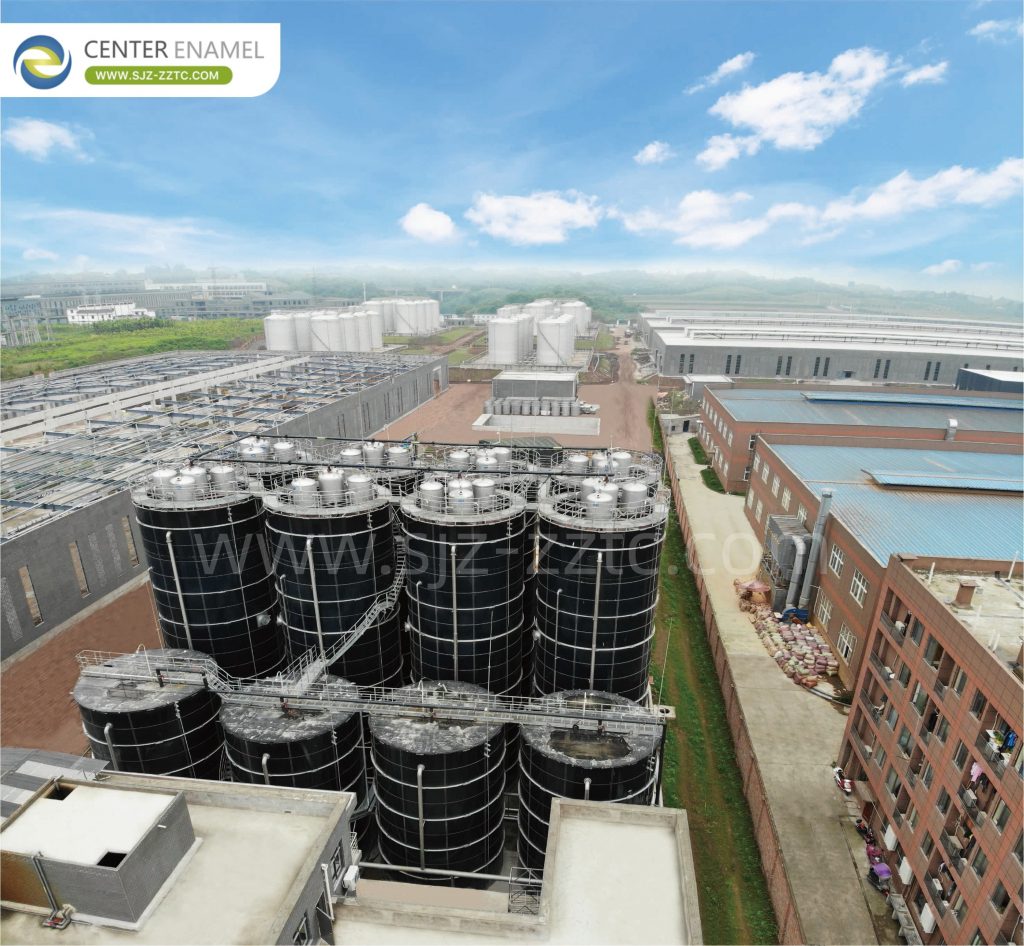
Global industrial wastewater treatment policies are escalating from "compliance discharge" to mandatory "resource recovery" and "zero liquid discharge." The EU, through its Circular Economy Action Plan, requires member states to increase industrial wastewater reuse rates and extends carbon footprint accounting to the full life cycle of wastewater treatment. China continuously updates and tightens industrial water pollutant discharge standards, with increasingly stringent limits on total nitrogen, total phosphorus, and characteristic pollutants for industries such as chemicals, pharmaceuticals, and printing and dyeing. Some water-scarce regions and highly polluting industries are mandated to adopt zero or near-zero liquid discharge technologies. Germany has established a differentiated pretreatment technical standard system by industry, requiring industrial wastewater to meet specific quality requirements before discharge into municipal wastewater treatment plants, implementing strict source control.
As regulatory standards tighten globally, the necessity for robust, high-performance infrastructure has become the primary driver for modern industrial design. To ensure compliance and maximize efficiency, facility owners are increasingly seeking reliable technology that stands the test of time. A well-engineered foundation is essential for meeting these evolving international environmental benchmarks.
Full-Process Factory Standardized for GFS Tanks
GFS tanks are fully factory-prefabricated to standardized specifications, with finished product quality stability far exceeding cast-in-place concrete tanks. All concrete tank processes are completed in the open air, with rebar tying, concrete pouring, and curing heavily influenced by worker skill, temperature, and rainfall. Wall thickness, density, and strength vary significantly between batches, with hidden defects like honeycombing, voids, and insufficient wall thickness common-quality cannot be uniformly controlled. Center Enamel's GFS Tanks steel panels, seals, and reinforcement components are all mass-produced in automated factories. Steel stamping, high-temperature enameling, and dimensional cutting are all controlled by CNC equipment, with each panel's parameters and enamel thickness strictly following unified national standards. All components are uniformly packaged and transported to site, with assembly strictly following standardized construction drawings. Full-process quality inspection from raw materials to finished components ensures highly consistent product performance parameters, completely eliminating the uncontrollable quality risks of on-site concrete construction, with every tank delivering stable, consistent performance.
With high-quality storage infrastructure securely in place, the focus naturally shifts to the core reaction process that powers the energy recovery system. Efficient biological processing is the heart of any successful facility, enabling the transformation of waste into valuable renewable energy. This operational excellence is the key to creating a truly sustainable industrial ecosystem.
CSTR Process Definition
CSTR, or Continuously Stirred Tank Reactor, is a suspended-growth continuous-flow anaerobic digestion process suitable for high-solids, high-concentration organic pollutant treatment, and is the most widely used classic anaerobic treatment technology. The process relies on a mechanical stirring system to solve the technical challenges of material stratification, sludge sedimentation, and surface crusting in traditional anaerobic reactors, achieving homogeneous mixing of wastewater, anaerobic sludge, functional microorganisms, and organic substrates throughout the reactor, ensuring full contact between microorganisms and pollutants. Unlike attached-growth anaerobic processes, CSTR requires no media carriers, relying on suspended sludge bacterial communities for degradation reactions. It withstands high-suspended-solids and high-viscosity wastewater shocks, making it the mainstream process for food waste, livestock manure, and municipal sludge anaerobic digestion. The process architecture is simple, operation logic straightforward, and it is adaptable to various high-pollution organic solid-liquid mixed systems.
By integrating optimized CSTR technology into a professional Biogas Power Plant layout, developers can achieve superior energy output while managing complex waste streams. To ensure this performance, we must carefully analyze the origins and characteristics of the input waste to tailor the system for maximum yield. Understanding the waste composition allows for precise engineering that guarantees long-term operational success.
Wastewater Sources of Food Waste
Food waste wastewater originates from the resource recovery process of kitchen waste from catering services, canteens, and food processing/distribution-a typical high-concentration organic wastewater in urban solid waste resource recovery. Major sources include food waste pretreatment sorting wastewater, oil separation wastewater, anaerobic digestion digestate, and equipment wash water. Food waste consists primarily of food residues, rich in animal/vegetable oils, starches, proteins, cellulose, salts, and seasoning residues. After pretreatment crushing and sorting, organics are solubilized forming high-concentration wastewater. Large and medium-sized cities' centralized food waste treatment facilities handle hundreds of tons daily with large continuous wastewater production; smaller facilities produce less volume but with higher concentrations-oil and salt accumulation issues are prominent.
Delivering this level of technical sophistication requires a team capable of executing complex installations under diverse global conditions. Our standardized construction approach bridges the gap between design and reality, ensuring that every facility meets the highest international standards. Reliability starts with the hands that build the project.
Center Enamel Professional Construction Team Manpower Reserve
Center Enamel has established its own domestic and international certified construction teams, with regular practical training on GFS Tanks installation and overseas construction standards for various countries. Domestically, regional construction teams cover multiple zones, capable of simultaneously deploying multiple teams for large tank farm projects. Internationally, cross-border professional installation teams are equipped to various country construction standards-sufficient manpower reserves ensure uninterrupted construction delivery for remote African sites, high-standard European/American facilities, and other projects.
Advanced material science further ensures that the infrastructure remains resilient against the corrosive nature of anaerobic digestion environments. By investing in innovative, long-lasting coatings, we protect the structural integrity of the plant for decades. These advancements are what allow modern projects to achieve both longevity and peak environmental performance.
Center Enamel Innovative Material Technology
Center Enamel has independently developed over 200 anti-corrosion enamel formulations, with proprietary double-sided double-layer enameling technology-GFS Tanks anti-corrosion service life exceeds 30 years-far surpassing concrete and ordinary equipment-suitable for global high-corrosion wastewater and biogas fermentation conditions.
Finally, ensuring complete system air-tightness is paramount for gas recovery and odor control, especially in sensitive project environments. Specialized roof solutions are designed to integrate seamlessly with the tanks, completing the secure anaerobic environment necessary for energy production. This total enclosure is the final step in high-efficiency biogas management.
Glass-Fused-to-Steel Roof Cover Solution
Glass-Fused-to-Steel Roof is a specialized tank cover solution designed for high air-tightness applications, primarily suited for CSTR anaerobic fermentation tanks and other biogas reactor tanks, serving as a core supporting component in organic waste anaerobic treatment projects. The roof is manufactured with the same material system as glass-fused-to-steel assembled tanks, with steel substrate and high-temperature fused glass coating integrated into one unit. The roof panel joints are equipped with specialized sealant strips and fasteners, achieving high-level overall air-tightness that completely seals biogas generated from anaerobic reactions inside the tank, preventing methane and odorous gas leakage while enabling biogas recovery and on-site odor control.
The product resists long-term corrosion from fermentation liquid and acid/alkaline biogas slurry, and will not be corroded or delaminate due to microorganisms or sulfides in the anaerobic environment. Its service life is synchronized with the glass-fused-to-steel tank, significantly reducing maintenance frequency. The structure employs steel truss supports for the glass-coated panels, providing stable load-bearing capacity. It can accommodate various process openings for mixers, biogas collection, monitoring, and manways, offering high integration. Modular components enable rapid on-site assembly, suitable for large-volume anaerobic fermentation tanks. It is widely used in livestock manure treatment, food waste anaerobic digestion, straw biogas, and municipal sludge disposal projects, and is the mainstream reliable roof selection for anaerobic fermentation tanks.
FAQs
1.How does Center Enamel improve Biogas Power Plant efficiency?
We integrate high-performance CSTR anaerobic processes with our proprietary, corrosion-resistant GFS Tanks. This combination ensures stable, long-term continuous energy production, minimizes maintenance downtime, and maximizes biogas yield from complex organic waste streams, providing a robust foundation for your sustainable energy facility.
2.Why are GFS Tanks superior for biogas projects?
Our GFS Tanks undergo strict automated quality control, ensuring a perfect enamel seal that prevents corrosion for over 30 years. Their modular design allows for rapid, precise assembly in any climate, eliminating the quality risks and long construction timelines associated with traditional concrete or welded steel tanks.
3.How does the professional team ensure project success?
We deploy certified construction teams trained in global standards, ensuring flawless on-site assembly. Whether in remote or high-standard regions, our teams provide full-cycle support, rigorous quality testing, and expert technical guidance, guaranteeing that your infrastructure is built to last and operates at peak efficiency from day one.