
Reliable CBG Plant EPC Solutions with Advanced UASB Process for Textile Wastewater Treatment
The industrial wastewater sector is grappling with escalating challenges, often summarized as the "three highs"-high difficulty, high cost, and high energy consumption. As industries diversify and environmental regulations tighten, the need for efficient, sustainable, and cost-effective treatment solutions has never been more critical. For high-strength organic effluents, particularly from textile manufacturing, the path forward lies in advanced anaerobic digestion technologies that can transform pollutants into valuable resources. At the core of this transformation is the Upflow Anaerobic Sludge Blanket (UASB) process, a mature and highly efficient biological treatment method.
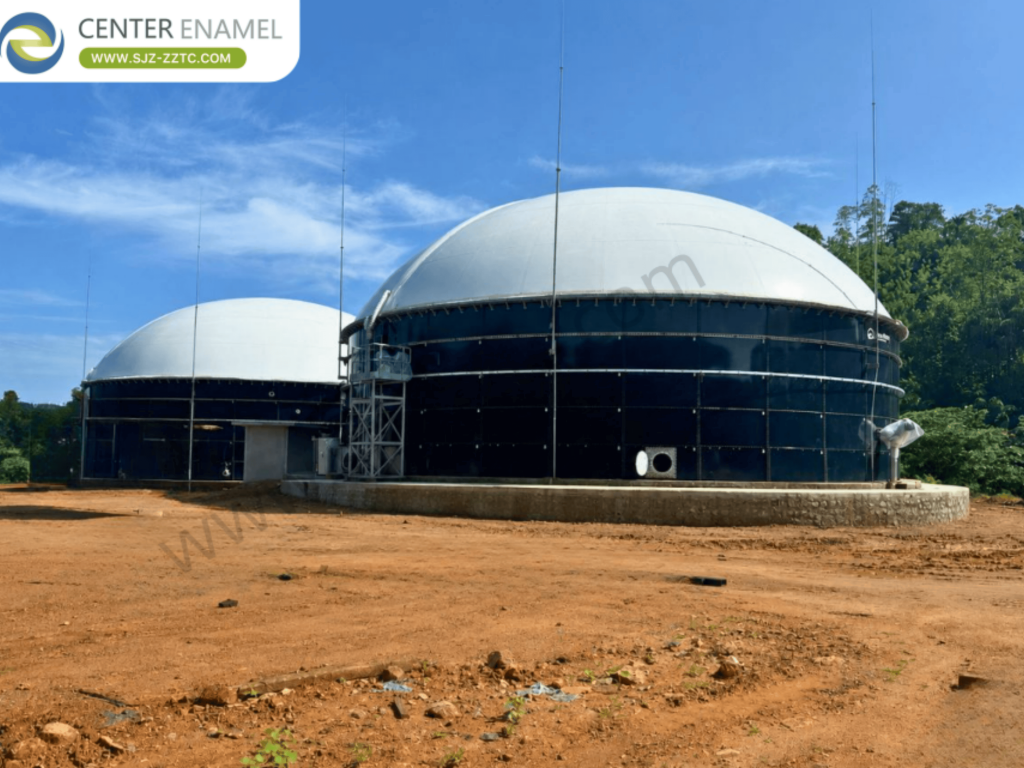
To fully realize the potential of the UASB Process and generate energy from waste, integrated CBG Plant EPC Solutions (Compressed Biogas Plant Engineering, Procurement, and Construction) are essential. These comprehensive solutions combine expert design, premium equipment like durable GFS Tanks, and turnkey construction to deliver plants that not only treat wastewater but also produce renewable compressed biogas. This article delves into the core industry challenges, process advantages, and practical implementations that define modern Textile Wastewater Treatment, highlighting how professional EPC services and the UASB Process converge to create sustainable and profitable industrial operations.
Core Industry Challenges of Industrial Wastewater Treatment
Understanding the fundamental obstacles in wastewater management is the first step toward developing effective solutions. The core challenges of Industrial Wastewater Treatment center on the "three highs"-high difficulty, high cost, and high energy consumption. Wastewater from new energy, chemical, and pharmaceutical industries is complex in composition with numerous characteristic pollutants, and traditional treatment processes are difficult to remove effectively. Chinese companies have significant price advantages in the mid-to-low-end equipment segment. The industry also faces continuous technological upgrade pressure from increasingly stringent emission standards, as well as new requirements for digitalization and low-carbon transformation on operational refinement management capabilities. Addressing these challenges requires a shift from conventional methods to advanced integrated solutions like CBG Plant EPC Solutions, which combine the efficiency of the UASB Process with robust infrastructure to overcome the "three highs" and deliver sustainable outcomes for Textile Wastewater Treatment and other demanding applications.
UASB Process Advantages for Sustainable Wastewater Management
At the heart of many modern treatment plants is the UASB Process, a technology celebrated for its efficiency, simplicity, and energy-positive operation. The UASB Process requires no mechanical mixing equipment, with sludge suspension achieved through hydraulic action, resulting in very low overall energy consumption. High-concentration anaerobic granular sludge can be cultivated, with high sludge concentration, strong activity, excellent settleability, low sludge washout, and low sludge yield, significantly reducing sludge disposal costs.
The integrated design combines reaction, sedimentation, and separation simultaneously, with small footprint and moderate capital investment. Its simple structure results in low failure rates and convenient maintenance. The process boasts a high volumetric loading rate with excellent organic pollutant degradation efficiency and good shock load resistance. Stable biogas production with high resource recovery value is a key benefit. As the process is mature and widely adopted, with well-established construction, commissioning, and O&M systems, it is suitable for large-scale Industrial Wastewater Treatment. For a CBG Plant EPC Solutions provider, the UASB Process is a cornerstone technology, enabling the conversion of organic pollutants from Textile Wastewater Treatment and other streams into valuable compressed biogas.
Textile Wastewater Environmental Toxicity of Pollutants
The textile industry presents a unique set of environmental challenges due to the complex and often toxic nature of its effluents. Textile Wastewater Treatment is critical because the wastewater primarily has color and organic pollution with some chemical toxicity. High-color wastewater discharged to natural waters blocks sunlight penetration, inhibiting aquatic plant photosynthesis and disrupting self-purification capacity and aquatic food chains. Some dyes and intermediates have biological toxicity-azo dye reductive cleavage can produce carcinogenic aromatic amines with chronic toxicity risks.
High-alkalinity desizing and scouring wastewater causes elevated pH in receiving waters, directly harming fish and disrupting aquatic acid-base balance. Surfactants and PVA sizing agents are water-soluble polymers difficult to naturally degrade, increasing water viscosity and affecting aquatic organism respiration. Moderate salinity with long-term discharge causes soil salinization. Some dyes contain heavy metal complexes (copper, chromium), with chronic toxicity risks from environmental accumulation. Overall pollution is primarily ecological damage-sustained discharge causes colored water pollution and ecological degradation. Effective Textile Wastewater Treatment must therefore employ a robust treatment train, with the UASB Process as a key stage to break down recalcitrant organics and reduce toxicity before downstream polishing, a solution expertly delivered through comprehensive CBG Plant EPC Solutions.
Indonesia Palm Oil Biogas Upgrade Project
Real-world applications demonstrate the tangible benefits of combining the UASB Process with premium equipment and expert project delivery. This project, commissioned in 2013 as the core anaerobic digestion reactor for the POME treatment station, features 3 GFS tanks in two sizes: 17.58 m diameter × 8.4 m height and 16.82 m diameter × 7.2 m height. The tanks serve as the core anaerobic reaction equipment specifically for high-organic palm oil production wastewater-anaerobic digestion degrades pollutants and recovers biogas.
The GFS tanks are adapted to local palm industry wastewater needs. Their assembly is convenient with corrosion resistance for Southeast Asia's hot humid high-corrosion environment-a mature biomass energy environmental benchmark project. This project exemplifies how the principles of the UASB Process and the expertise of a CBG Plant EPC Solutions provider can be applied to treat high-strength industrial effluents effectively, generating biogas and mitigating environmental impact, forming a blueprint for similar applications in Textile Wastewater Treatment and other sectors.
Full-Process Standardized Installation Quality Control
The long-term performance and reliability of any treatment plant are heavily dependent on the quality of its construction and installation. Demonstrating high-standard installation quality through long-term stable global project performance, Center Enamel has established full-chain quality control standards across four dimensions: factory protection, on-site assembly construction, completion inspection, and long-term warranty-ensuring quality control for every GFS tank used in CBG Plant EPC Solutions and Textile Wastewater Treatment projects.
At the factory stage, all enameled panels, seals, and structural components receive rust-proof and moisture-proof independent packaging with dedicated protective supports-preventing damage during sea and land transport and avoiding enamel coating damage. On-site construction strictly follows unified assembly process specifications-panel by panel tightening and leak testing in layers, with air-tightness and verticality testing after each tank section completion-dual-membrane covers and anaerobic piping undergo simultaneous pressure testing and acceptance. Differentiated quality acceptance standards are customized for different regions: EU/US projects follow stringent CE/NSF inspection criteria; Southeast Asian hot humid regions receive enhanced corrosion protection and sealing acceptance; remote African sites have additional foundation settlement re-inspection procedures. Upon project completion, complete construction inspection reports, pressure test records, and anti-corrosion appearance acceptance documents are issued, with full photo and video archives retained. Over 10,000 tanks delivered globally have operated long-term without large-scale leakage or structural deformation-preventing future O&M issues at source.
Installation and Construction Team Expertise
Behind every successful installation is a team of skilled professionals with extensive global experience. The installation team has practical experience from over 10,000 GFS tank projects globally, strictly following standardized construction procedures-full control over project mobilization, civil coordination, tank assembly, piping, and commissioning schedules and quality. This expertise is critical for the timely and successful delivery of complex CBG Plant EPC Solutions.
The team is proficient in complete standardized installation processes for GFS tanks, dual-membrane gas storage covers, USR/CSTR/IC anaerobic reactors, and biogas desulfurization/piping systems-adaptable to large-scale farms, industrial parks, remote mountainous sites, coastal high-corrosion sites, and other complex locations-strictly implementing unified global safety construction standards. For large overseas cross-border projects, the team can be deployed as complete units for on-site construction, technical training, and local worker practical instruction-full control over construction details, air-tightness testing, and corrosion protection-ensuring timely and stable commissioning of global environmental projects through standardized delivery capability. This ensures that the UASB Process and other core technologies are implemented flawlessly in every Textile Wastewater Treatment plant.
Aluminum Alloy Trough Deck Roof
Beyond the primary tank structure, auxiliary components like roofing systems play a vital role in overall system integrity and operational convenience. The Aluminum Alloy Trough Deck Roof is a cost-effective economical tank cover solution for clean water and wastewater storage scenarios, primarily designed for drinking water, production wastewater, and firewater reserve tanks, balancing practicality and cost advantages. The main body is integrally formed from anti-corrosion aluminum alloy plates, paired with aluminum support trusses. Its lightweight design imposes less load on the tank foundation, reducing civil construction investment.
A naturally formed dense oxide protective layer on the surface resists rain and mild wastewater corrosion, withstands outdoor sun and rain exposure, and effectively blocks wind, rain, insects, fallen leaves, and odor volatilization, protecting water quality by preventing dust and debris from falling in and causing secondary contamination. The flat roof structure is neat and orderly, allowing installation of maintenance walkways, guardrails, vents, and level monitoring ports on top, facilitating daily inspection and equipment maintenance. The simple sealing structure enables straightforward installation with short construction timelines, and virtually eliminates the need for anti-corrosion painting maintenance, resulting in extremely low operational costs. It is suitable for various small, medium, and large atmospheric pressure water storage tanks, and has been widely implemented in waterworks clear water tanks, industrial circulating water tanks, park firewater tanks, and domestic wastewater temporary storage facilities. This roofing solution is an excellent complement to other tanks within a Textile Wastewater Treatment plant, while the gas-tight reactors used for the UASB Process and CBG Plant EPC Solutions would utilize appropriate covers for biogas capture.
Frequently Asked Questions
Q: What is a CBG Plant and how does it relate to industrial wastewater treatment?
A: A CBG (Compressed Biogas) Plant is a facility that produces purified and compressed biogas from organic waste sources, including high-strength industrial wastewater. Through CBG Plant EPC Solutions, a provider integrates the UASB Process to treat wastewater and capture the resulting biogas. This biogas is then upgraded and compressed for use as a renewable fuel or for power generation, turning a waste stream into a valuable energy resource.
Q: Why is the UASB Process particularly effective for treating textile wastewater?
A: The UASB Process is highly effective for Textile Wastewater Treatment because it can handle high organic loads (COD) and the variable water quality characteristic of textile effluents. Its anaerobic environment breaks down complex dye molecules and other recalcitrant organics, improving the wastewater's biodegradability for subsequent aerobic treatment. Furthermore, it produces biogas, offsetting energy costs, and produces significantly less sludge than aerobic processes, reducing disposal costs.
Q: What are the main advantages of using an EPC solution for a wastewater treatment project?
A: Choosing CBG Plant EPC Solutions provides a single point of responsibility, reducing project risks and streamlining communication. The provider manages the entire project lifecycle-engineering, procurement, and construction-ensuring seamless integration of all components like reactors, tanks, and piping. This approach guarantees that the plant is designed and built to meet specific performance criteria and regulatory standards, using proven technologies like the UASB Process and durable equipment, ensuring timely and cost-effective project delivery.