
Reliable GFS Tanks and Mature UASB Process for Malaysia Fruit and Vegetable Waste Biogas Project
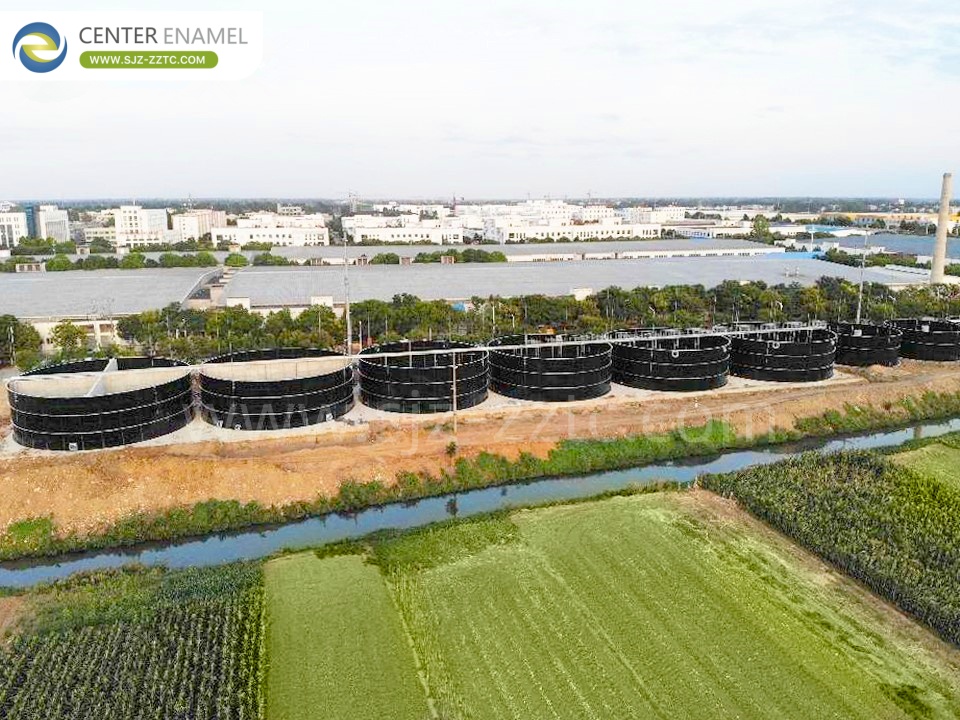
As a pivotal Southeast Asian nation with booming tropical agriculture and food processing industry, Malaysia develops extensive fruit and vegetable planting bases in Peninsular Malaysia, Sabah and Sarawak. Continuous growth of plantation economy, fresh food market and agro-processing sector creates massive volumes of organic fruit and vegetable waste each year. Traditional waste disposal ways including random landfilling, open stacking and uncontrolled incineration fail to satisfy Malaysia’s environmental protection rules, carbon neutrality roadmap and circular economy development targets.
As a professional global EPC contractor specializing in biomass recycling, Center Enamel supplies customized anaerobic solutions for local Fruit and Vegetable Waste Biogas Project. With proven core UASB Process and high-performance GFS Tanks, the enterprise converts discarded fruit and vegetable residues into eco-friendly biogas, assisting Malaysia in waste reduction, resource reuse and low-carbon sustainable industrial development.
Source of Malaysia’s fruit and vegetable waste
Malaysia’s fruit and vegetable waste mainly derives from four core industries. Large-scale crop plantations across Johor, Perak and Pahang generate defective fruits, stalk residues and discarded outer leaves during seasonal harvesting of durian, mango, pineapple and leafy vegetables. Urban wet markets and supermarket fruit counters in Kuala Lumpur, Penang and Ipoh abandon overripe, damaged unsold produce daily without effective classified collection.
Fruit canning, juice and frozen vegetable factories leave huge amounts of fruit peel, pomace and seed residues after deep processing. In addition, numerous catering outlets and resort restaurants fueled by domestic and overseas tourism produce abundant vegetable trimmings and expired raw ingredients, providing sufficient feedstock for local Fruit and Vegetable Waste Biogas Project.
Disposal challenges of Malaysia’s fruit and vegetable waste
Malaysia is confronted with various tough bottlenecks in organic waste management. Most fruit and vegetable scraps are transported to overloaded municipal landfills or piled casually alongside riverbanks and suburban vacant land, resulting in unpleasant odor diffusion, underground water pollution and spontaneous methane emission. Open-air waste burning is prevalent in remote rural areas of East Malaysia, releasing toxic pollutants and worsening regional air quality.
Mixed waste collection mode leads to plastic and inorganic impurities blended into organic waste, drastically increasing pretreatment cost. Insufficient specialized waste treatment facilities across countryside restrict centralized resource recovery. Besides, high moisture and quick rotting characteristics of fruit and vegetable waste make conventional composting low-yield and uneconomical, pushing local industries to adopt mature Fruit and Vegetable Waste Biogas Project.
How fruit and vegetable waste turns into biogas via anaerobic digestion
Biogas production relies on closed anaerobic digestion inside GFS Tanks and supporting reactors, finished through four sequential biochemical reactions.
Hydrolysis: microorganisms secrete enzymes to split large molecules like cellulose, starch and protein into small soluble organic substances.
Acidification: acid-forming bacteria transform soluble compounds into volatile fatty acids and alcohols.
Acetogenesis: intermediate products are further converted into acetic acid, hydrogen and carbon dioxide.
Methanation: methanogenic microbes generate raw biogas containing 55%–70% methane.
After desulfurization, dehydration and compression treatment, purified biogas can be used for factory power generation, industrial heating and domestic cooking, while post-fermentation digestate is processed into premium organic fertilizer for local crop cultivation.
Core benefits of Fruit and Vegetable Waste Biogas Project for Malaysia
Promotion of Fruit and Vegetable Waste Biogas Project brings comprehensive environmental, economic and social gains for Malaysia. Environmentally, it cuts landfill intake and random waste accumulation, curbs soil and water contamination and greenhouse gas release to help Malaysia achieve carbon reduction objectives. In energy aspect, self-produced biogas reduces national reliance on imported fossil fuels and alleviates rural power supply shortage.
Economically, it builds closed circular chain of “planting – waste recycling – biogas supply – organic fertilizer for farmland”, lowering waste handling expenditure for local food manufacturers and lifting green brand competitiveness. Socially, the project creates new employment in waste collection, plant operation and equipment maintenance to stimulate rural economy and balance urban-rural development.
Advanced Anaerobic Technologies: CSTR, UASB Process, USR, IC
Center Enamel configures four differentiated anaerobic technologies for Malaysia’s biogas projects, with UASB Process widely applied for liquid organic waste treatment.
UASB Process: Built on high-activity granular sludge bed, this technology boasts outstanding COD removal rate and high organic loading capacity. Featuring small land occupation and low power consumption, it perfectly treats pre-separated fruit and vegetable leachate, becoming core technique for projects with complete pretreatment workshop.
CSTR: Equipped with internal stirring system in GFS Tanks, it mixes high-solid waste and microbes evenly to avoid crusting, suitable for large-scale centralized biogas plants.
USR: Simple structure and low construction cost, directly handles high-solid raw waste without complex pretreatment for small rural biogas stations.
IC: High-efficiency internal circulation reactor with treatment efficiency 3–5 times of traditional equipment, applicable for super-large urban concentrated waste disposal projects.
Advantages of GFS Tanks for Fruit and Vegetable Waste Biogas Project
As indispensable core equipment, GFS Tanks perfectly adapt to Malaysia’s tropical high-temperature, rainy and coastal humid climate.
High-temperature sintered enamel coating resists acid, alkali and salt corrosion from acidic fermentation liquor and coastal salt fog to ensure long-term stable running.
Superior sealing performance effectively stops biogas leakage and prevents energy loss.
Modular bolt-on design realizes off-site prefabrication and fast field assembly without welding, shortening construction cycle greatly.
The tank owns over 30 years service life, smooth inner wall prevents organic dirt scaling to cut regular maintenance cost.
Meanwhile, tank capacity can be expanded flexibly as waste output increases and matches all four anaerobic processes for fermentation and raw material storage.
Reasons to select Center Enamel as EPC contractor
- Own over 200 independent enamel technology patents, all standardized GFS Tanks are manufactured following ISO and AWWA international quality standards.
- Provide full turnkey EPC service covering project design, equipment production, cross-border transportation, on-site installation, system commissioning, operator training and long-term after-sales maintenance.
- Complete customized engineering design according to Malaysia’s waste composition, local tropical weather and site terrain to optimize UASB Process parameters and maximize biogas output.
- Possess abundant Southeast Asian construction experience to flexibly comply with local environmental policies and construction specifications.
- Optimize whole system layout to lower equipment failure probability and daily operation cost, guaranteeing stable long-term economic returns for project investors.
- Run global after-sales service network to deliver lasting technical guidance and overhaul support for local Fruit and Vegetable Waste Biogas Project.
Professional GFS Tanks Installation from Center Enamel
Center Enamel adopts climate-adaptive installation techniques for Malaysia projects.
Hydraulic jacking top-down installation eliminates high scaffold construction, improving safety for narrow construction space in towns and villages.
Full bolted assembly abandons field welding, avoiding hidden corrosion risks caused by high humidity and sudden tropical downpours.
Experienced international engineers provide full-process on-site technical instruction and cooperate with local construction crews to accelerate construction progress.
After assembly, strict airtightness, pressure and anti-corrosion inspection will be carried out to ensure tanks satisfy biogas plant standards and support stable operation of the UASB Process and other anaerobic systems.
Successful Global Project Cases
Case1: Malaysia Biogas Project
Tank Dimensions: φ22.93 × 12.325 m (H) — 1 Unit
Total Volume: 5,087 m³
Completion Date: 2025
Case2: Singapore Biogas Project
Process Stage: CSTR
Tank Dimensions:
φ18.34 × 8.4 m (H) — 1 Unit
φ8.41 × 9.0 m (H) — 1 Unit
φ11.46 × 7.2 m (H) — 1 Unit
Total Volume: 3,458 m³
Completion Date: 2021
Malaysia’s massive fruit and vegetable waste is both environmental burden and valuable renewable resource, making the development of Fruit and Vegetable Waste Biogas Project an important green development strategy. Supported by mature UASB Process and durable GFS Tanks, Center Enamel’s full-cycle EPC solutions help local enterprises and governments realize harmless waste disposal and clean energy production.
Such biogas projects effectively eliminate organic waste pollution, reduce fossil fuel dependence, facilitate circular agriculture implementation and accelerate Malaysia’s carbon reduction schedule, laying reliable green foundations for long-term sustainable development of Malaysia’s agricultural and food processing industries.