
Rwanda Pig Manure Biogas Project: Complete Biogas Solutions with GFS Tanks and CSTR Process
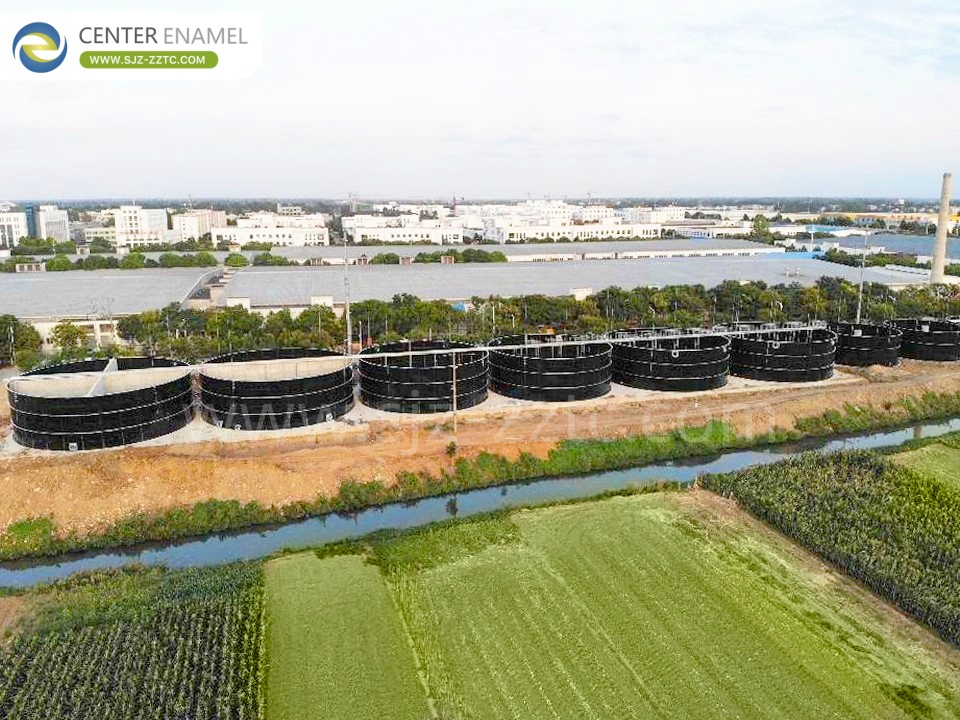
Rwanda's agricultural sector is undergoing a transformative shift towards sustainable energy, with pig manure conversion emerging as a key opportunity. By implementing advanced Biogas Project solutions featuring the CSTR Process and durable GFS Tanks, Rwandan farms can turn waste into a valuable renewable energy resource while addressing critical environmental challenges.
Rwanda's Pig Farming Industry and Waste Management Challenges
Rwanda's livestock sector has experienced notable growth as the nation pursues agricultural modernization and food security. With pig farming expanding across the country's rolling hills, the volume of pig manure requiring proper management has increased substantially. Traditional waste handling methods—including rudimentary storage pits and direct field discharge—have caused significant environmental strain, contaminating fertile soil and precious water resources . The uncontrolled decomposition of organic waste releases harmful greenhouse gases and generates pervasive odor issues affecting farm staff and surrounding communities. There is now a critical demand for modern, sustainable waste treatment infrastructure that can mitigate ecological risks while fostering long-term agricultural stability in Rwanda's diverse highland climate .
How Pig Manure Transforms into Biogas
The conversion of pig manure to biogas follows the established principles of anaerobic digestion, where microorganisms break down organic matter in an oxygen-free environment . Research has demonstrated that co-digesting swine manure with other biodegradable waste enhances biogas production, as swine manure contains macro-nutrients and trace metals such as cobalt, zinc, nickel, and molybdenum that support the anaerobic digestion process . The biogas generated—composed primarily of methane and carbon dioxide—can be utilized for on-farm electricity generation, heating, or as a clean cooking fuel. This transition addresses pollution by stabilizing organic matter and neutralizing pathogens while converting a waste liability into a valuable economic asset. Farm operators can significantly lower operational energy costs while adopting a circular economy model that promotes environmental stewardship .
The CSTR Process: Core Technology for Biogas Production
The CSTR Process (Continuous Stirred-Tank Reactor) is a proven anaerobic digestion technology ideally suited for Rwanda's pig manure treatment. Engineered to thrive in Rwanda's diverse environmental conditions, the CSTR utilizes high-performance mechanical stirring to maintain a fully mixed, temperature-controlled environment . Raw organic waste first undergoes pre-treatment—screening removes larger solid impurities, followed by specialized crushing to simplify the waste stream, and sand settling eliminates heavy grit before homogenization ensures a consistent influent flow . This structured approach enables efficient degradation of organic matter and facilitates consistent, high-yield biogas production.
Professional Biogas Project Design by Center Enamel
Center Enamel delivers comprehensive, end-to-end design solutions specifically engineered for the demanding requirements of livestock Biogas Project development in Rwanda . With extensive international experience, the company integrates sophisticated engineering expertise with high-performance equipment to create systems that are both exceptionally reliable and highly efficient. Their dedicated technical team manages the entire project lifecycle—from initial feasibility assessments and site evaluations to final commissioning—ensuring that every design is optimized for maximum gas yield and long-term operational success in Rwanda's highland and tropical environments .
GFS Tanks and Double Membrane Roof for Biogas Projects
GFS Tanks and the Double Membrane Roof are the preferred containment solutions for biogas projects in Rwanda . GFS Tanks combine the strength of steel with the chemical inertness of glass, fused at temperatures exceeding 820°C to create a hard, smooth surface that is exceptionally resistant to the acidic, corrosive conditions inherent in anaerobic digestion . This durability ensures a service life exceeding 30 years with minimal maintenance requirements. The Double Membrane Roof provides excellent airtightness for safe biogas collection and storage while offering significant cost optimization and space efficiency—eliminating the need for a separate ground-mounted gas holder .
Diverse Storage Tank and Cover Solutions
Center Enamel offers a complete range of storage tanks and roof solutions for biogas applications:
Glass-Fused-to-Steel (GFS) Tanks: The premier choice for biogas applications, offering superior corrosion resistance with pH 1–14 tolerance and a smooth, easy-to-clean surface.
Fusion Bonded Epoxy (FBE) Tanks: Engineered with advanced epoxy coating technology from AkzoNobel for effective corrosion protection.
Roof Solutions:
Double Membrane Roof: Preferred for biogas storage with cost optimization and space efficiency
Glass-Fused-to-Steel Roof: Airtight option suitable for pressurized structures
Aluminum Geodesic Dome: Advanced corrosion resistance and expansive clear span capability
Aluminum Alloy Trough Deck: Economical option for odor control
FRP Roof: Suitable for applications where airtightness is not required
Comprehensive Biogas Supporting Equipment
A complete biogas plant requires specialized auxiliary systems for efficient operation:
Gas Holders: For variable-volume biogas storage and pressure management
Solid-Liquid Separators: For processing digestate into fertilizer fractions
Torch Systems: Critical safety equipment for burning excess biogas during maintenance or emergencies
Dehydration and Desulfurization Tanks: For biogas purification by removing moisture and corrosive hydrogen sulfide
Screw Sludge Dewatering Machines: For efficient sludge volume reduction
Lifting Pumps: For consistent wastewater transfer throughout the system
Efficient Installation of GFS Tanks in Rwanda
Center Enamel's GFS Tanks are engineered for rapid on-site assembly suitable for Rwanda's diverse terrain:
Hydraulic jacking installation: No need for scaffolding or large cranes, ideal for rural and hilly locations
Zero on-site welding: Factory-prefabricated bolted components avoid welding failures common in tropical climates and humid conditions
Rapid commissioning: The bolted system eliminates long curing periods, significantly shortening construction cycles
Professional supervision: Experienced engineering teams oversee installation and provide operational training to local staff
Why Choose Center Enamel for Your Biogas Project
Center Enamel is a leading one-stop solution provider for biogas projects in Rwanda:
Global Manufacturing Leadership: Asia's largest GFS tank manufacturer with a 150,000 m² production base
Proven International Experience: Successful projects in over 100 countries with deep understanding of East African conditions
International Quality Standards: Products certified to ISO 28765, AWWA D103, NSF61, and OSHA
Complete EPC Service: Full turnkey solutions from design and manufacturing to installation and after-sales support
Local Capacity Building: Commitment to training and knowledge transfer for long-term project sustainability
Successful Project Case Studies
Canada Biogas Project
Tank dimensions: φ8.4m x 7.2m (H) (2 units)
Total volume: 798 m³
Completion year: 2024
Indonesia Biogas Project
Tank application: Palm oil wastewater treatment plant
Tank model: Ø19.86m x 8.4m
Number of tanks: 3 GFS tanks
Installation: 7 personnel, 40 days
Installation date: November 2009
Conclusion
Rwanda's pig farming industry stands at the forefront of sustainable agricultural transformation. By implementing proven Biogas Project solutions powered by the CSTR Process and durable GFS Tanks, Rwandan farms can transform manure from an environmental liability into a valuable renewable energy asset. With world-class manufacturing, international certifications, and comprehensive turnkey services, Center Enamel is a reliable partner for Rwanda's journey towards energy independence and sustainable agricultural growth.
FAQs
1.How does the CSTR Process handle Rwanda's diverse agricultural feedstocks?
The CSTR Process features robust mixing systems that can handle varied feedstocks including banana peels, coffee husks, potato residues, and livestock manure, maximizing biogas production across Rwanda's diverse agricultural landscape .
2.What makes GFS Tanks suitable for Rwanda's highland climate conditions?
GFS Tanks are fused at over 820°C, creating a corrosion-resistant coating that withstands both the highland temperate conditions and varied regional climates. Their bolted assembly eliminates welding failures common in humid conditions, ensuring long-term reliability .
3. What ongoing support does Center Enamel provide after project completion?
Center Enamel provides comprehensive after-sales support including technical training for local staff, ongoing maintenance guidance, and regular performance optimization—ensuring long-term project sustainability in Rwanda .