
Saudi Arabia Kitchen Waste to Energy: Advanced Biogas Project with GFS Tanks and CSTR Process
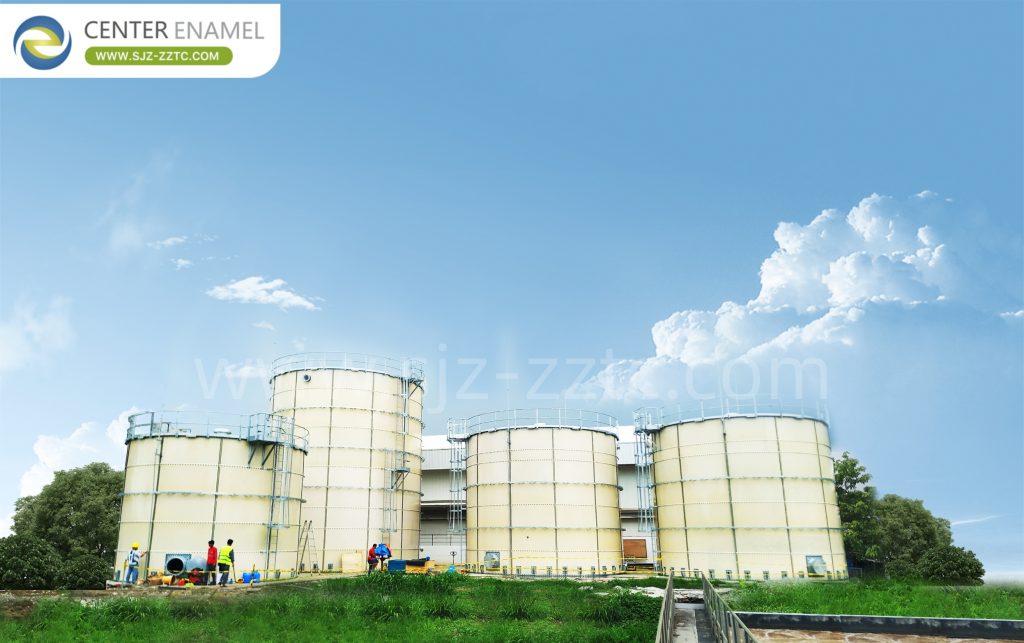
Saudi Arabia is turning the challenge of massive kitchen waste into an opportunity for renewable energy production through advanced Biogas Project technology. By implementing the efficient CSTR Process and utilizing durable GFS Tanks, the Kingdom is making significant strides in sustainable waste management and energy diversification.
The Scale of Saudi Arabia's Kitchen Waste Challenge
Saudi Arabia faces a significant environmental challenge from its substantial kitchen waste production. The nation's deep-rooted culture of generosity and hospitality, where lavish food displays are common, has resulted in one of the highest global rates of food waste. Studies indicate that the average Saudi individual wastes up to 250 kilograms of food annually, more than double the global average of 115 kg . This waste is staggering in both scale and cost, with the Ministry of Environment, Water and Agriculture estimating that food waste costs the Kingdom approximately $13 billion annually. In family restaurants specifically, research shows that bread and rice alone account for over 50% of food waste, with at least 20% of served food per customer being discarded .
The challenge is compounded by several factors: consumer behavior, the absence of a comprehensive legal framework for waste management, and restaurant practices such as oversized portions. Crucially, 70% of Saudi restaurants currently have no strategies for handling leftover food . With limited arable land and scarce water resources making the Kingdom heavily reliant on food imports, the need for circular solutions that transform waste into valuable resources has never been more urgent.
The Transformative Potential of Converting Kitchen Waste to Biogas
Transforming Saudi Arabia's massive kitchen waste stream into a valuable resource is where advanced technology excels. Restaurant kitchen waste, rich in starchy foods, proteins, and fats, is an ideal feedstock for anaerobic digestion. By processing this organic matter in an oxygen-free environment, the CSTR Process breaks it down into biogas—a renewable energy source primarily composed of methane (50–70%) that can be utilized for electricity generation, heating, or upgraded to biomethane .
This process delivers multiple environmental and economic benefits. It captures harmful methane that would otherwise escape from landfills, reduces the volume of waste requiring disposal, and produces a nutrient-rich digestate that can be used as high-quality organic fertilizer. For Saudi Arabia's agricultural sector, this digestate provides a sustainable alternative to chemical fertilizers, supporting the Kingdom's circular economy goals and reducing dependence on imported food products.
Understanding the CSTR Process: Core Technology for High-Efficiency Digestion
At the core of Center Enamel's approach to treating Saudi Arabian kitchen waste is the CSTR Process (Continuous Stirred-Tank Reactor). This advanced anaerobic treatment technology is ideally suited for the high-solids, high-concentration organic wastewater generated by the food service industry .
The CSTR Process reactor is a closed, insulated tank equipped with a mechanical stirring device that ensures fermentation raw materials and microorganisms remain in a state of complete mixing. Through continuous or semi-continuous feeding at a constant temperature (mesophilic range around 35°C), the system creates an optimal environment for anaerobic microorganisms to thrive and convert organic matter into biogas. This constant agitation prevents solids from settling and stops crust formation on the surface, ensuring stable and high biogas yields. The CSTR Process effectively degrades organic matter while maintaining a relatively complete mixed fermentation state, maximizing renewable energy potential from Saudi Arabia's diverse kitchen waste streams.
Center Enamel: Comprehensive Biogas Project Design Solutions
Center Enamel provides professional design solutions for Biogas Project applications, leveraging extensive experience in anaerobic digestion systems . As a premier global manufacturer specializing in Glass-Fused-to-Steel technology, the company offers complete engineering, procurement, and construction services for projects of all scales .
The design approach begins with thorough feedstock analysis and process modeling to determine optimal reactor configuration, mixing requirements, and gas collection systems. Engineers evaluate specific project parameters including organic loading rates, hydraulic retention times, and biogas yield expectations to develop customized solutions that maximize efficiency and return on investment.
Center Enamel integrates multiple critical components into each Biogas Project design, including pretreatment systems for feedstock preparation, the CSTR Process reactor with mechanical stirring, biogas purification equipment, and storage infrastructure. The company holds numerous international certifications including CE/EN1090, ISO 9001, NSF/ANSI 61, WRAS, and EN ISO 28765, ensuring all designs meet rigorous quality and safety standards .
Premium Storage Solutions: GFS Tanks and Double Membrane Roof
GFS Tanks (Glass-Fused-to-Steel) represent the premium coating technology in the storage tank market and are the cornerstone of Center Enamel's Biogas Project solutions. These tanks are manufactured through a high-temperature fusion process where molten glass reacts with the steel plate surface at 820°C-930°C, forming an inert, inorganic bond that combines the strength and flexibility of steel with outstanding corrosion resistance of glass .
For Biogas Project applications, GFS Tanks offer exceptional durability against the corrosive environment of anaerobic digestion, including protection against hydrogen sulfide (H2S) and methane (CH4) . The non-porous, smooth surface prevents adhesion of organic materials and makes cleaning straightforward. With a 30+ year service life and compliance with ISO 28765 and AWWA D103-09 standards, these tanks provide reliable, long-term biogas storage and digestion capabilities .
The Double Membrane Roof is the preferred cover solution for anaerobic digestion processes and biogas applications. Under normal working conditions, this innovative roof design offers significant advantages including cost optimization through reduced construction expenses and improved space efficiency compared to traditional structures. The double membrane roof significantly reduces the floor area required and eliminates the need for foundation construction costs associated with ground-mounted gas holders. This design provides excellent airtightness, making it ideal for biogas collection and odor control while integrating the AD tank with the cover on top for cost-effective operation.
Comprehensive Storage Tank Solutions for Biogas Projects
Center Enamel offers a diverse range of tank options to meet specific project requirements.
Galvanized Steel Tanks receive a tough, wear-resistant protective coating through the galvanizing process, offering superior corrosion resistance compared to other steel protection methods.
Fusion Bonded Epoxy Tanks, developed in partnership with AkzoNobel, provide innovative coating technology for demanding applications.
Stainless Steel Tanks in AISI 304/316 grades are designed to meet the most stringent requirements, including storage of high-purity water and liquids in harsh environments.
Diverse Cover Solutions for Every Application
Center Enamel provides multiple cover options for storage tanks.
The Aluminum Geodesic Dome Roof offers advanced corrosion resistance, expansive clear span capability, and efficient construction with minimal maintenance.
The Glass-Fused-to-Steel Roof provides airtightness for pressurized structures and odor control applications with a cone shape and external/internal beams.
Single and Double Membrane Roofs deliver superior airtightness for anaerobic digestion processes.
Aluminum Alloy Trough Deck Roofs offer economical solutions for potable water, wastewater, and firewater storage.
Stainless Steel Roofs provide super anti-corrosion performance and long service life for harsh environments.
FRP Roofs suit applications where airtightness is not required, such as drinking water and agricultural storage.
Essential Biogas Project Equipment
Complete Biogas Project solutions require additional equipment including Gas Holders for biogas storage, Black Membrane covers for lagoons, Solid-liquid Separators for digestate processing, Torch Systems for emergency gas flaring, Lifting Pumps for material transfer, Dehydration and Desulfurization Tanks for biogas purification, and Screw Sludge Dewatering Machines for efficient sludge handling.
Efficient Installation and Project Execution
Center Enamel delivers efficient installation of GFS Tanks through modular construction with factory-prefabricated components, standard panel sizes of 2.4m x 1.2m for rapid assembly, reduced on-site construction time of 3-5 weeks, minimal weather dependency, simplified foundation requirements, easy expansion capabilities, and comprehensive installation support.
One-Stop Solution Provider for Biogas Projects
Center Enamel offers complete Biogas Project solutions with integrated EPC services, process package design, equipment supply, professional engineering expertise, international certification compliance (CE/EN1090, ISO 9001, NSF61, WRAS, EN28765), adherence to design standards (AWWA D103, OSHA, EN28765, EuroCode), extensive experience in diverse applications, and global project delivery capability.
Successful Project Implementations
Center Enamel has successfully delivered Biogas Project solutions for various applications globally.
Biogas Project in Malaysia
Tank dimensions: φ22.93m x 12.325m (H) (1 unit)
Total volume: 5,087 m³ (1 unit)
Completion year: 2025
Biogas Project in Singapore
Process: CSTR
Tank dimensions:
φ18.34m x 8.4m (H) (1 unit)
φ8.41m x 9.0m (H) (1 unit)
φ11.46m x 7.2m (H) (1 unit)
Total volume: 3,458 m³
Completion year: 2021
Conclusion
Saudi Arabia's commitment to sustainable development and energy diversification creates significant opportunities for advanced Biogas Project solutions. The combination of the efficient CSTR Process and durable GFS Tanks provides an ideal approach to converting kitchen waste into renewable energy. Center Enamel offers comprehensive solutions including professional design, premium storage infrastructure, and complete equipment packages to support the Kingdom's waste-to-energy goals.
Frequently Asked Questions
Q1: How does the CSTR Process handle Saudi Arabia's high-volume kitchen waste, particularly starchy food waste?
The CSTR Process is specifically designed to handle high-solids, high-organic matter waste, including the large quantities of bread and rice commonly wasted in Saudi family restaurants. The continuous mixing action ensures stable fermentation even with this specific feedstock composition, preventing solids settling and crust formation while maintaining optimal conditions for biogas production.
Q2: Why are GFS Tanks the preferred choice for Biogas Projects in Saudi Arabia's harsh climate?
GFS Tanks offer exceptional durability in Saudi Arabia's demanding conditions. The glass-fused-to-steel coating provides superior corrosion resistance against hydrogen sulfide and methane, handles temperature fluctuations effectively, and ensures a non-porous, gas-tight seal. With a 30+ year service life and compliance with international standards, these tanks deliver reliable, long-term performance in arid desert environments.
Q3: What makes Center Enamel a comprehensive Biogas Project solution provider for Saudi Arabia?
Center Enamel provides complete turnkey solutions including professional EPC services, advanced GFS Tanks manufacturing, diverse cover options, essential process equipment, and compliance with international certifications. With extensive experience in Saudi Arabian projects and a proven track record of successful installations, the company offers integrated expertise that covers every aspect of biogas project development.