
SBR vs MBR: Which Wastewater Treatment Technology Fits Your Project?
Selecting between a Sequencing Batch Reactor (SBR) and a Membrane Bioreactor (MBR) is one of the most consequential decisions in wastewater treatment design. Both are advanced biological processes that outperform conventional activated sludge in many scenarios, yet they achieve their results through fundamentally different mechanisms. SBR relies on timed cycles of fill, react, settle, and decant within a single tank, while MBR uses a physical membrane barrier-typically ultrafiltration or microfiltration-to separate solids from treated water .
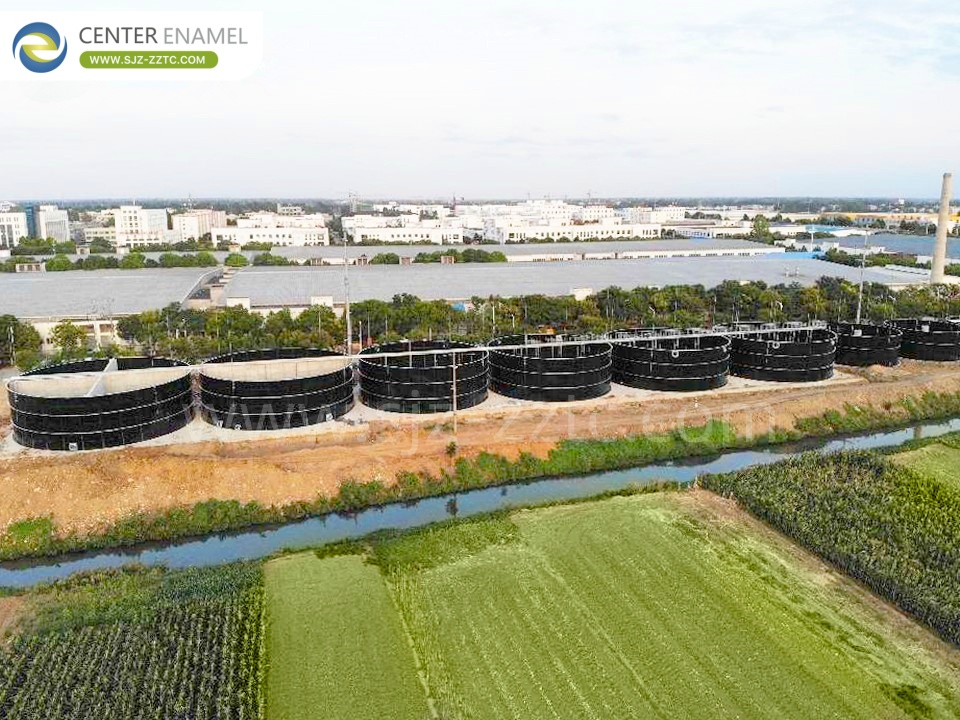
The choice between them affects not only effluent quality but also capital budget, energy consumption, operator workload, and long-term maintenance strategy. This article breaks down the comparison across the dimensions that matter most in real-world projects.
Understanding SBR: The Cyclical Approach
The Sequencing Batch Reactor operates on a simple but elegant principle: instead of using separate tanks for aeration and settling, everything happens in one vessel over a defined sequence of phases. A typical cycle includes fill, react (aeration and mixing), settle, decant, and idle . This temporal separation replaces the spatial separation found in conventional continuous-flow systems.
SBR systems typically maintain mixed liquor suspended solids (MLSS) concentrations between 3,000 and 5,000 mg/L, which is moderate compared to MBR . The process offers inherent flexibility-cycle timing can be adjusted to accommodate variable flows, making it particularly well-suited to batch industrial discharges and seasonal operations. Nutrient removal, including nitrification and denitrification, can be achieved within the same tank by controlling the aerobic and anoxic phases of each cycle. One notable advantage is that SBR requires no secondary clarifier, eliminating a significant piece of infrastructure and its associated footprint .
Understanding MBR: The Membrane Barrier
The Membrane Bioreactor couples biological treatment with membrane filtration, using the membrane as a direct barrier to solids rather than relying on gravity settling. This allows MBR systems to operate at much higher MLSS concentrations-typically 8,000 to 18,000 mg/L-which dramatically reduces the required bioreactor volume . The membrane pore size, usually in the range of 0.04 to 0.4 micrometers, produces an effluent essentially free of suspended solids, often below 1 mg/L TSS .
The result is a compact system capable of producing reuse-quality water in a single treatment step. MBR has become the standard choice for space-constrained urban sites and for applications where direct water reuse is required. The trade-off is complexity: membrane fouling is an ever-present operational challenge, requiring chemical cleaning protocols and higher operator skill levels .
Effluent Quality: How Do They Compare?
When it comes to raw treatment performance, MBR holds a clear edge in effluent purity. The membrane barrier captures particles that settling cannot, producing water with consistently lower TSS and BOD. Studies comparing the two technologies in municipal wastewater treatment have found MBR achieves removal efficiencies exceeding 99% for TSS and 94% for COD, with better total nitrogen and phosphorus removal than SBR .
That said, SBR is no slouch. A well-operated SBR can achieve BOD below 10 mg/L and TSS in the 5–20 mg/L range, along with excellent nitrification . For many discharge permits, SBR effluent quality is entirely adequate. The gap matters most when the treated water must meet stringent reuse standards or when discharging to sensitive receiving waters with tight nutrient limits.
| Parameter | SBR | MBR |
| Effluent TSS | 5–20 mg/L | < 1 mg/L |
| Effluent BOD | < 10 mg/L | < 5 mg/L |
| MLSS Concentration | 3,000–5,000 mg/L | 8,000–18,000 mg/L |
| Secondary Clarifier | Not required | Not required |
| Pathogen Removal | 2–3 log | 4–6 log |
| Membrane Fouling Risk | None | High |
Footprint and Space Requirements
Land availability often decides the technology before any other factor is considered. MBR’s ability to operate at high MLSS concentrations means the bioreactor itself can be significantly smaller than an SBR of equivalent capacity. More importantly, MBR eliminates the secondary clarifier entirely, which typically occupies 30–50% of a conventional plant’s footprint .
SBR also eliminates the secondary clarifier, giving it a footprint advantage over conventional activated sludge. However, the lower MLSS ceiling means the bioreactor volume must be larger than an MBR for the same treatment capacity, and the cyclical operation means the tank must have enough volume to hold the influent during the fill phase. For urban projects where land is scarce and expensive, MBR’s compactness frequently justifies its higher capital cost.
Energy Use and Operational Costs
This is where the economics shift in SBR’s favor. MBR systems consume significantly more energy, primarily due to membrane aeration (which runs continuously to scour the membranes and control fouling) and the permeate pumps that draw water through the membrane. One analysis found that MBR energy consumption can reach 0.57 kWh/m³, compared to 0.33 kWh/m³ for SBR-a 40% efficiency gap between the two technologies .
Operational costs follow the same pattern. MBR requires membrane replacement every 5–10 years, chemical cleaning agents, and higher-skilled operators to manage fouling and maintain membrane integrity. SBR, by contrast, has no membranes to foul or replace, and its automated control systems are generally simpler to maintain . A cost comparison from Indian municipal projects found total annual O&M costs for SBR at approximately 0.72 million rupees, compared to 1.9 million rupees for MBR .
| Cost Factor | SBR | MBR |
| Capital Cost | Medium | Highest |
| Energy Consumption | Medium (~0.33 kWh/m³) | High (~0.57 kWh/m³) |
| Membrane Replacement | Not applicable | Every 5–10 years |
| Operator Skill Required | Medium | High |
| Chemical Cleaning | Minimal | Regular CIP protocols |
| Sludge Production | Medium | Low (long SRT) |
Operational Complexity and Reliability
MBR’s reputation for operational intensity is well-earned. Membrane fouling is unavoidable, and managing it requires a disciplined program of backwashing, relaxation cycles, and periodic chemical cleaning (CIP). Operators must monitor transmembrane pressure, permeability, and membrane integrity. When fouling becomes severe or a membrane module fails, treatment capacity can be compromised until repairs are completed .
SBR’s operational challenges are different but generally less costly. The cyclical nature of the process means that a upset in one cycle-such as a failed decant or an aeration fault-can often be corrected in the next cycle. There are no membranes to degrade or replace. The primary operational focus is on maintaining proper cycle timing, dissolved oxygen levels, and sludge wasting schedules. That said, SBR’s batch nature means it can be less resilient to shock loads than continuous systems, and the decant mechanism requires periodic maintenance .
Selecting the Right Technology for Your Project
The decision between SBR and MBR should be driven by project-specific constraints rather than a blanket preference for one technology.
Choose MBR when: effluent must meet reuse standards for direct non-potable applications (irrigation, toilet flushing, cooling tower makeup); land area is severely constrained and expensive; pathogen removal requirements are stringent; or the project involves retrofitting an existing facility with minimal available space .
Choose SBR when: flow rates are variable or intermittent, such as at industrial facilities with batch production schedules; capital and operating budgets are tight; operator availability is limited; or the discharge permit can be met without membrane-grade effluent quality. SBR is particularly well-suited to food processing, slaughterhouse, and seasonal vegetable processing operations where discharge patterns are irregular .
For projects with moderate effluent requirements and adequate land, SBR typically offers the better life-cycle cost. For projects where water reuse is a core objective or space is at a premium, MBR’s higher costs are often justified by its superior output and compactness.
Frequently Asked Questions
Can SBR produce effluent quality comparable to MBR?
Not quite. SBR can achieve excellent BOD and TSS removal, but the membrane barrier in MBR captures fine particles and pathogens that settling cannot. If your permit requires TSS below 5 mg/L or you need log-4 pathogen removal for reuse, MBR is the safer choice. For standard discharge permits, SBR is usually sufficient .
Which technology is more expensive to operate?
MBR has higher operating costs across the board: more energy for membrane aeration and permeation, periodic membrane replacement, chemical cleaning supplies, and higher labor requirements for skilled operators. SBR’s operating costs are lower, though it may require slightly more sludge handling than MBR’s long-SRT operation .
How long do MBR membranes last?
Typically 5 to 10 years, depending on feed water quality, cleaning frequency, and operating conditions. Membranes degrade over time from chemical exposure and mechanical stress, and eventually require replacement. This is a significant recurring capital expense that SBR systems do not face .
Ready to determine whether SBR or MBR is the right fit for your treatment goals? Contact our engineering team today to discuss your project requirements and receive a tailored technology recommendation. We’ll help you balance effluent quality, budget, and operational realities to select the system that performs reliably for years to come.