
Searching for an Industrial Wastewater Treatment Project EPC Contractor Who Can Master Anaerobic Digestion?
Industrial wastewater treatment today is defined by the "three highs"-high difficulty, high cost, and high energy consumption. Effluents from new energy, chemical, and pharmaceutical sectors carry complex compositions and numerous characteristic pollutants that traditional processes struggle to remove effectively.
Chinese manufacturers hold significant price advantages in mid- to low-end equipment, yet the industry faces relentless pressure from tightening emission standards and new demands for digitalization and low-carbon transformation. Meeting these demands requires more than equipment supply; it requires an Industrial Wastewater Treatment Project EPC Contractor with deep process know-how-and that know-how increasingly centers on Anaerobic Digestion.
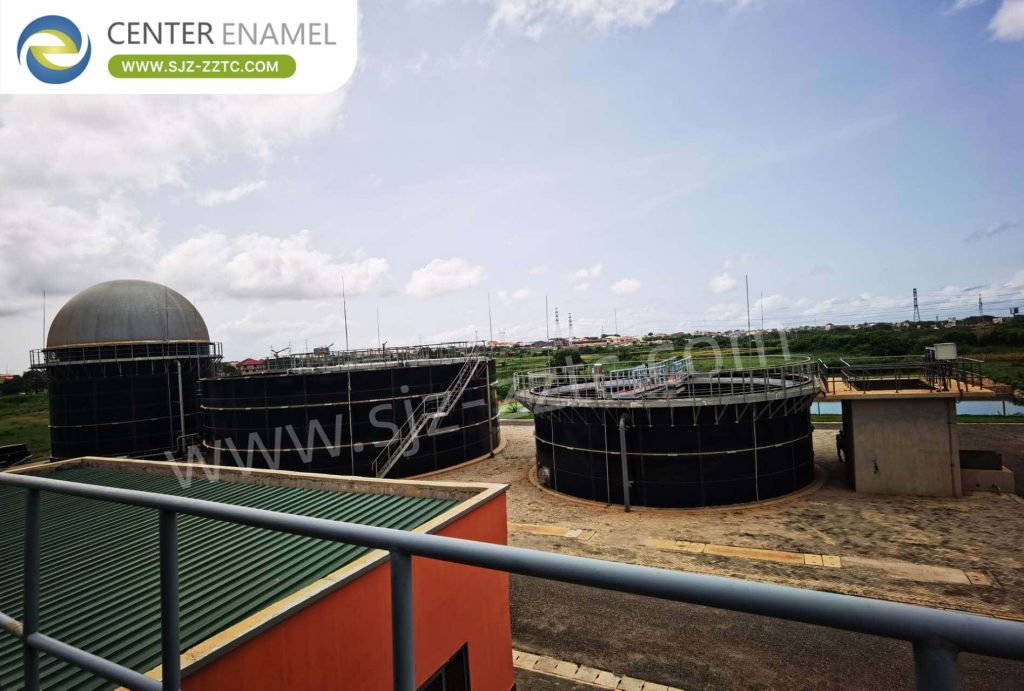
Why Anaerobic Digestion Sits at the Heart of High-Strength Wastewater Treatment
Among anaerobic technologies, the IC (Internal Circulation) reactor represents the third-generation high-efficiency solution built upon UASB foundations. Its core innovation is a built-in gas-lift internal circulation system that enables autonomous wastewater recirculation without external return pumps. The reactor uses a dual-zone configuration-a lower main reaction zone and an upper polishing zone-where biogas gas-lift creates hydraulic internal circulation, significantly increasing upflow velocity and enhancing sludge-wastewater contact. The result is extremely high compactness combined with high efficiency, energy savings, and minimal footprint. This makes Anaerobic Digestion via IC the core process for modern industrial high-strength wastewater treatment, particularly where land is limited and pollutant loads are extreme.
Brewery Wastewater: A High-Volume, High-Strength Challenge Worth Solving
Brewery wastewater exemplifies the kind of high-concentration organic stream where Anaerobic Digestion proves its value. It originates from the entire production process of beer, liquor, and wine-raw material soaking and washing, saccharification and fermentation, distillation and purification, and filling and packaging. Major streams include still bottoms, fermentation yellow water, spent mash, and raw material soaking wastewater, alongside auxiliary discharges from equipment and pipeline washing, floor cleaning, and cooling water. Discharge is markedly intermittent and seasonal, peaking during production season and dropping off-season. Large breweries typically have unified collection systems, while small and medium-sized facilities face dispersed collection and uncontrolled discharge issues. For all these profiles, anaerobic treatment converts organic load into biogas rather than merely consuming energy to destroy it.
How GFS Tanks Fit Modern Intensive Plant Layouts
Process efficiency depends on containment that adapts to the site, not the reverse. GFS tanks offer flexible customization of size and appearance with higher land utilization rates, ideally suited to modern compact plant layouts-and with significant advantages over fixed poured concrete tanks. Concrete tanks cannot alter volume or shape after pouring, their heavy bases occupy large areas, and placement is difficult on narrow or irregular plots. Their rough, uniform appearance cannot match modern facility aesthetic requirements. GFS tank volume can be precisely customized from dozens of cubic meters up to 50,000 cubic meters, with tank height and diameter freely combined to fit narrow or irregularly shaped plots. Enamel color customization supports visual harmony with plant buildings, and during later expansion, GFS tanks can be directly adjusted and expanded-while monolithic concrete tanks must be demolished and rebuilt. This aligns well with the intensive construction and aesthetic O&M needs of industrial parks.
A Demonstration Project Proving Anaerobic Digestion Reliability
Center Enamel served as general contractor for the Pakistan Food Waste + Napier Grass Biogas Demonstration Project, applying CSTR as the core Anaerobic Digestion process with food waste and Napier grass as mixed fermentation feedstock. A mechanical mixing system ensures thorough contact between feedstock and anaerobic microorganisms, achieving efficient organic degradation and stable daily biogas production of 100 m³. The project is the local official demonstration for validating gas production efficiency and long-term continuous operational stability. Following successful pilot operation, multiple large-scale Napier grass biogas projects are planned locally to promote biomass clean energy and support regional low-carbon development.
Three Decades of EPC Capability Backed by Proprietary Technology
The confidence to deliver such projects rests on a long track record. Center Enamel has been deeply engaged in environmental bolted storage equipment for over 30 years, beginning with proprietary enamel anti-corrosion material technology and completing a full-industry-chain upgrade from single tank manufacturer to comprehensive environmental EPC service provider. The company is recognized as a National High-Tech Enterprise, National Specialized and Sophisticated "Little Giant," Manufacturing Single Champion, and Provincial Green Factory. It has successfully delivered over 30,000 environmental projects globally, integrating enamel frit R&D, intelligent equipment manufacturing, and EPC project contracting-every breakthrough built on proprietary core anti-corrosion technology.
Manpower Reserve That Keeps Global Projects on Schedule
Delivery capability ultimately comes down to people. Center Enamel has established its own domestic and international certified construction teams, with regular practical training on GFS tank installation and overseas construction standards for various countries. Domestically, regional construction teams cover multiple zones and can deploy several teams simultaneously for large tank farm projects. Internationally, cross-border professional installation teams are equipped to meet the construction standards of each destination country. This manpower reserve ensures uninterrupted construction delivery-whether for remote African sites, high-standard European and American facilities, or any project in between.
Project Data at a Glance
| Project / Metric | Details |
| Pakistan Food Waste + Napier Grass Biogas Demonstration | CSTR core process; food waste + Napier grass feedstock; daily biogas output 100 m³ |
| Global Environmental Projects Delivered | 30,000+ projects worldwide |
| Company Experience | 30+ years in environmental bolted storage equipment |
| GFS Tank Capacity Range | Dozens of m³ up to 50,000 m³, customizable |
Frequently Asked Questions
Q: What wastewater streams suit Anaerobic Digestion?
A: High-concentration, high-flow soluble organic streams such as brewery, beverage, starch, pharmaceutical, chemical, and papermaking wastewater-particularly where land is constrained and rapid COD/BOD removal is required.
Q: Can GFS tanks be expanded after installation?
A: Yes. GFS tanks can be adjusted in layout and expanded directly, unlike monolithic concrete tanks that must be demolished and rebuilt.
Q: How does Center Enamel support overseas projects?
A: Through certified cross-border installation teams trained to each country's construction standards, ensuring uninterrupted delivery from remote sites to high-standard facilities.
Tell us about your wastewater challenge and let our engineers map the right anaerobic solution for your site-we respond promptly with a tailored proposal.
Partner with a proven Industrial Wastewater Treatment Project EPC Contractor and turn high-strength effluent into a controlled, energy-recovering asset-contact Center Enamel today.