
Sewage Treatment Explained: Removing COD, Nitrogen and Phosphorus
Sewage treatment moves domestic wastewater through preliminary screening, primary settling, and secondary biological treatment - usually with biological nutrient removal - so that COD, BOD, nitrogen, and phosphorus are cut to safe discharge levels before the water leaves the plant. Each stage removes a different fraction, and the train is sized to the population it serves.
1. Preliminary and Primary Stages
Preliminary screening and grit removal protect equipment from rags and sand. Primary settling then drops the settleable solids and a portion of the suspended organics. These low-cost steps shrink the load on the more expensive biological stage that follows.
2. Secondary Biological Treatment
Secondary treatment is where most COD and BOD are consumed by biomass. Suspended-growth (activated sludge) and attached-growth (biofilm) systems both work; the choice is about footprint and operability. For municipal sewage, a well-run secondary stage typically takes BOD from hundreds of mg/L down to tens.
3. Biological Nutrient Removal
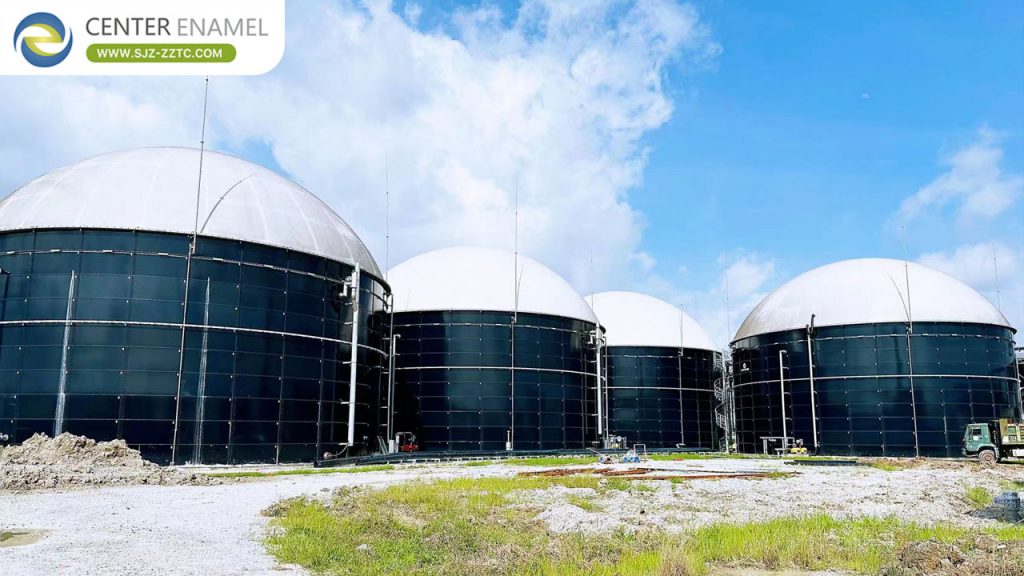
Nitrogen and phosphorus cause eutrophication, so many plants add nutrient removal: an anaerobic-anoxic-oxic (A2/O) or similar train strips nitrate and binds phosphate biologically. Clarification and, where needed, polishing finish the job. The tankage for these stages - equalization, reaction, and settling - is where bolted GFS tanks earn their place, resisting the corrosive liquor across 200-60,000 m3 units built to ISO 28765 and AWWA D103.
Comparison: Treatment Stages
| Stage | Removes | Typical outcome |
| Preliminary | Rags, grit | Equipment protection |
| Primary | Settleable solids | Partial COD cut |
| Secondary | COD, BOD | BOD to tens mg/L |
| Nutrient removal | N, P | Eutrophication control |
About Shijiazhuang Zhengzhong Technology Co., Ltd (Center Enamel)
Shijiazhuang Zhengzhong Technology Co., Ltd (Center Enamel) manufactures the bolted GFS tanks used across these stages: enamel fused at 820-930 C forms an inert barrier against corrosive sewage liquors, engineered to ISO 28765 and AWWA D103, shipped flat-pack and assembled on site. For a delivered municipal reference spanning equalization, anaerobic, and nutrient-removal tanks, see the Ghana domestic sewage project in the cluster.
Sewage treatment is a staged train: screen, settle, biologically consume COD and BOD, then remove nitrogen and phosphorus. Size each stage to the population and limit. Send your flow and discharge target and we will configure the GFS tankage.
Frequently Asked Questions (FAQ)
Q1: What are the stages of sewage treatment?
A: Preliminary screening, primary settling, secondary biological treatment, and nutrient removal.
Q2: How is nitrogen removed?
A: Through an anoxic-oxic biological train that strips nitrate, commonly inside an A2/O process.
Q3: What removes phosphorus?
A: Biological phosphate uptake in the nutrient-removal stage, sometimes with polishing.
Q4: What is secondary treatment?
A: The biological stage that consumes most COD and BOD with biomass.
Q5: What tank sizes are used?
A: GFS tanks from 200 m3 to 60,000 m3.
Q6: What standards apply to the tanks?
A: GFS tanks are built to ISO 28765 and AWWA D103.
Suggested CTA
Send your sewage flow and discharge target. We will configure the GFS tankage for screening, reaction, and clarification.