
Sewage Treatment Plant: Odor Control And Gas-Tight Enclosure
Odor at a sewage treatment plant comes mostly from the headworks (inlet, screening, grit) and the sludge line, not from the clean final effluent. It is managed by capturing the gas at its source with covers and a slight negative pressure, then treating the collected air before discharge. Gas-tight tank covers and enclosures are the physical core of that strategy. An uncovered, unventilated tank turns a localized nuisance into a site-wide complaint, so odor control is a layout and enclosure decision as much as a chemical one.
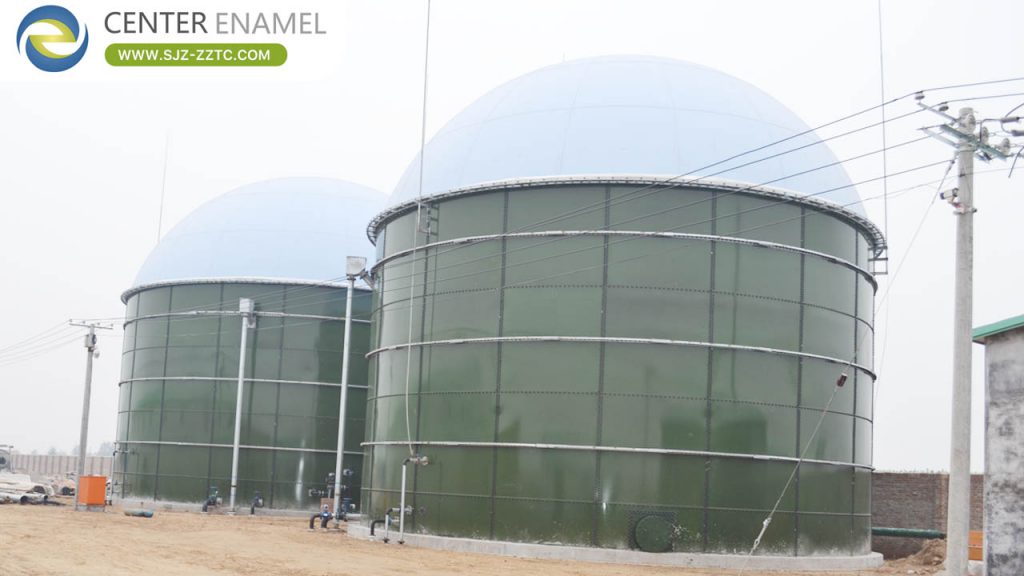
Where Odor Actually Originates
The strongest sources are the places where raw wastewater is first agitated or where solids are held and dewatered. Downstream, well-operated aerobic and settling stages generate far less odor. The practical implication is that covering everything is wasteful; covering the right few sources is effective. This map is general industry guidance, not a measurement from any named plant.
| Area | Odor character | Why it matters |
| Inlet / screening | Sewer, sulfidic | First and strongest source |
| Equalization tank | Stagnant, sulfidic | Holding time builds odor |
| Sludge holding / dewatering | Strong, ammoniacal | High-strength solids |
| Anaerobic reactors | Contained gas | Must stay gas-tight |
| Final effluent | Minimal | Usually not a source |
Cover The Source, Keep A Negative Pressure
The control principle is capture before treatment. A cover over the odor source, combined with an extract fan, keeps the space under slight negative pressure so air leaks inward rather than odor leaking outward. The extracted air then goes to a treatment step. Without the negative pressure, even a covered tank will push odor out through every gap.
Choosing A Gas-Tight Cover
Cover choice balances span, corrosion resistance, access and cost. Bolted glass-fused-to-steel panels and aluminum domes suit large circular tanks; modular panels suit smaller rectangular basins. The right choice depends on the tank geometry and the need for access, not on a single 'best' material.
| Cover type | Best for | Note |
| GFS bolted panels | Circular / rectangular tanks | Corrosion-resistant |
| Aluminum dome | Large circular tanks | Long clear span |
| FRP / membrane | Small basins, pits | Light, lower span |
| Concrete slab | Permanent covers | Heavy, access-limited |
Collection And Treatment Routes
Collected air is treated by one of several routes depending on volume and concentration: a biofilter for large, low-concentration flows; a wet scrubber for soluble sulfides; activated carbon for polishing; or a flare where methane is present. Selection is driven by the measured air volume and composition, which must be taken from the site, not assumed.
Where Enclosure Belongs - A Hoggery Example
The verified library includes a 300 m3/day hoggery wastewater project in Puning, Guangdong, using a pre-process + USR + AOAO train for manure-cleaning wastewater. It is a real plant where the anaerobic stage is enclosed by design. The source confirms the capacity, process and application; odor concentrations, cover specification and air-treatment details are Not Specified in the Available Source and are not claimed here. The reference illustrates where enclosure belongs, not a measured odor result.
About Company
Shijiazhuang Zhengzhong Technology Co., Ltd (Center Enamel) is a comprehensive high-tech enterprise specializing in wastewater engineering, process section contracting, and equipment manufacturing. The company delivers biogas and wastewater projects through three main lines - EPC (turnkey) contracting, equipment supply, and process packages - covering livestock and municipal wastewater, biomass energy, industrial wastewater, and food waste. Its reactor portfolio spans CSTR, USR, UBF, UASB, IC, and EGSB, backed by in-house Glass-Fused-to-Steel tank manufacturing (enamel firing at 820-930 C) and certifications including ISO 9001, NSF/ANSI 61, and CE-EN 1090. With 35+ years of operation, a 150,000 m2 manufacturing base, and projects in 100+ countries, Center Enamel provides the single-responsibility engineering behind sewage treatment plants where odor is controlled at the source with gas-tight covers and a designed collection and treatment route.
Conclusion
Odor control is a source-capture problem: locate the few strong sources, cover them gas-tight, hold a slight negative pressure and treat the extracted air. Covering everything is unnecessary; covering the right sources works.
Frequently Asked Questions
Q1: Where does sewage plant odor mainly come from? A1: The headworks and the sludge line - inlet, screening, equalization and sludge handling.
Q2: Does final effluent produce odor? A2: Usually little; the strong sources are upstream raw and solids areas.
Q3: Why use a gas-tight cover? A3: To capture odor at its source and allow negative-pressure extraction instead of site-wide release.
Q4: What is negative pressure in this context? A4: Extracting air so that leakage flows inward, keeping odor inside the covered space.
Q5: Which tanks most need covering? A5: Inlet, equalization and sludge tanks; final effluent rarely does.
Q6: What air-treatment options exist? A6: Biofilters, wet scrubbers, activated carbon and flares, chosen by air volume and composition.
Q7: Should every tank be covered? A7: No - cover the strong sources; blanket covering adds cost without proportional benefit.
Q8: Can odor levels be assumed from plant type? A8: No - they must be measured on site; generic values are not a design basis.
Suggested CTA
Have an engineer map your plant's odor sources and specify gas-tight covers and a collection route sized to your measured air volume.