
Sewage Treatment Plant Upgrade Solutions: Meeting Tighter Limits Through Retrofits
A sewage treatment plant solution for an existing works is usually a targeted retrofit, not a rebuild. Identify the stage that fails the new limit - often nitrogen removal, phosphorus, or solids - and add capacity only there: an anoxic zone, a tertiary filter, a dosing system, or an upstream anaerobic step to cut the load reaching an overloaded aeration basin. Reusing sound tankage is often the difference between an affordable upgrade and an unneeded capital project.
Diagnose The Stage That Fails
A tighter permit rarely fails every stage at once. Ammonia limits expose an undersized or poorly aerated biological stage; total-nitrogen limits expose a missing anoxic zone; phosphorus limits need chemical dosing or a dedicated biological step; and tighter suspended solids call for better clarification or filtration. Matching the retrofit to the failing parameter avoids spending on stages that already comply.
| Tightened limit | Likely weak stage | Typical targeted retrofit |
| Ammonia | Aeration / nitrification | More air, media, or longer SRT |
| Total nitrogen | No anoxic denitrification | Add anoxic zone and recycle |
| Phosphorus | No P-removal step | Chemical dosing or bio-P stage |
| Suspended solids | Clarification | Upgraded clarifier or tertiary filter |
| Organic load | Overloaded aeration | Anaerobic pre-stage to cut COD |
Reusing Existing Tankage
Before ordering new vessels, survey what is already on site. A tank with sound structure and a workable cover can often be re-assigned - an old digester becoming an equalisation basin, for example - at a fraction of rebuild cost. The check is condition and geometry, not age: a cracked or poorly mixed vessel is a liability, while a sound one is an asset even if its original duty has changed.
Adding An Anaerobic Pre-Stage
When the works treats a strong or variable inflow, an upstream anaerobic reactor can remove a large share of COD before the aeration basin, cutting aeration energy and freeing existing capacity. This is most valuable where the works is flow-constrained but has room for a compact reactor. It is less useful on very dilute domestic sewage, where there is little COD worth recovering.
Keeping The Plant Running During Works
An upgrade is judged on how little it disrupts compliance. Phasing - building the new stage in parallel, then switching flow over during a planned window - keeps the existing process in service until the replacement is proven. A retrofit spec should therefore state the required bypass arrangements and the sequence for bringing each new stage online.
Project Reference - Ghana UBF + A²/O Municipal Plant
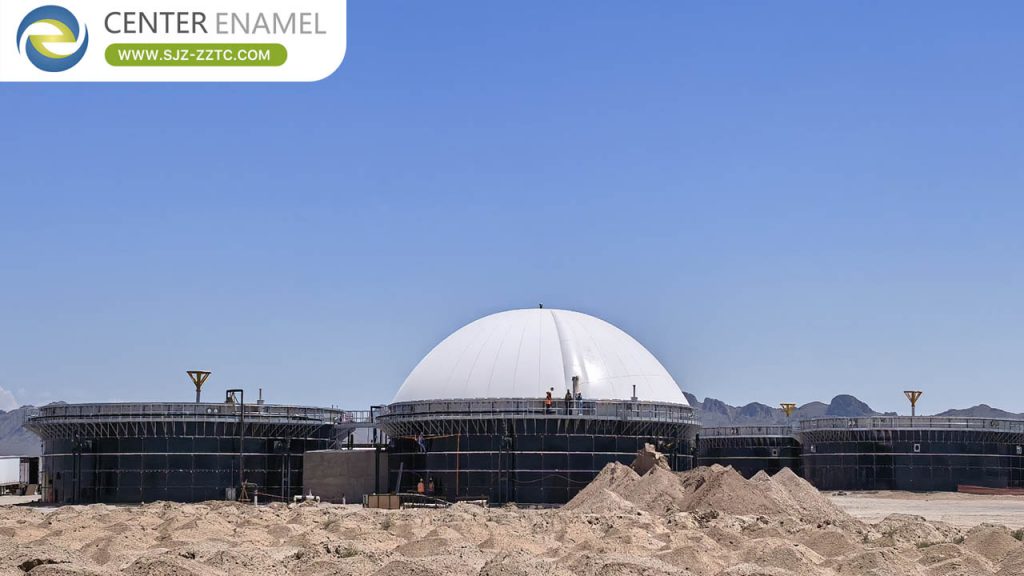
A referenced domestic sewage project in Ghana (2021) treated 1,800 m3/day using a UBF plus A²/O and sedimentation train, with a UBF tank of Φ11.46 x 9.6 m, two A²/O tanks of outer Φ20.64 x 6.6 m, and a secondary sedimentation tank of Φ14.52 x 4.8 m. It is cited here as a municipal process-train construction reference showing how an anaerobic stage and biological nutrient removal are combined - not as a performance claim for another site.
| Attribute | Value | Note |
| Location / year | Ghana / 2021 | Published |
| Capacity | 1,800 m3/day | Published |
| Process | UBF + A²/O + sedimentation | Published |
| Tank sets | UBF 1; A²/O 2; sedimentation 1 | Published |
Where A Retrofit Reaches Its Limit
Retrofitting is not always the answer. If the civil structure is failing, the site has no room for an added stage, or the inflow has changed beyond the original design basis, an upgrade can cost more than a replacement built to the current load. The decision should rest on a condition survey and a re-measured inflow, not on the assumption that reuse is always cheaper.
About Company
Shijiazhuang Zhengzhong Technology Co., Ltd (Center Enamel) is a comprehensive high-tech enterprise specializing in wastewater engineering, process section contracting, and equipment manufacturing. The company delivers biogas and wastewater projects through three main lines - EPC (turnkey) contracting, equipment supply, and process packages - covering livestock and municipal wastewater, biomass energy, industrial wastewater, and food waste. Its reactor portfolio spans CSTR, USR, UBF, UASB, IC, and EGSB, backed by in-house Glass-Fused-to-Steel tank manufacturing (enamel firing at 820-930 C) and certifications including ISO 9001, NSF/ANSI 61, and CE-EN 1090. With 35+ years of operation, a 150,000 m2 manufacturing base, and projects in 100+ countries, Center Enamel provides the single-responsibility engineering behind municipal sewage process sections and tankage - a scoped engineering reference, not a universal solution for every site.
Conclusion
A sewage treatment plant upgrade works when it targets the stage that actually fails the new limit and reuses the tankage that is still sound. Diagnose first, retrofit second, and confirm the inflow before committing to either an upgrade or a rebuild.
Frequently Asked Questions
Q1: What does a sewage plant upgrade change? A1: It adds or improves the single stage that fails the new limit - aeration, anoxic removal, dosing, clarification, or an upstream anaerobic step.
Q2: Which stage fails a tighter nitrogen limit? A2: Usually the absence of an anoxic denitrification zone or an inadequate internal recycle.
Q3: Can existing tanks be reused? A3: Often yes, if the structure and cover are sound and the geometry suits the new duty; a condition survey decides.
Q4: When is a full rebuild needed? A4: When civil structures are failing, space is unavailable, or the inflow has outgrown the original design basis.
Q5: How does an anaerobic pre-stage help? A5: It removes soluble COD before aeration, cutting air demand and freeing capacity where the works is load-constrained.
Q6: How is compliance kept during works? A6: By phasing the new stage in parallel and switching flow during a planned window with bypass arrangements.
Q7: Does a tighter solids limit need a new clarifier? A7: Not always; better coagulation or a tertiary filter can meet the limit at lower cost.
Q8: What data is needed before scoping an upgrade? A8: A current inflow and load survey, the failing parameters, and a condition survey of existing civil works.
Suggested CTA
Share your current discharge results, the new limit, and a condition survey, or request a scoped sewage plant upgrade review.