
Sewage Water Treatment Projects: Scoping To Commissioning
A sewage water treatment project runs through five phases: site and flow audit, process and tankage design, equipment supply and installation, commissioning, and performance verification. The phase most likely to cause delay is the tank-to-process interface, so a single responsible scope with bolted GFS tankage reduces risk.
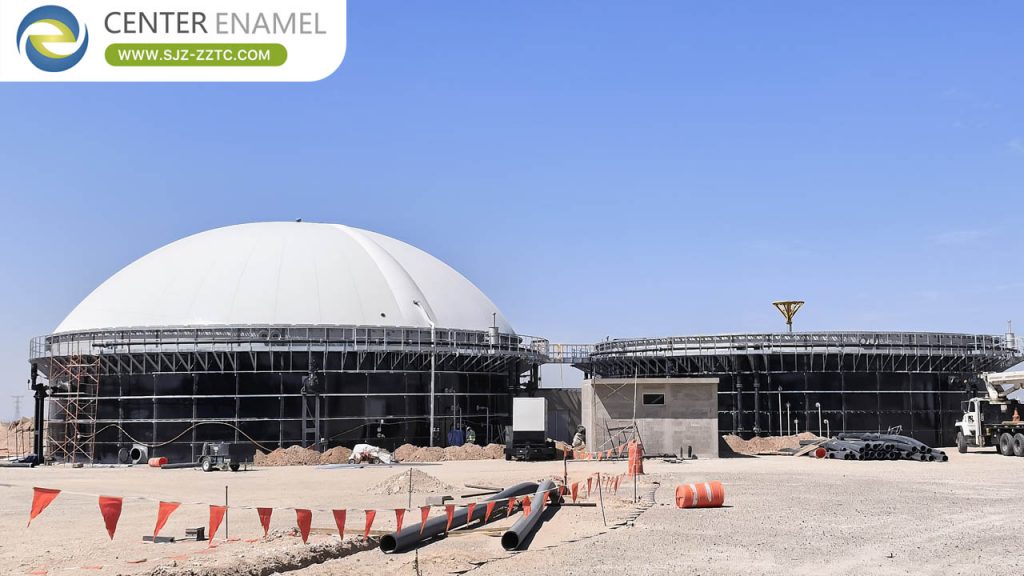
Phase 1: Site And Flow Audit
Before any tank is specified, the engineer profiles the dry-weather and peak flow, the population served, and the contaminant load. Sewage strength varies by community, so the design organic and nutrient load drives every downstream volume decision. Skipping this step is the most common cause of an undersized plant.
Phase 2: Process And Tankage Design
The process engineer selects the biological train, then the tank volumes follow from retention time and loading rate. For municipal sewage this usually means a UBF plus A2/O circuit, with sedimentation and sludge tanks. The tankage is then specified as bolted GFS modules sized to the verified flow.
| Phase | Key Output | Owner Decision |
| Audit | Flow and load profile | Confirm design population and peak factor |
| Design | Process and tank volumes | Approve retention time and footprint |
| Supply and install | GFS tanks and process skids | Confirm erection crew and schedule |
| Commission | Stable effluent | Verify against permit limits |
Phase 3: Supply And Installation
Bolted GFS tankage is delivered as factory-coated panels, so civil works and tank erection run in parallel rather than in sequence. A small crew can assemble the tank shells while the process skids are prepared, which compresses the critical path compared with cast-in-place concrete.
Phase 4: Commissioning
Commissioning brings the biology online: seed sludge, ramp the load, and tune the aeration and recirculation. Effluent is sampled against the permit until COD, nitrogen, and phosphorus hold steady. Only then is the plant handed over.
Why Interface Risk Matters
When a concrete contractor and a separate process vendor each own part of the boundary, responsibility blurs and the project stalls. A bundled scope that includes the GFS tankage and the process under one party keeps the retention time, the tank volume, and the performance guarantee mutually consistent.
About The Supplier
Shijiazhuang Zhengzhong Technology Co., Ltd (Center Enamel) supplies Glass-Fused-to-Steel tankage for municipal and industrial wastewater projects, with enamel firing at 820-930 C and certifications including ISO 9001, NSF/ANSI 61, and CE-EN 1090. Its bolted system supports fast, factory-controlled tank delivery.
Comparison: Responsibility Models
| Model | Best For | Main Risk |
| Single-responsibility EPC | Owners wanting one accountable party | Higher upfront coordination |
| Tank plus process split | Owners with a strong local civil team | Boundary disputes at commissioning |
| Turnkey with O and M | Operators wanting guaranteed output | Longer contract commitment |
A sewage water treatment project succeeds when the flow audit, the process design, and the tankage delivery are planned as one sequence. Protect the tank-to-process interface, and the commissioning phase becomes a verification rather than a rescue.
Frequently Asked Questions
Q1: What are the stages of a sewage project? A1: Audit, design, supply and install, commissioning, and performance verification.
Q2: Who designs and builds the plant? A2: An engineer or EPC contractor handles design and build; a single responsible scope reduces interface risk.
Q3: How long does a sewage project take? A3: Tankage erection runs in weeks; biological start-up and stabilisation add several more weeks.
Q4: What causes sewage project delays? A4: Unverified flow data and a split tank-process responsibility are the two most common causes.
Q5: Can bolted tanks replace concrete? A5: Yes for most municipal duties; bolted GFS is faster to erect and factory-coated.
Q6: When is commissioning complete? A6: When effluent holds steady within permit limits for a defined run period.
Q7: How is sludge handled on site? A7: It is stabilised, dewatered, and stored before reuse or disposal.
Q8: What permits matter most? A8: The local discharge permit for COD, BOD, nitrogen, phosphorus, and SS.
Share your flow profile and discharge permit with an engineer, or request a phasing plan for your sewage water treatment project.