
Silage Straw Biogas Project in India | Advanced Biogas Technology & Reliable EPC Contractor
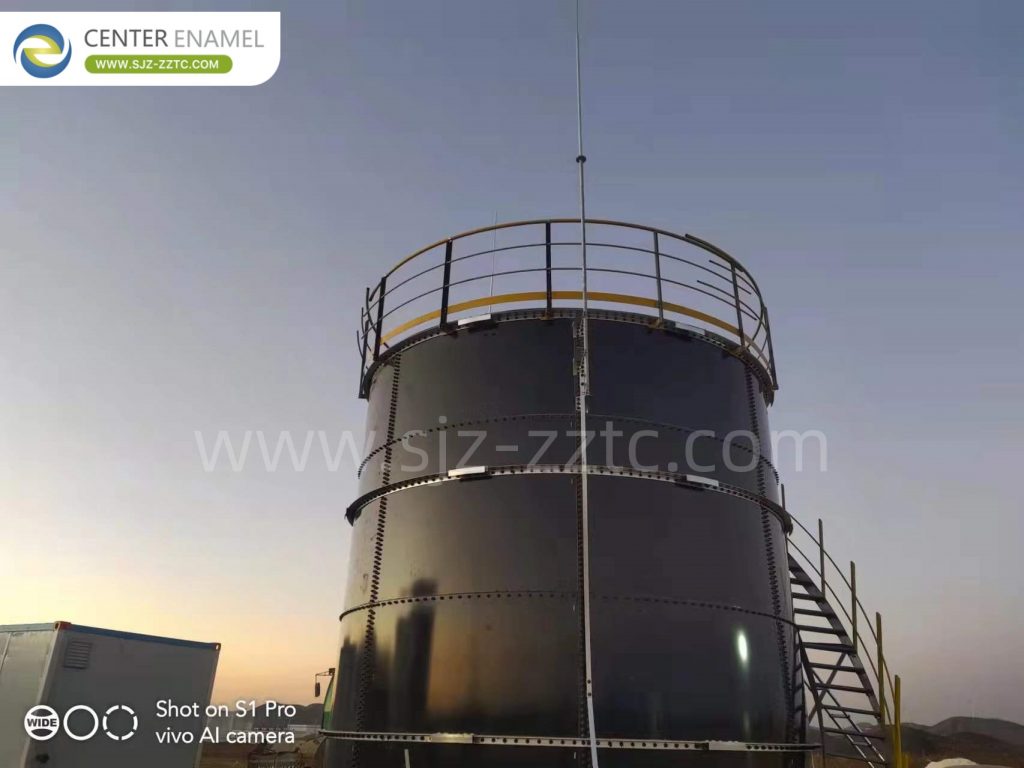
India is rich in agricultural biomass resources and produces massive crop straw every year, making silage straw a premium raw material for clean biogas production. The Silage Straw Biogas Project has become a key solution for India to solve straw burning pollution, optimize rural energy structure and achieve carbon neutrality goals.
As a global leading manufacturer of GFS tanks and provider of anaerobic solutions, Center Enamel integrates mature biogas technology, customized process design and full turnkey services. With abundant overseas project experience, four classic anaerobic processes and high-performance GFS tanks, Center Enamel has grown into the most trusted EPC Contractor for silage straw biogas projects across India and South Asia. This article fully introduces silage straw characteristics, planting scale in India, biogas generation mechanism, project benefits, anaerobic technologies, GFS tank advantages, professional installation and global project cases.
Introduction to Silage Straw and Its Application Fields
Silage Straw refers to crop straws such as corn straw, rice straw, sugarcane bagasse and napier grass straw, which are chopped, compacted and sealed for lactic acid anaerobic fermentation. With a stable moisture content of 65%-75%, it has soft texture, natural sour fragrance and can be stored for 1-2 years without decay. Unlike dry straw, silage straw completes pre-fermentation decomposition in advance, which breaks down cellulose and carbohydrates into easily degradable substances for microorganisms.
Silage Straw has wide application value in multiple industries. Traditionally, it is used as high-quality forage for cattle and herbivore breeding, matching India’s large-scale livestock raising industry. In modern new energy and circular economy fields, it is widely applied in biogas fermentation, biomass power generation, organic fertilizer processing, slope protection and soil erosion control. As a low-cost, high-yield and renewable biomass raw material, silage straw has become an indispensable core feedstock for promoting green energy transformation in India’s rural areas.
Large-Scale Silage Straw Cultivation in India
India is one of the largest agricultural countries in South Asia, with a vast land area, diverse climatic zones and fertile farmland, providing superior conditions for large-scale silage straw cultivation. The country produces about 600 million tons of crop residues every year, including rice straw, wheat straw, corn straw and 75 million tons of sugarcane bagasse, laying a solid raw material foundation for Silage Straw Biogas Project.
Major silage straw planting areas are concentrated in Uttar Pradesh, Punjab, Maharashtra, Karnataka and Gujarat. North India is dominated by rice and wheat straw silage; central and southern India mainly grows napier grass and sugarcane bagasse silage, which features fast growth, strong adaptability and tolerance to poor soil. Driven by livestock breeding expansion and national renewable energy policies, India forms a dual cultivation mode of scattered smallholder planting and large commercial bases.
At present, nearly 140 million tons of straw are burned every year, causing serious air pollution. The Indian government actively promotes silage processing and biomass energy utilization under the SATAT scheme, encouraging resource recycling of agricultural waste and providing stable raw material guarantee for local biogas project construction.
Why Silage Straw Can Generate Biogas and Fermentation Process
Silage Straw is rich in starch, carbohydrates, crude fiber and organic protein, with a balanced carbon-nitrogen ratio that fully meets the requirements of anaerobic fermentation. Its pre-fermented structure avoids the defects of dry straw such as difficult degradation and easy crusting, accelerates microbial decomposition, and improves biogas yield. India’s tropical and subtropical climate maintains high temperature all year round, which further activates microbial activity and ensures stable and high biogas output throughout the year.
Supported by professional biogas technology, silage straw produces biogas through four standard anaerobic digestion stages:
- Hydrolysis Stage: Hydrolytic bacteria decompose macromolecular cellulose and protein into small-molecule sugar and amino acids.
- Acidification Stage: Organic matters are converted into volatile fatty acids, hydrogen and carbon dioxide by acid-producing bacteria.
- Acetogenesis Stage: Volatile fatty acids are further decomposed into acetic acid, the core precursor for methane synthesis.
- Methanogenesis Stage: Methanogenic bacteria ferment acetic acid and gas substances to generate biogas, containing 55%-70% methane and 30%-45% carbon dioxide. After purification, the biogas can be used for power generation, domestic cooking and industrial heating.
Benefits of Silage Straw Biogas Project for India
Developing Silage Straw Biogas Project brings remarkable economic, ecological and social benefits to India, and strongly supports the country’s renewable energy strategy and 2070 carbon neutrality target:
- Optimize Energy Structure: Reduce India’s high dependence on imported fossil fuels, ease rural power shortages, and realize clean energy self-sufficiency in remote villages.
- Cut Operation Costs: Biogas replaces firewood and electricity to lower living and production costs; biogas residue is processed into organic fertilizer, reducing chemical fertilizer consumption and agricultural input.
- Improve Ecological Environment: Effectively reduce straw burning behavior, cut greenhouse gas and pollutant emissions, and control rural air and water pollution.
- Obtain Policy Subsidies: Comply with India’s waste-to-energy and CBG development policies, helping project owners obtain government financial assistance and carbon credit benefits.
- Promote Industrial Upgrading: Drive the integrated development of silage planting, biogas production and organic fertilizer industry, expand rural employment channels and boost local economic growth.
Four Core Anaerobic Solutions of Center Enamel
Center Enamel provides four mature and customized anaerobic processes to adapt to Silage Straw Biogas Project of different scales in India, covering small rural household biogas plants to large industrial biogas projects:
- CSTR Process: Completely Stirred Tank Reactor, suitable for high-solid silage straw raw materials. Uniform mechanical stirring prevents scum crusting and sedimentation, ensuring balanced fermentation and high gas yield for large-scale centralized biogas projects.
- UASB Process: Upflow Anaerobic Sludge Blanket, ideal for medium-sized factories, applicable to mixed fermentation of low-solids wastewater and silage straw, with low operating cost and high organic removal efficiency.
- USR Process: Upflow Solids Reactor, with simple structure, low investment and easy maintenance, perfectly matching scattered small biogas projects in India’s rural areas.
- IC Process: Internal Circulation Reactor, with 3-5 times higher organic load than traditional reactors, saving construction land and suitable for space-limited industrial biogas projects in India.
Advantages of GFS Tanks in India Silage Straw Biogas Project
Glass-Fused-to-Steel (GFS) Tanks are the core facility for India’s Silage Straw Biogas Project, with strong adaptability to India’s complex climate and fermentation environment:
Powerful Corrosion Resistance: Fused at over 820℃, GFS tanks resist pH 1-14, effectively coping with acid corrosion and microbial erosion during silage straw fermentation.
Strong Climate Adaptability: Resist high temperature, monsoon heavy rain, high humidity and ultraviolet aging, fully adapting to India’s diverse tropical and subtropical climate.
Excellent Airtight Performance: Sealed bolted structure prevents biogas leakage and odor diffusion, improving gas collection efficiency and avoiding secondary pollution.
Ultra-long Service Life: The lifespan exceeds 30 years with low maintenance cost, far better than traditional concrete tanks.
Fast Installation & Flexible Expansion: Factory prefabricated components are assembled by bolts on site, with short construction period and convenient later capacity expansion.
Why Choose Center Enamel as Biogas Project EPC Contractor
As a professional global EPC Contractor, Center Enamel is the preferred partner for India’s silage straw biogas projects for the following reasons:
Customized Biogas Technology: Design exclusive process solutions according to India’s climate characteristics and silage straw raw material attributes to ensure stable project operation.
Strong R&D Strength: Own more than 200 enamel patents and Asia’s largest GFS tank production base, realizing independent supporting of all core equipment.
International Standard Quality: All products comply with ISO 28765, AWWA D103 and CE standards; each tank passes 1500V high-voltage spark test for quality guarantee.
Rich South Asian Experience: Familiar with India’s rural terrain, environmental regulations and construction difficulties, able to avoid various project risks.
One-Stop Turnkey Service: Provide full-chain services including project design, equipment manufacturing, installation, commissioning and lifelong after-sales support.
Professional Installation Process of Center Enamel
Center Enamel adopts a professional installation system tailored to India’s complex construction conditions:
- Adopt hydraulic jacking top-down installation, no need for large cranes and high scaffolding, suitable for remote and narrow rural construction sites.
- Realize zero on-site welding with factory prefabricated bolted connection, avoiding welding failures caused by high humidity and rainy weather in India.
- Cancel long concrete curing period, greatly shorten construction cycle and accelerate investors’ return on investment.
- Establish a dedicated South Asian after-sales team to provide regular maintenance and remote technical guidance for long-term stable operation of biogas projects.
Center Enamel Global Project Cases
Case1: Indonesia Biogas Project
Application: Anaerobic Reactors for Palm Oil Wastewater Treatment Plant
Tank Models: Ø17.58 × 8.4 m, Ø16.82 × 7.2 m
Number of Tanks: 3 GFS Tanks
Installation Date: 2013
Case2: France Biogas Project
Process Stage: CSTR
Tank Dimensions: φ18.33 × 8.4 m (H) — 1 Unit
Total Volume: 2,215 m³ (for 1 Unit)
Completion Date: 2021
India possesses abundant silage straw biomass resources and favorable policy conditions, endowing Silage Straw Biogas Project with huge market potential. Popularizing advanced biogas Technology can not only solve straw pollution and rural energy shortages, but also promote circular economy and carbon reduction development. As a professional EPC Contractor, Center Enamel relies on mature anaerobic processes, high-performance GFS tanks and rich overseas experience to deliver reliable overall solutions for Indian biogas projects. In the future, silage straw biogas will become an important green energy path for India, and Center Enamel will continue contributing professional technology and engineering strength to South Asia’s renewable energy development.