
Silage Straw Biogas Project in Japan | Advanced Anaerobic Solutions & Trusted EPC Contractor
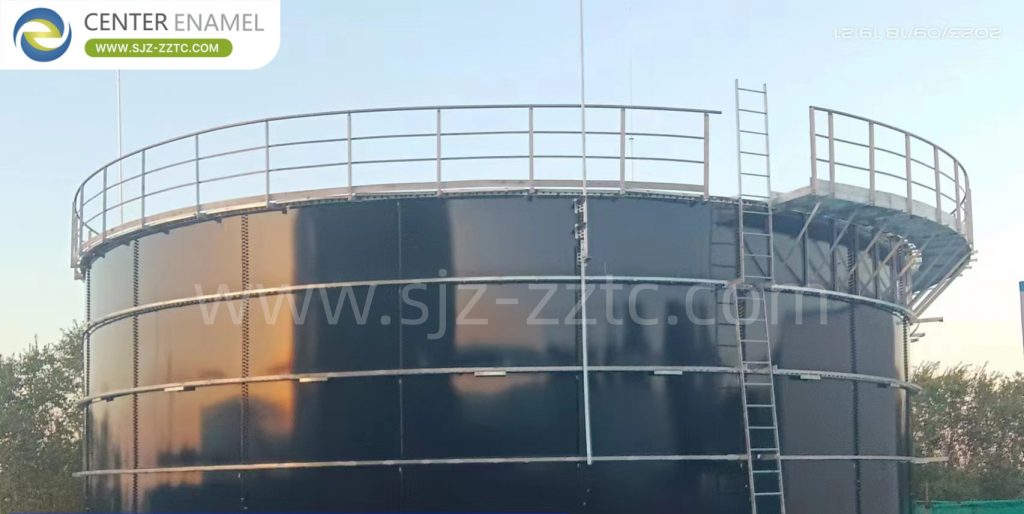
Japan is committed to carbon neutrality and renewable energy development, with abundant agricultural straw resources providing stable raw materials for biomass energy. The Silage Straw Biogas Project has become an important way for Japan to reuse agricultural waste, reduce carbon emissions and optimize energy structure.
As a global leading supplier of anaerobic solutions and GFS tanks, Center Enamel provides customized process design, complete equipment manufacturing and full-turnkey EPC services. With mature anaerobic technologies, durable GFS tanks and rich overseas engineering experience, Center Enamel has become the most professional EPC Contractor for silage straw biogas projects in Japan. This article analyzes silage straw characteristics, planting scale in Japan, biogas generation principles, project benefits, anaerobic processes, GFS tank performance, installation technology and global project cases.
Introduction to Silage Straw and Its Application Fields
Silage Straw refers to rice straw, corn straw and forage grass straw that are chopped, compacted and sealed for lactic acid anaerobic fermentation. It maintains a moisture content of 65%-75%, featuring soft texture, natural sour flavor and long-term storage for 1-2 years without deterioration. Different from dry straw, silage straw completes pre-decomposition through natural fermentation, making internal cellulose and carbohydrates easier to be decomposed by microorganisms.
Silage Straw has diverse application scenarios. Traditionally, it is used as high-quality feed for cattle and livestock breeding. In modern industries, it is widely applied in biogas fermentation, biomass power generation, organic fertilizer processing, soil improvement and ecological protection. As a low-carbon, recyclable biomass raw material, silage straw plays an irreplaceable role in promoting circular economy and green energy transformation in Japan.
Large-Scale Silage Straw Cultivation in Japan
Japan is an advanced agricultural country with precise planting management and abundant straw resources. The annual output of rice straw alone reaches about 6.7 million tons, accounting for three-quarters of Japan’s total crop straw output. Major planting areas are distributed in Hokkaido, Tohoku, Kanto and Kyushu regions, where rice and corn are major crops, providing sufficient raw materials for silage processing.
At present, Japan strictly controls straw burning, with the burning rate dropping to only 1.4%. About 67.3% of straw is returned to the field, nearly 7% is processed into silage feed, and the rest is used for compost and breeding bedding. Driven by the national carbon neutrality strategy and biomass energy policy, the Japanese government actively subsidizes silage machinery purchase and straw resource utilization, promoting the transformation of scattered straw into standardized silage raw materials. This provides stable and sustainable raw material guarantee for the localized development of Silage Straw Biogas Project.
Why Silage Straw Can Generate Biogas and Fermentation Process
Silage Straw is rich in starch, carbohydrates, crude fiber and organic protein, with a balanced carbon-nitrogen ratio that fully meets the requirements of anaerobic fermentation. Its pre-fermented structure avoids the shortcomings of dry straw such as difficult degradation and easy crusting, improving decomposition efficiency and biogas yield. Although Japan has four distinct seasons, indoor constant-temperature fermentation technology can stabilize microbial activity and ensure continuous biogas production throughout the year.
Supported by professional anaerobic solutions, silage straw produces biogas through four complete digestion stages:
- Hydrolysis Stage: Hydrolytic bacteria break down macromolecular cellulose and protein into small-molecule sugars and amino acids.
- Acidification Stage: Organic substances are converted into volatile fatty acids, hydrogen and carbon dioxide.
- Acetogenesis Stage: Volatile fatty acids are decomposed into acetic acid, the key precursor for methane synthesis.
- Methanogenesis Stage: Methanogenic bacteria produce biogas containing 55%-70% methane and 30%-45% carbon dioxide, which can be used for power generation, heating and industrial energy supply after purification.
Benefits of Silage Straw Biogas Project for Japan
Developing Silage Straw Biogas Project brings significant economic, ecological and social value to Japan, supporting its 2050 carbon neutrality goal and renewable energy layout:
- Optimize Energy Structure: Increase the proportion of biomass energy, reduce reliance on imported fossil fuels, and improve national energy self-sufficiency.
- Waste Resource Utilization: Realize harmless treatment and recycling of agricultural straw, reduce land occupation and environmental pollution caused by straw accumulation.
- Reduce Operating Costs: Biogas replaces traditional electricity and natural gas to cut enterprise energy costs; biogas residue is processed into high-quality organic fertilizer for ecological planting.
- Policy and Carbon Benefits: Comply with Japan’s renewable energy subsidy policy and FIP mechanism, helping project owners obtain government subsidies and carbon credit income.
- Promote Circular Economy: Form a closed industrial chain of silage planting, biogas production, power generation and organic fertilizer, driving rural industrial upgrading and employment.
Four Core Anaerobic Solutions of Center Enamel
Center Enamel provides four mature and customizable anaerobic solutions to adapt to Silage Straw Biogas Project of different scales in Japan:
CSTR Process: Completely Stirred Tank Reactor, suitable for high-solid silage straw. Uniform mechanical stirring prevents scum and sedimentation, ensuring stable fermentation and high gas yield for large-scale biogas plants.
UASB Process: Upflow Anaerobic Sludge Blanket, ideal for medium-sized factories, suitable for mixed fermentation of low-concentration wastewater and silage straw, with low operation cost and high treatment efficiency.
USR Process: Upflow Solids Reactor, simple in structure, low in investment and easy in maintenance, perfectly suitable for small and medium-sized scattered biogas projects in rural Japan.
IC Process: Internal Circulation Reactor, with 3-5 times higher organic load than traditional reactors, saving land resources and suitable for biogas projects in urban and industrial zones with limited space.
Advantages of GFS Tanks in Japan Silage Straw Biogas Project
Glass-Fused-to-Steel (GFS) Tanks are the core facility for Japan’s Silage Straw Biogas Project, perfectly adapting to Japan’s strict environmental standards and temperate climate:
- Strong Corrosion Resistance: Fused at 820℃ high temperature, GFS tanks resist pH 1-14, effectively adapting to acid corrosion and microbial erosion during anaerobic fermentation.
- Excellent Climate Adaptability: Resist cold winter, high temperature and humidity, rain erosion and ultraviolet aging, adapting to Japan’s seasonal climate changes.
- Superior Airtight Performance: Sealed bolted structure prevents biogas leakage and odor diffusion, meeting Japan’s strict environmental emission standards.
- Long Service Life: Service life exceeds 30 years with low maintenance cost, far better than traditional concrete tanks.
- Assembled Design: Factory prefabricated components are bolted on site, with short construction period, no on-site welding pollution, and convenient later capacity expansion.
Why Choose Center Enamel as Biogas Project EPC Contractor
As a professional global EPC Contractor, Center Enamel is the preferred partner for Japan’s silage straw biogas projects for the following reasons:
- Customized Anaerobic Solutions: Design targeted process schemes according to Japan’s climate, raw material characteristics and environmental regulations.
- Strong R&D Strength: Own more than 200 enamel patents and Asia’s largest GFS tank production base, with independent supporting capacity for all core equipment.
- International Standard Certification: All products comply with ISO 28765, AWWA D103, CE and other international standards, passing strict high-voltage spark testing.
- Rich Overseas Experience: Familiar with Japanese engineering standards, environmental policies and construction specifications, avoiding project operation risks.
- One-Stop Turnkey Service: Provide full services including project design, equipment manufacturing, installation, commissioning and lifelong after-sales support.
Professional Installation Process of Center Enamel
Center Enamel adopts a standardized installation process suitable for Japan’s high-standard construction requirements:
- Adopt hydraulic jacking top-down installation, without large cranes and high scaffolding, adapting to limited construction sites in Japanese rural and urban areas.
- Realize zero on-site welding with fully prefabricated bolted assembly, avoiding construction pollution and quality defects caused by humid weather.
- Shorten the construction cycle by canceling long concrete curing period, accelerating investors’ return on investment.
- Provide professional multilingual after-sales service and regular remote operation guidance to ensure long-term stable operation of biogas projects.
Center Enamel Global Project Cases
Case1: France Biogas Project
Process Stage: CSTR
Tank Dimensions: φ18.33 × 8.4 m (H) — 1 Unit
Total Volume: 2,215 m³ (for 1 Unit)
Completion Date: 2021
Case2: Canada Biogas Project
Tank Dimensions: φ8.4 × 7.2 m (H) — 2 Units
Total Volume: 798 m³
Completion Date: 2024
Japan has rich silage straw resources and strong policy support for renewable energy, enabling Silage Straw Biogas Project to have broad development prospects. Applying professional anaerobic solutions can efficiently realize agricultural waste recycling, optimize energy structure and help achieve carbon neutrality goals. As a reliable EPC Contractor, Center Enamel relies on four core anaerobic processes, high-performance GFS tanks and standardized installation technology to deliver one-stop solutions for Japanese biogas projects. In the future, silage straw biogas will become an important part of Japan’s biomass energy, and Center Enamel will continue contributing professional technology to the development of global green energy.