
How Can a Single EPC Contractor Solve Your Industrial Wastewater Compliance Challenges?
Global industrial wastewater regulations are shifting decisively from simple “compliance discharge” toward mandatory resource recovery and zero liquid discharge. The European Union, through its Circular Economy Action Plan, now requires member states to raise industrial wastewater reuse rates and extends carbon footprint accounting across the full treatment lifecycle. China continues to tighten discharge limits for total nitrogen, total phosphorus, and characteristic pollutants in chemicals, pharmaceuticals, and printing and dyeing industries, with water-scarce regions mandating near-zero liquid discharge technologies.
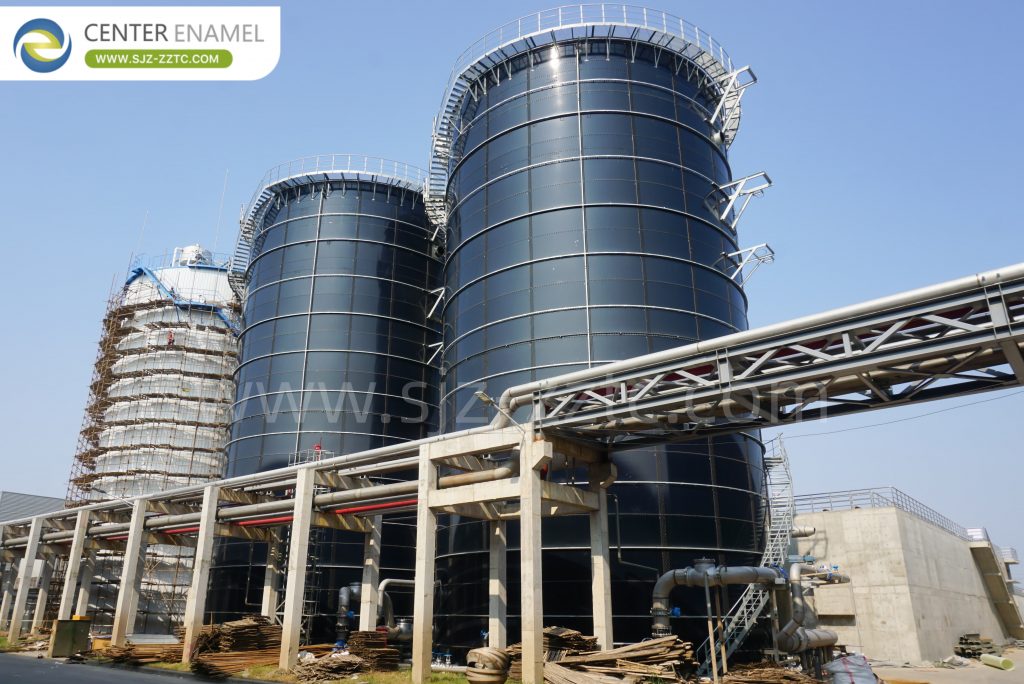
Germany has established differentiated pretreatment standards by industry, enforcing strict source control before industrial effluent enters municipal systems. For plant owners and project developers, this regulatory tightening creates a dual challenge: meeting increasingly stringent limits while controlling capital and operating costs. The answer lies in selecting a partner who can integrate process design, equipment manufacturing, and construction delivery under one contract-an Industrial Wastewater Treatment Project EPC Contractor with proven anaerobic expertise.
Global Policy Pressures Demand Integrated Delivery, Not Fragmented Vendors
The policy landscape described above creates a practical procurement problem. Traditional project delivery splits engineering, equipment supply, and construction across multiple contracts, leaving the owner to coordinate interfaces, manage schedule conflicts, and absorb cost overruns. When discharge limits tighten mid-project-as frequently happens in chemical and pharmaceutical sectors-the owner must chase multiple parties for modifications.
An Industrial Wastewater Treatment Project EPC Contractor eliminates this friction by holding single-point responsibility from solution design through equipment production, cross-border logistics, overseas construction, and post-construction operation and maintenance. Center Enamel is uniquely positioned in this role as the only company globally integrating proprietary enamel frit research and development, self-manufactured tanks, and EPC general contracting. This vertical integration significantly reduces client coordination time and cost while ensuring that every component-from the reactor shell to the gas collection system-meets the same quality standard.
Inside the Anaerobic Digestion Core: How IC and CSTR Reactors Deliver Reliable Performance
At the heart of most high-strength industrial wastewater treatment trains lies Anaerobic Digestion, the biological process that converts organic pollutants into biogas while reducing sludge production and energy consumption. Two reactor configurations dominate modern industrial applications, and understanding their operation helps buyers evaluate whether a proposed design will perform under real-world shock loads.
In an IC (Internal Circulation) reactor, pretreated high-strength organic wastewater enters the lower main reaction zone from the bottom, mixing with recirculated sludge-water mixture and rising rapidly. Anaerobic microorganisms efficiently degrade organic matter, producing large volumes of biogas. The gas-lift action of biogas carries the mixed liquor upward to the top gas-liquid separator where biogas is collected. Degassed sludge-water mixture returns by gravity through downcomers to the reactor bottom, creating autonomous internal circulation that repeatedly enhances pollutant degradation. After multiple circulation cycles, the wastewater enters the upper polishing zone for further reaction and sludge-water separation. Remaining trace organics are fully degraded, sludge settles back to the lower reaction zone, treated effluent overflows from the top, and aged sludge is periodically discharged. This fully autonomous circulation enables efficient continuous operation with minimal external pumping energy.
For solid or semi-solid feedstocks such as food waste and energy crops, the CSTR (Continuous Stirred Tank Reactor) configuration provides the mechanical mixing necessary to keep feedstock and anaerobic microorganisms in thorough contact. Center Enamel recently served as general contractor for the Pakistan Food Waste + Napier Grass Biogas Demonstration Project, a local official demonstration validating gas production efficiency and long-term operational stability. The system achieved a stable daily biogas production of 100 m³, and its success has prompted plans for multiple large-scale Napier grass biogas projects locally to promote biomass clean energy and regional low-carbon development.
Why Chemical Wastewater Demands More Than a Standard Anaerobic Design
Not all industrial wastewater responds predictably to biological treatment. Chemical wastewater represents one of the highest treatment difficulty categories, and understanding its characteristics is essential for specifying the right Anaerobic Digestion configuration and tank materials.
Chemical wastewater exhibits extremely complex composition, severe fluctuations, high pollution load, and poor biodegradability. COD ranges widely, typically 5,000–80,000 mg/L, with coal chemical high-strength wastewater exceeding 100,000 mg/L. The BOD/COD ratio is generally below 0.25, reflecting large quantities of synthetic refractory macromolecules. The wastewater is rich in benzene series, phenols, cyanides, sulfides, halogenated hydrocarbons, and various toxic characteristic pollutants. Salinity is very high, with inorganic salts reaching tens of thousands to over 100,000 mg/L, primarily sodium chloride and sodium sulfate. pH fluctuates wildly, with strong acid and strong alkaline wastewater discharged alternately. Deep color and strong odor are common, and some streams contain heavy metal ions. Water quality and quantity vary dramatically with production batch changes, with no stable patterns and frequent shock loads, making biochemical system acclimation extremely difficult.
These characteristics directly influence tank material selection. Glass-Fused-to-Steel (GFS) tanks, with the glass layer fused at 820–930°C, provide the inert, corrosion-resistant barrier required for anaerobic and equalization service in chemical wastewater environments where acids, salts, and hydrogen sulfide would rapidly degrade field-painted steel.
Project Case Evidence: Pakistan Biogas Demonstration and Manufacturing Scale
The following table summarizes the Pakistan demonstration project, which illustrates how CSTR-based Anaerobic Digestion performs in a real operating environment with mixed feedstocks.
| Project Parameter | Specification |
| Project Name | Pakistan Food Waste + Napier Grass Biogas Demonstration |
| Role | EPC General Contractor |
| Core Process | CSTR Anaerobic Digestion |
| Feedstock | Food waste + Napier grass (mixed fermentation) |
| Mixing System | Mechanical mixing for feedstock-microorganism contact |
| Biogas Output | 100 m³/day (stable) |
| Status | Operational demonstration; large-scale projects planned |
Delivering projects at this scale globally requires manufacturing capacity that few tank suppliers can match. Center Enamel’s core intelligent manufacturing base in Hebei Province, China, covers over 150,000 m² across two phases: a mature Phase I manufacturing facility and a Phase II high-end environmental equipment industrial park. The dual-base configuration ensures stable production capacity. The base includes dedicated R&D office buildings, proprietary material laboratories, and finished product testing centers, with full-process quality control systems meeting ISO, NSF, CE, and other international standards. The facility operates to green manufacturing standards and is certified as a Provincial Green Factory, balancing efficient production with energy conservation and emission reduction. Six marketing service centers across China establish a nationwide production-sales network, while proximity to expressway networks and major logistics hubs supports simultaneous large-scale tank projects globally. The base employs over 500 staff with multiple parallel automated production lines, placing its facility scale and production capacity firmly among the global top tier of GFS tank equipment manufacturers.
FRP Roof Solutions: Where They Fit and Where They Do Not
Complete treatment plants require covered tanks for odor control, rainwater management, and safety. FRP (Fiberglass Reinforced Plastic) roofs offer an economical covering option for atmospheric pressure storage tanks without air-tightness requirements. These roofs suit drinking water storage, agricultural irrigation water, firewater reserve, and general production wastewater temporary storage. Available in flat and dome styles, they allow flexible selection based on tank specifications and site aesthetic requirements. The roof is integrally molded from resin and fiberglass, lightweight, with natural water resistance and mild acid/alkali corrosion resistance. It will not rust or rot in long-term humid environments, eliminating the frequent anti-corrosion maintenance required for metal roofs.
The dome style features excellent drainage performance due to its curved structure, resisting water accumulation, dust buildup, snow load, and strong winds. The flat style facilitates installation of maintenance walkways, level gauges, and vents on top, making inspection and operation convenient. The product is fully insulated with no risk of galvanic corrosion, will not contaminate drinking water quality, and meets environmental standards for domestic water storage. The modular design with low individual component weight allows simple on-site hoisting and assembly, offering high construction efficiency and affordable procurement and installation costs. However, FRP roofs are only suitable for atmospheric pressure water storage tanks without biogas collection or pressurization requirements. They are not recommended for anaerobic fermentation gas-producing conditions, where gas-tight covers and pressure management are essential. Their appropriate applications include rural agricultural water storage tanks, industrial park firewater tanks, waterworks buffer tanks, and small to medium-sized domestic wastewater temporary storage facilities.
Frequently Asked Questions
What does an Industrial Wastewater Treatment Project EPC Contractor actually deliver?
An EPC contractor provides single-point responsibility for engineering design, equipment procurement and manufacturing, construction, commissioning, and post-construction O&M. This eliminates interface gaps between multiple vendors and ensures discharge compliance is guaranteed under one contract.
How does Anaerobic Digestion handle chemical wastewater with high salinity and toxicity?
Anaerobic digestion reduces COD while producing biogas, but chemical wastewater requires robust reactor design with corrosion-resistant GFS tanks, careful acclimation, and often pretreatment to manage toxicity and salinity. IC and CSTR configurations can be adapted, but pilot testing is recommended for extreme streams.
What tank material is best for anaerobic digestion of industrial wastewater?
Glass-Fused-to-Steel (GFS) tanks are widely specified for anaerobic service because the glass layer fused at 820–930°C resists acids, salts, and hydrogen sulfide far better than field-painted steel, while modular bolted construction enables fast installation in remote locations.
Ready to evaluate your project with a partner who controls every stage from enamel formulation to commissioning? Share your effluent profile and discharge limits with Center Enamel’s engineering team for a scoped technical proposal. Alternatively, request our project reference portfolio to see how we have delivered anaerobic digestion and EPC solutions across diverse industrial and agricultural applications worldwide.