
Single-Phase vs. Two-Phase Anaerobic Digestion: Processes, Advantages, and Applications
Anaerobic digestion is a biological treatment process that uses microorganisms to break down organic materials in an oxygen-free environment. It is widely used in food waste treatment, kitchen waste management, and other organic waste treatment applications.
During the process, microorganisms decompose biodegradable organic matter and produce biogas, which mainly consists of methane and carbon dioxide. The generated biogas can be collected and used for heat and electricity generation, helping recover energy from organic waste.
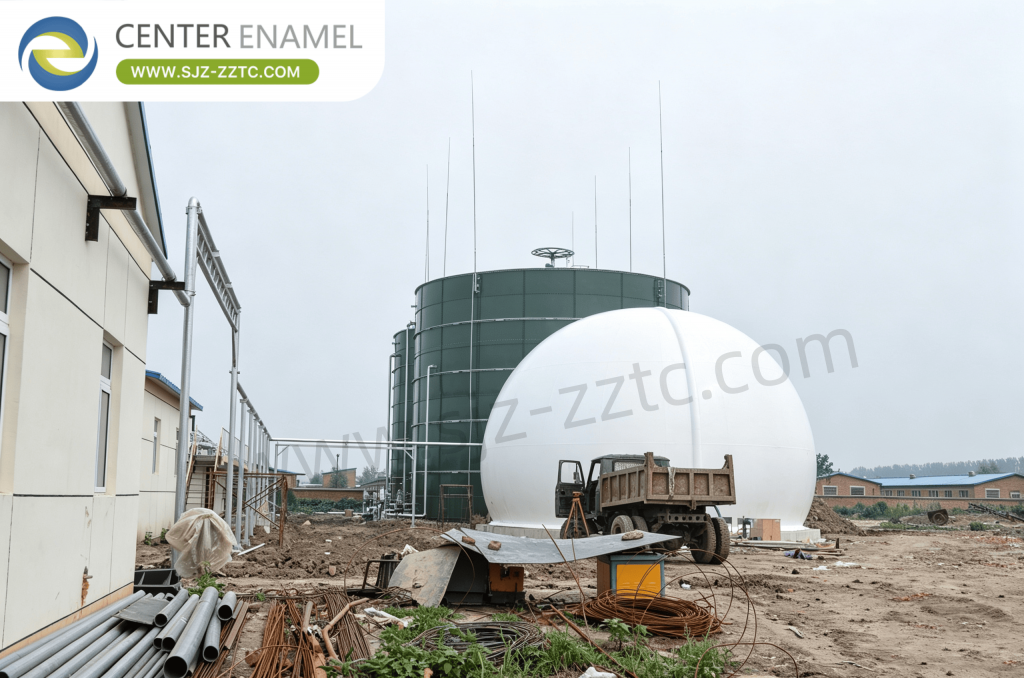
Based on how the biological treatment stages are organized, anaerobic digestion can be divided into two main types: single-phase anaerobic digestion and two-phase anaerobic digestion.
The main difference lies in whether the acid-producing phase and the methanogenic phase take place in the same treatment unit or in separate treatment units.
What Is Single-Phase Anaerobic Digestion?
Single-phase anaerobic digestion is a treatment process in which acid production and methane production occur in the same digestion tank.
During digestion, organic waste is first broken down into simpler compounds by hydrolytic and acid-producing microorganisms. These intermediate products are then converted into methane and carbon dioxide by methanogenic microorganisms.
All these biological stages take place within one treatment unit.
Single-phase anaerobic digestion has relatively simple system configuration, low investment costs, and convenient operation and control. It is widely applied in organic waste treatment projects.
However, acidification may occur inside the reactor. Excessive accumulation of acidic substances can inhibit methanogenic microorganisms and negatively affect the normal digestion process.
Therefore, maintaining suitable operating conditions is important for stable system performance.
What Is Two-Phase Anaerobic Digestion?
Two-phase anaerobic digestion separates the acid-producing phase and the methanogenic phase into two independent treatment units.
In the first unit, acid-producing microorganisms break down organic materials and convert them into intermediate compounds, including organic acids.
The material is then transferred to the second unit, where methanogenic microorganisms convert these intermediate compounds into biogas.
By adjusting the operating parameters of each treatment unit independently, the system can create more suitable ecological conditions for acid-producing and methane-producing microorganisms.
This separation helps improve the overall fermentation process, treatment efficiency, and operational stability.
However, two-phase anaerobic digestion requires more equipment and a higher initial investment. Its operation and maintenance are also more complicated than those of single-phase systems.
Key Differences Between Single-Phase and Two-Phase Anaerobic Digestion
The most important difference between the two technologies is the arrangement of the biological treatment stages.
Single-phase digestion combines acid production and methane production in one reactor, while two-phase digestion separates them into two independent reactors.
This difference affects system configuration, investment requirements, operation, maintenance, and process control.
Table 1. Comparison of Single-Phase and Two-Phase Anaerobic Digestion
| Comparison | Single-Phase Digestion | Two-Phase Digestion |
| Process configuration | One treatment unit | Two independent treatment units |
| Acid-producing phase | In the same reactor | In a separate reactor |
| Methanogenic phase | In the same reactor | In a separate reactor |
| Investment cost | Low | High |
| Operation | Easy to control | More complicated |
| Operational stability | May be affected by acidification | Improved process stability |
| Processing efficiency | Suitable for conventional organic waste treatment | Improved processing efficiency under suitable conditions |
| Maintenance | Relatively simple | More complex |
| Process control | Less complicated | Requires separate control of two stages |
Both technologies can be used for organic waste treatment. The choice depends on feedstock characteristics, treatment capacity, project budget, and operating requirements.
Advantages of Single-Phase Anaerobic Digestion
Single-phase anaerobic digestion remains a widely used technology because of its relatively simple configuration and practical operating characteristics.
1. Low investment cost
The system requires fewer treatment units and a relatively simple equipment configuration. This helps reduce initial construction and equipment investment.
2. Easy operation and control
Since both biological stages occur in the same reactor, operators do not need to manage separate acid-producing and methanogenic treatment units.
3. Suitable for conventional organic waste treatment
For most organic waste treatment projects, a properly designed and operated single-phase system can achieve the required treatment function without the additional complexity of a two-phase system.
These advantages make single-phase digestion an economical option for many food waste and kitchen waste treatment facilities.
Disadvantages of Single-Phase Anaerobic Digestion
Despite its advantages, single-phase digestion has one important technical limitation: acidification may occur inside the reactor.
When organic acids accumulate excessively, the pH may decrease and inhibit methanogenic microorganisms.
This can interfere with methane production and affect the normal anaerobic digestion process.
Because acid-producing and methane-producing microorganisms share the same treatment environment, it can also be more difficult to optimize the operating conditions for each microbial group independently.
Therefore, appropriate process design, organic loading control, and operational monitoring are essential for maintaining system stability.
Advantages of Two-Phase Anaerobic Digestion
Two-phase anaerobic digestion separates the two major biological stages, providing several operational advantages.
1. Improved operational stability
Acid production and methane production occur in separate reactors. This helps reduce the impact of excessive acid accumulation on methanogenic microorganisms.
2. Improved processing efficiency
By controlling the operating conditions of each reactor independently, the system can provide more suitable environments for different microbial communities.
3. Stronger buffering capacity of the feed
According to the comparison, two-phase digestion can strengthen the buffering capacity of the feed, helping improve the stability of the fermentation process.
4. Optimized biological treatment
Separating the two stages allows operators to adjust process parameters according to the requirements of acid-producing and methanogenic microorganisms.
These characteristics make two-phase digestion an option for projects requiring more independent process control.
Disadvantages of Two-Phase Anaerobic Digestion
Although two-phase digestion offers process optimization advantages, it also has several limitations.
High investment: Two independent treatment units require additional equipment and construction investment.
Complex operation: Operators need to manage two different biological treatment stages.
Higher maintenance requirements: Additional equipment and process control systems increase maintenance demands.
More complicated process control: Operating parameters must be adjusted for both acid-producing and methanogenic reactors.
In actual market applications, these factors can make two-phase systems less attractive for projects where a simpler treatment process can achieve the required results.
Which Technology Is Better for Food Waste Treatment?
Choosing between single-phase and two-phase anaerobic digestion requires a comprehensive evaluation of project requirements.
For most conventional organic waste treatment projects, single-phase digestion is generally recommended when the system is properly designed and operated.
Two-phase digestion provides better separation of biological stages and can improve process stability and treatment efficiency. However, these benefits come with higher investment and more complicated operation and maintenance.
In practical engineering applications, the additional complexity of a two-phase system does not necessarily translate into sufficient economic benefits for every project.
Table 2. Technology Selection for Food Waste Treatment Projects
| Project Requirements | Recommended Technology | Main Reason |
| Limited investment budget | Single-phase digestion | Lower initial investment |
| Simple operation and maintenance | Single-phase digestion | Easier process control |
| Conventional organic waste treatment | Single-phase digestion | Can achieve the required treatment function with proper design |
| Independent control of biological stages | Two-phase digestion | Separate acid-producing and methanogenic reactors |
| Improved process stability | Two-phase digestion | Reduced interaction between the two biological stages |
| More advanced process optimization | Two-phase digestion | Independent adjustment of operating conditions |
In European organic waste treatment projects, single-phase anaerobic digestion accounts for the vast majority of applications, according to the comparison provided. This reflects the practical preference for relatively simple and economical treatment systems.
Main Process of Food Waste Anaerobic Digestion
For general food waste treatment projects, the main process typically includes three major stages:
1. Pretreatment
Food waste is collected and pretreated to remove unsuitable materials and prepare the organic fraction for anaerobic digestion.
2. Anaerobic digestion
The pretreated organic waste enters a digestion system. Depending on project requirements, the system can use single-phase or two-phase digestion, with wet medium-temperature or high-temperature operating conditions.
3. Biogas energy utilization
The biogas produced during anaerobic digestion is collected and utilized for energy recovery, such as heat and electricity generation.
The overall process can be summarized as:
Pretreatment + Single-Phase or Two-Phase Anaerobic Digestion + Biomass Gas Energy Utilization
For most general food waste treatment projects, a properly designed single-phase wet anaerobic digestion system is a practical choice. Two-phase digestion can also be considered when specific process requirements justify its additional investment.
Conclusion: Single-Phase or Two-Phase Anaerobic Digestion?
Single-phase and two-phase anaerobic digestion are both effective approaches to biological organic waste treatment.
Single-phase digestion combines acid production and methane production in one reactor. It offers low investment costs and easy operation and is suitable for many conventional food waste treatment projects.
Two-phase digestion separates these biological stages into independent reactors. This allows more precise process control and can improve treatment efficiency and operational stability, but requires higher investment and more complicated operation and maintenance.
For most general food waste treatment projects, single-phase anaerobic digestion is usually the preferred option when the system is properly designed and operated.
The final technology selection should consider waste characteristics, treatment capacity, investment budget, operating conditions, and long-term economic performance.
Frequently Asked Questions (FAQs)
1. What is the main difference between single-phase and two-phase anaerobic digestion?
The main difference is the arrangement of the biological treatment stages. Single-phase digestion performs acid production and methane production in the same reactor, while two-phase digestion separates these processes into two independent treatment units.
2. Is two-phase anaerobic digestion more efficient than single-phase digestion?
Two-phase digestion can improve processing efficiency and operational stability by creating separate operating conditions for acid-producing and methanogenic microorganisms. However, its actual performance depends on system design, feedstock characteristics, and operating conditions. It also requires higher investment and more complicated maintenance.
3. Which anaerobic digestion technology is better for food waste treatment?
For most conventional food waste treatment projects, single-phase anaerobic digestion is a practical and economical choice because of its low investment and simple operation. Two-phase digestion may be more appropriate when independent biological process control and additional treatment performance justify the higher investment.