
Sludge Anaerobic: How Anaerobic Digestion Stabilizes And Makes Biogas
Sludge anaerobic digestion is the biological process that stabilizes wastewater and organic sludge in the absence of oxygen, at mesophilic temperature (35-38 C) over roughly 15-30 days, converting the volatile solids into biogas that is typically 55-65% methane. It reduces sludge volume, destroys pathogens and recovers energy from material that would otherwise be a disposal cost - which is why it underpins both sewage sludge and organic-waste biogas plants.
What Anaerobic Sludge Digestion Is
In an anaerobic digester, a mixed community of archaea and bacteria hydrolyzes the sludge, acidifies the intermediates and then methanizes them. Unlike aerobic treatment, it needs no oxygen and produces far less excess biomass, and unlike simple storage it actively destroys volatile solids and pathogens. The feed is the sludge or organic stream itself - primary sludge, waste activated sludge, or co-digested organic waste - and the output is stabilized digestate plus biogas.
The Biology And The Conditions
The process is temperature-sensitive. Mesophilic operation at 35-38 C is the common, stable choice; thermophilic at 50-55 C runs faster but is less forgiving. Retention time of 15-30 days lets the volatile solids convert, and the biogas methane fraction of 55-65% is what makes it worth capturing. Key levers are feed consistency, temperature stability and mixing - a digester that cools or is shock-loaded drops methane yield before it fails outright.
| Parameter | Typical range | Why it matters |
| Temperature | 35-38 C (mesophilic) | Stable methanogenesis |
| Retention | 15-30 days | Volatile-solids conversion |
| Methane | 55-65% of biogas | Energy value |
| Biogas yield | 0.30-0.45 m3/kg COD | Scales with feed |
| VS reduction | 40-60% | Stabilization + volume cut |
What You Get
Three benefits stack. First, stabilization: the digestate is safer to handle and less odorous. Second, volume reduction: destroying 40-60% of volatile solids cuts what must be disposed of. Third, energy: the biogas is used for heat, power (CHP) or upgrading to biomethane. For many plants the biogas is the difference between a sludge-disposal cost and a near-neutral or revenue-bearing operation - which is why digestion is the default for sewage sludge and organic-waste biogas alike.
Project Reference - Malaysia Biogas Project
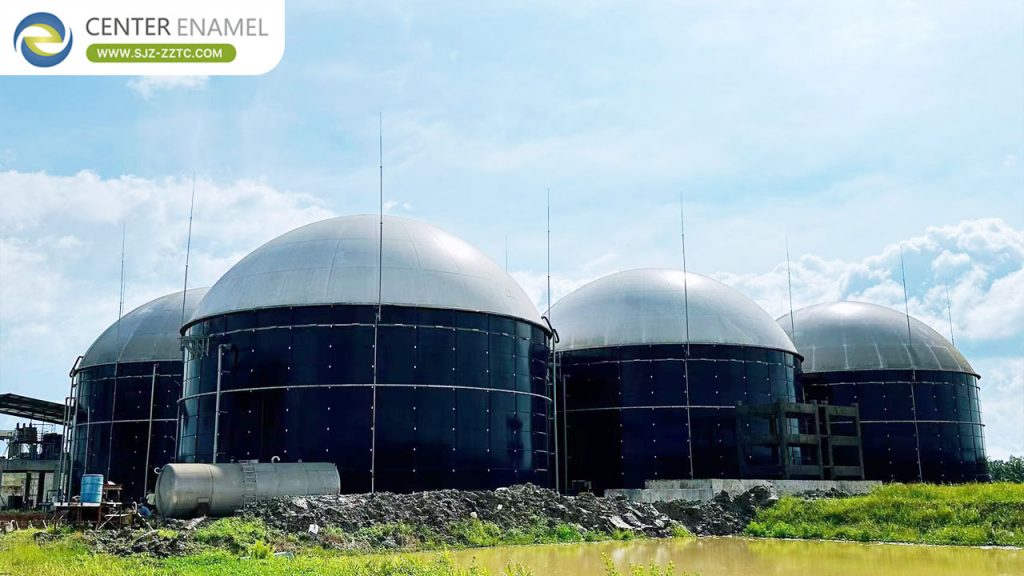
A large-scale biogas project in Malaysia applies five Glass-Fused-to-Steel tanks with a total effective volume of 27,000 m3, producing about 22,000 m3 of biogas per day at roughly 80% digestibility, with a gas production rate of 0.45 m3 per kg COD removed. Published water-quality data (COD from >=60,000 to >=12,000 mg/L) is shown as a real before/after reference; other project details beyond location, process, volumes, daily biogas, digestibility and this rate are not released, so no further figures are asserted.
| Attribute | Value | Note |
| Location | Malaysia | Published |
| Tanks | 5 GFS tanks | 27,000 m3 total |
| Daily biogas | 22,000 m3/day | Published |
| Digestibility | >= 80% | Published |
| Gas rate | 0.45 m3/kg COD | Published |
| COD | >=60,000 to >=12,000 mg/L | Reference |
About Company
Shijiazhuang Zhengzhong Technology Co., Ltd (Center Enamel) is a comprehensive high-tech enterprise specializing in wastewater engineering, process section contracting, and equipment manufacturing. The company delivers biogas and wastewater projects through three main lines - EPC (turnkey) contracting, equipment supply, and process packages - covering livestock and municipal wastewater, biomass energy, industrial wastewater, and food waste. Its reactor portfolio spans CSTR, USR, UBF, UASB, IC, and EGSB, backed by in-house Glass-Fused-to-Steel tank manufacturing (enamel firing at 820-930 C) and certifications including ISO 9001, NSF/ANSI 61, and CE-EN 1090. With 35+ years of operation, a 150,000 m2 manufacturing base, and projects in 100+ countries, Center Enamel provides the single-responsibility engineering behind sludge and organic-waste biogas projects such as the Malaysia reference, where five GFS digester tanks produce 22,000 m3 of biogas per day - a scoped, evidenced application of anaerobic sludge digestion rather than a generic claim.
Sludge anaerobic digestion stabilizes solids, cuts volume and recovers biogas (55-65% methane) at 35-38 C over 15-30 days - the proven energy-recovery step behind sewage-sludge and organic-waste biogas plants.
Frequently Asked Questions
Q1: What is sludge anaerobic digestion? A1: Oxygen-free biological stabilization of sludge/ organic feed into biogas and digestate.
Q2: What temperature does it run at? A2: Mesophilic 35-38 C is standard; thermophilic 50-55 C is faster but less stable.
Q3: How long is the retention time? A3: Typically 15-30 days for mesophilic volatile-solids conversion.
Q4: What is the biogas methane content? A4: Usually 55-65% methane; the rest is mostly CO2.
Q5: How much biogas does sludge yield? A5: About 0.30-0.45 m3 per kg COD removed, scaling with feed.
Q6: What are the benefits? A6: Stabilization, 40-60% volume reduction, pathogen kill and energy recovery.
Q7: Does anaerobic sludge digestion produce odor? A7: A well-run digester stabilizes the feed and reduces odor versus raw sludge.
Q8: How should digestate be handled after digestion? A8: It is stabilized and used as a fertilizer-grade material or further dewatered.
Suggested CTA
Send your sludge volume, solids and biogas goal to an engineer, or read the companion article on building a sludge anaerobic solution.