
Sludge Treatment And Dewatering: Thickening, Stabilization And Volume Reduction
Sludge treatment is the management of the solids by-product from wastewater treatment: it thickens the stream, stabilizes the organics (by digestion or lime), and dewaters it to cut haul volume before disposal or reuse. The goal is to reduce mass, kill pathogens, and recover biogas where the plant has anaerobic capacity - not to recycle the water, which is the liquid train's job.
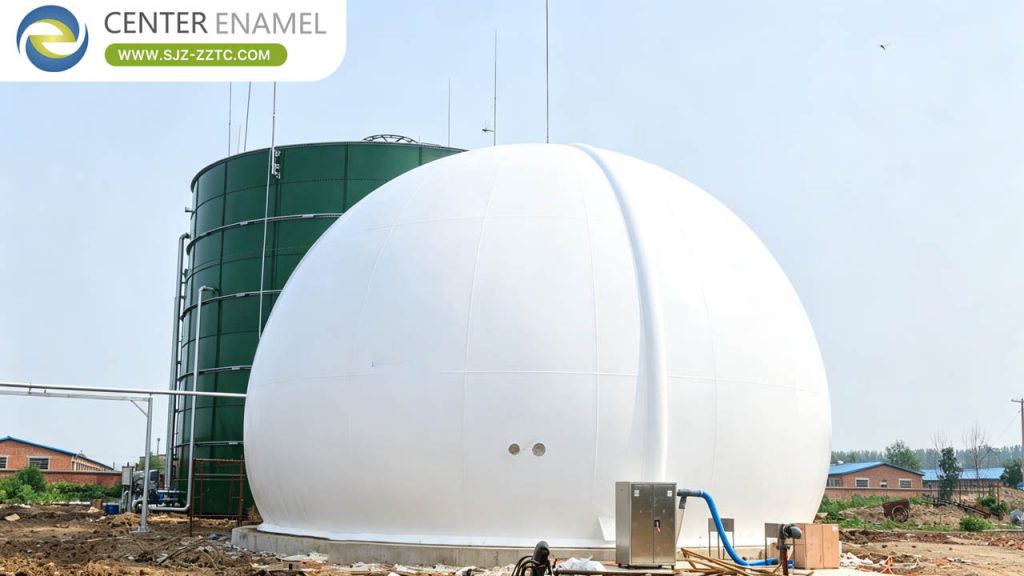
The Sludge Stream, By Source
Primary sludge comes from clarifiers; waste activated sludge comes from the biological stage; together they are putrescible and odor-prone. Thickening (gravity or dissolved-air flotation) roughly doubles solids concentration before dewatering, which is the single biggest lever on transport cost.
| Sludge Type | Origin | Typical Solids % | First Step |
| Primary | Clarifier | 2-5% | Thicken |
| Waste activated | Bio stage | 0.5-1.5% | Thicken / digest |
| Mixed | Both | 1-3% | Stabilize + dewater |
Stabilization And Dewatering Options
Stabilization stops biological activity and odor: anaerobic digestion also recovers biogas, aerobic digestion is simpler but uses energy, and lime stabilization is cheap and fast. Dewatering then uses a belt press or centrifuge to lift solids to 15-25%, shrinking haul volume several-fold versus the liquid stream.
| Method | Purpose | Output Solids | Note |
| Anaerobic digester | Stabilize + biogas | Liquid | Recovers methane |
| Aerobic digester | Stabilize | Liquid | Uses energy |
| Lime | Stabilize fast | Liquid | Cheap, alkaline |
| Belt press | Dewater | 15-22% | Low CAPEX |
| Centrifuge | Dewater | 18-25% | Compact, fast |
Sizing The Solids Loop
The dewatering load is tied to the plant's flow and the biomass yield of the biological process; a plant producing more waste activated sludge needs either more digester volume or more dewatering capacity. The trade is CAPEX against haul and disposal cost - a small town may lime-stabilize and haul, while a large utility digests and generates power.
| Plant Size | Typical Path | Driver |
| Small | Thicken + lime + haul | Low CAPEX |
| Medium | Thicken + belt press | Balance cost |
| Large | Digest + centrifuge | Biogas + volume cut |
About Company
Shijiazhuang Zhengzhong Technology Co., Ltd (Center Enamel) is a comprehensive high-tech enterprise specializing in wastewater engineering, process section contracting, and equipment manufacturing. The company delivers biogas and wastewater projects through three main lines - EPC (turnkey) contracting, equipment supply, and process packages - covering livestock and municipal wastewater, biomass energy, industrial wastewater, and food waste. Its reactor portfolio spans CSTR, USR, UBF, UASB, IC, and EGSB, backed by in-house Glass-Fused-to-Steel tank manufacturing (enamel firing at 820-930 C) and certifications including ISO 9001, NSF/ANSI 61, and CE-EN 1090. With 35+ years of operation, a 150,000 m2 manufacturing base, and projects in 100+ countries, Center Enamel provides the single-responsibility engineering behind integrated wastewater trains that include the solids loop - thickening, stabilization, and dewatering - as part of a single-responsibility scope rather than a bolt-on afterthought.
Comparison: Belt Press Vs Centrifuge
| Element | Belt Press | Centrifuge |
| Footprint | Larger | Compact |
| CAPEX | Lower | Higher |
| Polymer use | Moderate | Higher |
| Best for | Small-medium | Large, continuous |
Sludge treatment closes the solids loop: thicken, stabilize, and dewater to cut volume and odor, recover biogas where digestion exists, and size the path from the plant's flow and disposal cost - distinct from the liquid treatment train.
Frequently Asked Questions
Q1: What is sludge? A1: The solids by-product of clarification and the biological stage; putrescible and odor-prone until stabilized.
Q2: How is sludge dewatered? A2: A belt press or centrifuge lifts solids to 15-25%, cutting haul volume several-fold.
Q3: What stabilizes sludge? A3: Anaerobic digestion (with biogas), aerobic digestion, or lime addition.
Q4: Can sludge yield biogas? A4: Yes; anaerobic digestion of the organic fraction produces methane-rich biogas.
Q5: Why dewater at all? A5: Water is the bulk of mass; removing it slashes transport and disposal cost.
Q6: Which dewatering fits a small plant? A6: A belt press has lower CAPEX; lime stabilization avoids digestion.
Q7: Is dewatered sludge reusable? A7: After stabilization it may be land-applied or co-composted per local rules.
Q8: Who scopes the solids loop? A8: An engineer balances CAPEX against haul and disposal cost for the plant size.
Suggested CTA
Send your plant flow and disposal cost to an engineer, or request a scoped sludge treatment and dewatering outline.