
South Africa Biogas Project Solutions: GFS Tanks + Double Membrane Roof for Livestock Waste-to-Energy
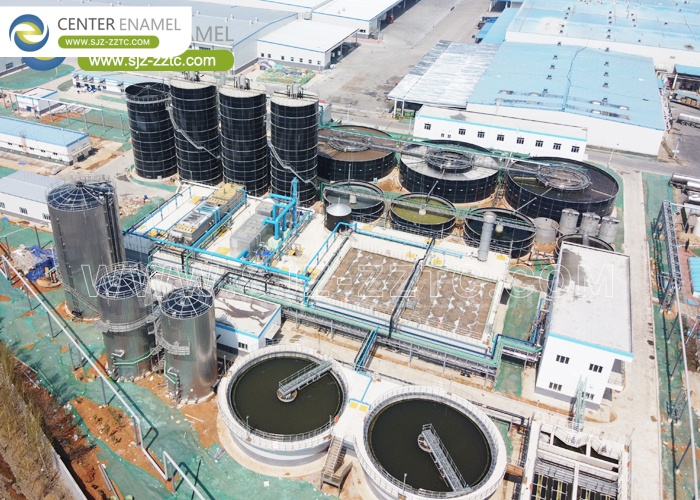
South Africa faces persistent energy reliability issues, with frequent load-shedding and rising electricity costs placing immense pressure on agriculture, industry, and wastewater treatment operations. For livestock farms and food processing facilities, energy bills and waste disposal are two of the largest operational expenses. However, these challenges also create an opportunity. By converting organic farm waste into biogas, businesses can generate their own renewable energy while solving waste management problems. This article explores how professional Biogas Project design, the CSTR Process, and GFS Tanks from Center Enamel deliver sustainable, cost-effective solutions for South African farms and industries.
The Advantages of Converting Farm Wastewater to Biogas
Livestock farms produce large volumes of organic wastewater containing manure, urine, and feed residues. Traditionally, this waste is stored in lagoons or applied directly to land, leading to greenhouse gas emissions (methane), groundwater contamination, and odor complaints. By capturing this waste in an anaerobic digestion system, farmers can:
Generate renewable energy: Biogas (60–70% methane) can power generators, boilers, or be upgraded to biomethane.
Reduce electricity costs: Self-generated biogas lowers reliance on the unstable national grid.
Earn carbon credits: Methane destruction qualifies for carbon offset programs.
Produce valuable digestate: The effluent from the digester is a nutrient-rich organic fertilizer.
Comply with environmental regulations: Treating wastewater before discharge avoids fines.
For South African pig farms, dairies, and abattoirs, biogas is not just an environmental choice-it is an economic necessity.
Center Enamel: Professional Biogas Project Design and EPC Services
With over 36 years of history, Center Enamel is Asia’s largest manufacturer of Glass-Fused-to-Steel (GFS) tanks and a leading provider of turnkey biogas solutions. The company began with enamel frit and GFS tank production and has since expanded into full Biogas Project delivery, including EPC (Engineering, Procurement, and Construction), process packages, and equipment supply.
Certified to CE/EN1090, ISO9001, NSF61, WARS, and EN28765, and following AWWA D103, OSHA, and EuroCode standards, Center Enamel provides robust systems for South Africa’s demanding conditions. Their expertise covers every stage-from initial feasibility to commissioning and after-sales support.
Pretreatment Stage + CSTR Process: The Core of Anaerobic Digestion
A successful Biogas Project begins with proper feedstock preparation. Center Enamel’s pretreatment stage includes:
Screening: A mechanical screen removes large solids (plastic, stones, rope) that could damage pumps or cause blockages.
Crushing: A crushing device reduces organic particle size, increasing surface area for microbial action.
Sand settling: Heavier particles such as sand and grit are removed to prevent abrasion inside reactors.
Homogenization tank: Wastewater is collected and mixed to balance flow and organic load, ensuring stable downstream processing.
Following pretreatment, the heart of the system is the CSTR Process. CSTR stands for Continuous Stirred-Tank Reactor, an anaerobic treatment technology that keeps fermentation materials and microorganisms in a fully mixed state inside a closed tank. The reactor is equipped with a mechanical stirring device that runs continuously or semi-continuously at a constant temperature (typically 35–37°C for mesophilic digestion). This complete mixing prevents solids settling, avoids scum layer formation, and maximizes contact between bacteria and organic matter. As a result, the CSTR Process achieves high organic removal efficiency and stable biogas production-even with high-suspended-solids feedstocks like pig slurry or chicken manure.
The biogas produced (methane and carbon dioxide) is collected from the top of the reactor and can be stored in a gas holder, while the digestate exits for solid-liquid separation and further use as fertilizer.
GFS Tanks and Double Membrane Roof: Two Key Products for Biogas Projects
Center Enamel supplies two major products for Biogas Project infrastructure: GFS Tanks and two types of roofs-Glass-Fused-to-Steel (GFS) roof and double membrane roof.
GFS Tanks (Glass-Fused-to-Steel) are the industry standard for anaerobic digesters and biogas storage. The glass-fused-to-steel coating provides exceptional corrosion resistance, even in high-sulfide and low-pH environments common in anaerobic digestion. Unlike concrete, GFS tanks do not require frequent recoating or lining. With a production capacity of 250,000 sheets per year, Center Enamel delivers bolted GFS tanks that are easy to transport and assemble on site-ideal for remote South African farms.
Roof selection depends on environmental conditions and project economics:
GFS roof is recommended for harsh conditions (high wind speeds, heavy snow loads) or when a ground-mounted gas holder is required. This option is practical for tank diameters under 23 meters.
Double membrane roof is the preferred solution under normal working conditions. Its advantages include lower cost (directly reducing roof expenses) and space efficiency-it eliminates the need for a separate ground-mounted gas holder, saving foundation costs and footprint.
Both roof types integrate seamlessly with the CSTR Process, sealing the anaerobic environment while allowing biogas collection.
Supporting Equipment for a Complete Biogas System
A fully functional biogas plant requires more than just a digester. Center Enamel provides a full range of auxiliary equipment:
Gas Holder: Stores biogas to balance production and consumption.
Black Membrane: Used for lined lagoons or secondary containment.
Solid-liquid Separator: Separates digestate into solid fiber (bedding or compost) and liquid fertilizer.
Torch System: Safely burns excess biogas when not needed for energy recovery.
Lifting Pump: Transfers wastewater, slurry, or digestate between treatment stages.
Dehydration and Desulfurization Tank: Removes moisture and hydrogen sulfide (H₂S) from raw biogas to protect engines and pipes.
Screw Sludge Dewatering Machine: Reduces volume of sludge from pretreatment or digestate handling.
This complete equipment package ensures that a Biogas Project operates reliably, safely, and with minimal manual intervention.
Efficient Installation Capabilities of Center Enamel
Speed of construction is critical for South African projects facing tight budgets and production schedules. Center Enamel’s bolted GFS tank design enables rapid on-site assembly without welding or heavy concrete work. The company’s experienced engineers can erect a full digestion system in weeks rather than months. All components are prefabricated in the 150,000 m² R&D and production base, ensuring consistent quality and minimal weather-related delays. For remote locations with limited access to skilled labor, the bolted design is a major advantage. Center Enamel also provides technical supervision and training, so local crews can operate and maintain the system long after commissioning.
Center Enamel: A One-Stop Biogas Project Solution Provider for South Africa
Center Enamel is not just a tank manufacturer-it is a one-stop solution provider for complete Biogas Project systems. From initial concept and engineering design to equipment supply, installation, and commissioning, Center Enamel delivers turnkey solutions tailored to South Africa’s agricultural and industrial needs. Their current business scope includes EPC services, process packages, and equipment supply-all backed by CE, ISO, and NSF certifications.
For a South African pig farm with 5,000 sows, Center Enamel can design a CSTR Process system using GFS Tanks with a double membrane roof, plus all auxiliary equipment (pumps, desulfurization, torch, solid-liquid separator). The biogas can power a generator to offset 80% of the farm’s electricity demand, while the digestate replaces chemical fertilizers. Center Enamel manages everything-permitting support, civil works coordination, tank erection, piping, and startup. This holistic approach reduces risk, shortens delivery time, and ensures that the final system meets local safety and performance standards.
With exports to over 100 countries and 500+ employees dedicated to water, wastewater, and biogas projects, Center Enamel has the scale and experience to support South Africa’s energy transition. Whether you need a small farm digester or a large industrial biogas plant, Center Enamel delivers durability, efficiency, and long-term value.
Conclusion
South Africa’s electricity crisis and environmental regulations make biogas an increasingly attractive investment. By converting farm and food wastewater into biogas using the CSTR Process housed in durable GFS Tanks with efficient roof systems, farms can cut energy costs, manage waste, and generate new revenue. Center Enamel provides everything needed-from pretreatment to gas utilization-as a single, accountable partner. For farm owners, cooperatives, and project developers, choosing Center Enamel means choosing a reliable, certified, and proven biogas solution.
FAQ
Q1: Why is the CSTR Process better than other anaerobic digesters for high-solids farm waste?
A1: The CSTR Process uses continuous mechanical stirring to keep solids suspended and microorganisms in constant contact with fresh feedstock. This prevents settling, avoids short-circuiting, and maintains uniform temperature and pH. For high-solids waste like poultry litter or cow manure (8–12% total solids), CSTR delivers higher biogas yields and greater process stability compared to plug-flow or covered lagoon systems.
Q2: How long do GFS Tanks last in corrosive biogas environments?
A2: GFS Tanks (Glass-Fused-to-Steel) have a proven service life of over 30 years. The glass coating is fired at 800–950°C, creating an inert, vitreous surface that resists hydrogen sulfide attack (common in biogas), acidic condensate, and chloride corrosion. Unlike epoxy-coated or stainless steel tanks, GFS requires no repainting or lining, making it the most durable and low-maintenance option for Biogas Projects.
Q3: Can Center Enamel deliver a complete Biogas Project for a remote South African farm?
A3: Yes. Center Enamel offers full EPC services, including design, manufacturing, shipping, on-site installation, and commissioning. Their bolted GFS Tanks are containerized for transport, and their engineering team works with local contractors for foundations and utilities. They also provide training for operators and remote monitoring options. With projects in over 100 countries, Center Enamel has the logistics and technical expertise to succeed in any location.