
Starch Wastewater Treatment: GFS Tanks for Efficient Biogas Solutions
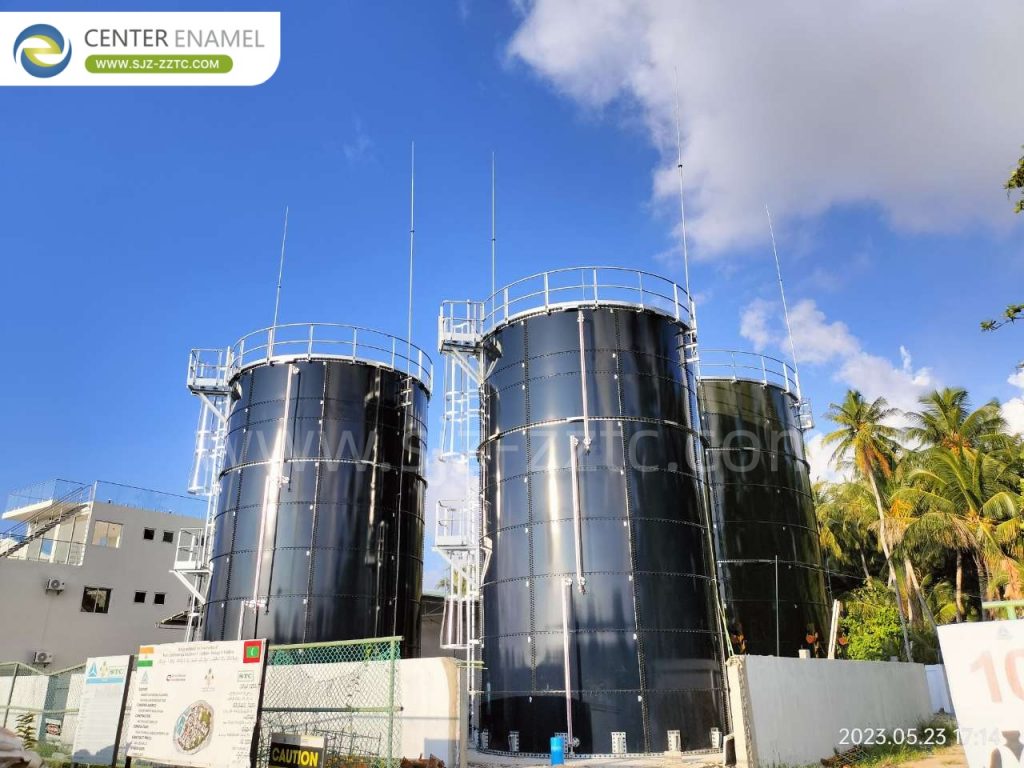
Starch is one of the most widely used agricultural products globally, serving as a key raw material in food production, the textile industry, chemical manufacturing, and pharmaceuticals . However, the starch production process generates a substantial amount of high-strength wastewater that poses significant environmental challenges. With global starch production reaching tens of millions of tons annually, the treatment of starch wastewater has become a critical concern for manufacturers worldwide.
The Challenge of Starch Wastewater
Starch wastewater is characterized by exceptionally high organic content, measured as Chemical Oxygen Demand (COD) and Biological Oxygen Demand (BOD). Typical secondary effluent from starch processing contains COD levels around 200–250 mg/L and turbidity of 150–200 NTU . The wastewater is rich in biodegradable organic matter, suspended solids, and in some cases, compounds like cyanide depending on the starch source .
The main sources of starch wastewater include:
Potato starch processing, which produces wastewater high in organic matter and nutrients
Wheat starch manufacturing, where wastewater is typically treated aerobically but faces challenges with energy consumption and sludge generation
Wheat starch sugar production, which generates high-strength organic wastewater requiring advanced treatment
Without proper treatment, starch wastewater can severely impact aquatic ecosystems, depleting oxygen in water bodies and releasing greenhouse gases during decomposition.
Common Starch Wastewater Treatment Methods
Physicochemical Treatment
Sedimentation and Coagulation: Sedimentation is one of the primary methods for removing total suspended solids (TSS). Studies show that a settling time of approximately 60–120 minutes can achieve 90–95% TSS removal . Combined sedimentation and adsorption processes can achieve overall COD removal efficiencies of approximately 75% .
Electrocoagulation: Iron electrocoagulation combined with oxidants such as sodium hypochlorite (NaClO) has demonstrated COD and turbidity removal efficiencies of 86.3% and 95.76%, respectively . This integrated approach is more energy-efficient than conventional electrocoagulation alone.
Membrane Filtration: Ultrafiltration and nanofiltration membrane technologies are increasingly used for advanced treatment of starch wastewater. These processes can recover valuable byproducts such as proteins while producing high-quality effluent suitable for reuse .
Biological Treatment
Anaerobic Digestion: Anaerobic treatment is particularly effective for high-strength starch wastewater with high biodegradable organic content. Anaerobic ponds, for example, have demonstrated over 90% COD and TSS removal in tropical climates . The process not only treats wastewater but also generates biogas—a renewable energy source.
Internal Circulation Anaerobic Reactors: Advanced reactor designs like the eddy-integrated internal circulation anaerobic reactor have shown remarkable performance in treating wheat starch sugar wastewater. With a design capacity of 4,000 m³/d, such systems achieve COD removal rates above 89.2%, with a biogas yield of 0.4 m³ per kg of COD removed . These systems also contribute significantly to greenhouse gas reduction by capturing methane that would otherwise be released.
Center Enamel: Professional Starch Wastewater Treatment Solutions
Center Enamel is a premier EPC Contractor providing comprehensive, end-to-end solutions for starch wastewater treatment projects worldwide. With over 36 years of experience and established as Asia's largest manufacturer of Glass-Fused-to-Steel (GFS) tanks, Center Enamel is uniquely positioned to deliver turnkey projects that meet the highest international standards.
Key Technology: Glass-Fused-to-Steel (GFS) Tanks
GFS Tanks are the premium choice for wastewater containment in the demanding environments of starch wastewater treatment. The technology involves firing a special enamel at temperatures exceeding 820°C, fusing it to the steel substrate. This creates a highly durable, inert, and corrosion-resistant coating that withstands the acidic, abrasive nature of starch wastewater and the harsh conditions of anaerobic digestion processes.
For starch wastewater treatment applications, GFS Tanks offer numerous advantages:
Superior Corrosion Resistance: The glass coating protects against aggressive chemicals found in starch wastewater, including organic acids and cleaning agents
Long Service Life: With a lifespan exceeding 30 years, GFS tanks provide a long-term, cost-effective investment
Modular Bolted Design: Enables rapid on-site assembly, significantly reducing construction time compared to welded or concrete alternatives—by up to one-third
Minimal Maintenance: The inert glass surface resists fouling and requires minimal upkeep, reducing operational costs
Leak-Proof Integrity: The seamless coating ensures secure containment, protecting the surrounding environment from contamination
Comprehensive EPC Services
Center Enamel provides professional, customized design solutions for starch wastewater treatment projects. Our engineering team conducts comprehensive site assessments to evaluate local conditions, including soil characteristics, water table levels, and climate patterns specific to each region.
Our design philosophy integrates modular GFS Tanks with appropriate tank cover solutions—including Double Membrane Roof systems for biogas projects requiring gas-tightness, Aluminum Geodesic Dome Roofs for odor control, and other options. We incorporate anaerobic digestion technologies such as UASB (Upflow Anaerobic Sludge Blanket) reactors, which not only treat wastewater but also capture biogas as a renewable energy source .
A Full Suite of Equipment
Beyond tank systems, Center Enamel supplies a complete range of ancillary equipment as part of its EPC package:
Gas Holders: For safe storage of biogas produced during anaerobic digestion
Emergency Torch Systems: Safely burn off excess biogas during maintenance or system shutdown
Lifting Pumps: Essential for moving wastewater through various treatment stages
Dehydration and Desulfurization Tanks: Purify biogas by removing moisture and corrosive hydrogen sulfide
Efficient Installation and Rapid Project Delivery
A key differentiator for Center Enamel is efficient installation capability. With an annual production capacity exceeding 250,000 GFS tank sheets, our manufacturing and supply chain are fully optimized for rapid delivery. Components are prefabricated in our 150,000 m² production facility and shipped in standardized containers for assembly at project sites worldwide.
Key advantages include:
No Heavy Welding: On-site assembly requires only bolting, sealing, and basic mechanical fastening
Expert Technical Supervision: Our professional team oversees every assembly step, ensuring quality standards are met
Remote Capability: Quality-controlled installation even in remote locations
A One-Stop Solution for Starch Wastewater Treatment
Center Enamel is more than an equipment supplier; we are a dedicated partner providing one-stop solutions for the starch industry. Our turnkey services cover site assessment, process design, equipment manufacturing, civil works, installation, operator training, and ongoing after-sales support.
By choosing Center Enamel, starch manufacturers gain a single point of contact, ensuring clear communication, streamlined project management, and a guaranteed result that meets local environmental standards while maximizing biogas recovery and operational efficiency.
Starch wastewater treatment represents both a significant environmental challenge and an opportunity for resource recovery. With modern solutions including anaerobic digestion in high-quality GFS Tanks, starch manufacturers can overcome wastewater disposal challenges, generate renewable biogas energy, and meet sustainability targets. Center Enamel, with its proven technology and comprehensive EPC services, is the ideal partner to lead this sustainable transition.
FAQs
Q: How do GFS Tanks perform in starch wastewater treatment environments?
A: GFS Tanks are engineered for the harsh conditions of starch wastewater treatment. The glass-fused-to-steel coating provides exceptional corrosion resistance against organic acids and chemicals, ensuring reliable performance for over 30 years with minimal maintenance.
Q: What is the typical timeline for a complete starch wastewater treatment project from Center Enamel?
A: Center Enamel typically delivers a complete project—including design, manufacturing, shipping, installation, and commissioning—within 6 to 9 months, depending on project scale. Our bolted GFS Tank design and pre-fabricated components significantly reduce on-site construction time compared to traditional methods.
Q: Can GFS Tanks be used for anaerobic digestion in starch wastewater treatment?
A: Yes. GFS Tanks are ideal for anaerobic digestion applications, including UASB reactors. They provide the necessary durability, corrosion resistance, and air-tightness required for efficient biogas collection. With appropriate roof solutions like the Double Membrane Roof, GFS tanks can capture biogas as a renewable energy source.