
Strategic Wastewater Treatment Contractors for Cassava Processing Plants in Cambodia
Cambodia is one of the world's leading exporters of fresh cassava and starch, with significant processing hubs in Kampong Cham, Battambang, and Pailin. As the Royal Government of Cambodia strengthens its National Green Growth Strategy and the Ministry of Environment (MoE) enforces stricter industrial effluent discharge limits, processors require a specialized Wastewater Treatment Contractor to move beyond inefficient open lagoons.
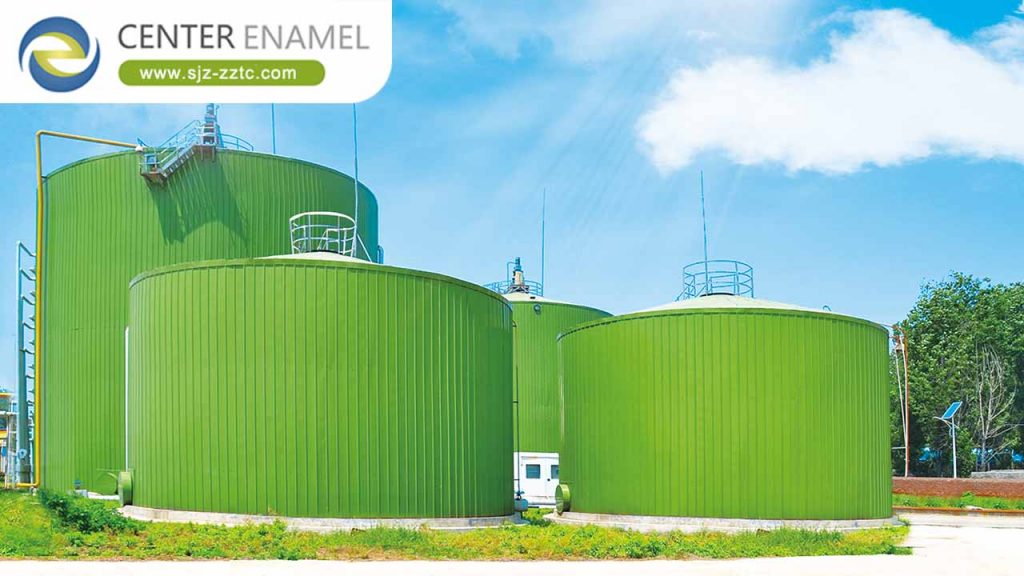
Shijiazhuang Zhengzhong Technology Co., Ltd. (Center Enamel) is a world-class EPC (Engineering, Procurement, and Construction) specialist. We provide turnkey wastewater treatment plants engineered to handle the high organic loads and acidic profile of cassava starch processing.
Scope of Work
Center Enamel provides complete end-to-end EPC services for cassava starch wastewater treatment projects across Cambodia:
Phase 1: Influent Analysis & Process Design
Comprehensive characterization of cassava effluent (COD, BOD, cyanide, pH, TSS)
Process design tailored to the specific starch extraction method and production scale
Regulatory mapping against Cambodian MoE effluent discharge standards
Biogas utilization planning for starch dryer fueling or electricity generation
Phase 2: Manufacturing & Logistics
Precision fabrication of GFS tanks and anaerobic reactor components
Titanium-rich glass coating applied at 820°C for pH 1–14 resistance
Modular bolted design for containerized shipping to Cambodian sites
Customs coordination and logistics management to remote processing locations
Phase 3: Installation & Commissioning
On-site assembly 50% faster than conventional concrete construction
Anaerobic reactor start-up and biomass acclimation
Biogas system integration, including collection, desulfurization, and utilization
Full commissioning against performance guarantees
Phase 4: Training & Ongoing Support
Comprehensive operator training on system operation and safety
Process optimization guidance for sustained performance
Long-term technical support and spare parts availability
Specialized Wastewater Treatment Technology for Cassava Starch
Cassava processing generates wastewater with extreme Chemical Oxygen Demand (COD) (often up to 30,000 mg/L) and high levels of cyanide. As a professional contractor, Center Enamel integrates proprietary hardware with advanced biological processes:
1. High-Rate Anaerobic Digestion (IC & EGSB)
Our Internal Circulation (IC) and Expanded Granular Sludge Bed (EGSB) reactors are the industry gold standard for high-load organic treatment.
Biogas ROI: These systems capture methane-rich biogas that can be repurposed to fuel starch dryers or generate electricity, offering a clear Return on Investment (ROI) by reducing fossil fuel dependency.
High Efficiency: Our reactors consistently achieve over 90% COD removal before the final polishing stage, ensuring stable compliance with Cambodian environmental laws.
2. Corrosion-Proof GFS Containment
Cassava effluent is naturally acidic (pH 4.0–4.5), which causes rapid structural failure in traditional concrete tanks.
Titanium-Rich Glass Coating: Our Glass-Fused-to-Steel (GFS) tanks feature a glass coating fused at 820°C, providing a pH resistance range of 1–14.
Modular Speed: Our bolted design allows for installation 50% faster than concrete, which is vital for Cambodian plants looking to modernize without long operational shutdowns.
Performance Benchmark: Modernizing Cambodian Starch Infrastructure
For Cambodian starch producers, transitioning from legacy ponds to Center Enamel's engineered reactors is a strategic move for both compliance and profitability.
Table 1: Traditional Lagoon vs. Center Enamel IC Reactor — Performance Comparison
| Metric | Traditional Lagoon Systems | Center Enamel IC Reactor (EPC) |
| COD Removal Efficiency | 60% – 70% | 90% – 95% |
| Land Footprint | Massive (100% Base) | Minimal (15% – 20% of Lagoon Space) |
| Odour Control | Poor / High Community Complaints | Excellent (Fully Enclosed System) |
| Energy Profile | Energy Consumer | Energy Producer (Biogas Recovery) |
| Construction Time | 6–12 Months (Concrete) | 3–4 Months (Modular GFS Design) |
| Corrosion Resistance | Fails rapidly in acidic effluent | pH 1–14 resistant glass coating |
| Service Life | 10–15 years (with repairs) | 30+ years |
| Regulatory Compliance | Increasingly non-compliant | Meets MoE discharge standards |
Table 2: Center Enamel Anaerobic Technology Selection Guide for Cassava Wastewater
| Technology | Best Suited For | Key Advantages | Typical COD Removal |
| IC Reactor | High-strength cassava starch effluent | Superior mass transfer; high loading rate; compact footprint | 90% – 95% |
| EGSB Reactor | Concentrated organic loads; space-constrained sites | Excellent biomass retention; stable performance | 85% – 92% |
| GFS Tank Containment | Acidic effluent (pH 4.0–4.5) | pH 1–14 resistance; 30+ year service life; fast installation | N/A (containment) |
| Integrated EPC System | Full compliance + biogas ROI | Turnkey delivery; energy production; regulatory assurance | 90%+ overall |
Verified Global & Regional Project References
Center Enamel's authority as a top-tier EPC contractor is validated by our extensive footprint in Southeast Asia and worldwide:
Thailand Cassava & Rubber Sector: Successful delivery of multiple industrial wastewater systems in Thailand, including specialized containment totaling 1,159 m³ and 743 m³ for regional starch leaders.
Indonesia Industrial Water: Construction of a massive 10,236 m³ system and the world's tallest GFS tank (34.8 meters) in Central Java, demonstrating our engineering precision in the region.
Coca-Cola Company (Malaysia): Center Enamel engineered and constructed a high-efficiency EGSB industrial wastewater treatment plant that has maintained stable, high-performance operation for over 5 years.
Global Scale (Swaziland): A landmark alcohol wastewater project featuring a total volume of 42,188 m³, showcasing our ability to handle the world's most concentrated organic loads.
The Center Enamel EPC Advantage in Cambodia
1. Professional General Contracting (EPC)
We are not just a manufacturer; we are a Professional Wastewater Treatment Contractor. We manage the entire project lifecycle: influent analysis, process design, manufacturing, logistics to Cambodia, and on-site commissioning and operator training.
2. Engineered for Tropical Conditions
Our plants are designed for Cambodia's unique challenges, including high-humidity tropical environments and remote site logistics. Our GFS technology ensures a service life exceeding 30 years.
3. Global Technical Authority
With over 10,000 tanks installed in 100+ countries, Center Enamel brings decades of expertise in anaerobic technology. We help Cambodian exporters meet the "Green Supply Chain" requirements of global buyers in the EU and USA.
Frequently Asked Questions (FAQ)
What makes cassava starch wastewater so difficult to treat?
Cassava starch wastewater combines extreme Chemical Oxygen Demand (often up to 30,000 mg/L) with high cyanide levels and a naturally acidic pH of 4.0–4.5. This combination rapidly destroys traditional concrete tanks and overwhelms conventional lagoon systems. Effective treatment requires high-rate anaerobic reactors paired with corrosion-proof containment engineered specifically for these conditions.
Why are open lagoons no longer viable for Cambodian cassava processors?
Cambodia's Ministry of Environment (MoE) is enforcing stricter industrial effluent discharge limits under the National Green Growth Strategy. Open lagoons typically achieve only 60–70% COD removal, produce severe odor nuisance, generate uncontrolled methane emissions, and consume massive land areas. They cannot reliably meet modern compliance standards.
How much biogas can a cassava starch plant generate from its wastewater?
Biogas potential depends on production scale and effluent strength, but cassava starch wastewater is among the highest-yielding organic waste streams in agro-processing. The captured methane-rich biogas can fuel starch dryers directly or generate electricity, typically delivering a clear ROI by displacing fossil fuel purchases.
What is the advantage of IC reactors over conventional anaerobic systems?
Internal Circulation (IC) reactors achieve superior mass transfer efficiency through their internal circulation design, enabling higher organic loading rates within a smaller footprint. For cassava wastewater with extreme COD concentrations, IC reactors consistently deliver 90–95% COD removal—performance that conventional systems cannot match.
Why are Glass-Fused-to-Steel (GFS) tanks preferred over concrete for cassava wastewater?
Cassava effluent's acidic pH (4.0–4.5) causes rapid structural failure in concrete tanks. Center Enamel's GFS tanks feature a titanium-rich glass coating fused at 820°C, providing pH resistance from 1 to 14. They also install 50% faster than concrete and deliver a service life exceeding 30 years.
How quickly can a Center Enamel wastewater treatment plant be installed in Cambodia?
Our modular bolted GFS design enables installation in 3–4 months, compared to 6–12 months for conventional concrete construction. This speed is vital for Cambodian plants seeking to modernize without prolonged operational shutdowns.
Partner with Asia's Leading Industrial Wastewater Treatment Contractor
Cambodia's cassava processors face a defining moment: tightening environmental enforcement and global buyer expectations are making legacy lagoon systems obsolete. The transition to engineered anaerobic treatment is no longer optional—it is a strategic imperative for compliance, profitability, and market access.
Center Enamel delivers the complete solution: high-rate IC and EGSB anaerobic reactors, corrosion-proof GFS containment, biogas recovery for energy ROI, and full EPC project management from influent analysis through operator training.
Ready to modernize your cassava processing infrastructure in Cambodia? Contact Center Enamel today to request a customized wastewater treatment design and discover how our turnkey EPC solutions can turn your effluent challenge into a compliance and profitability advantage.