
Strategic Wastewater Treatment Contractors for Food Processing in the Philippines
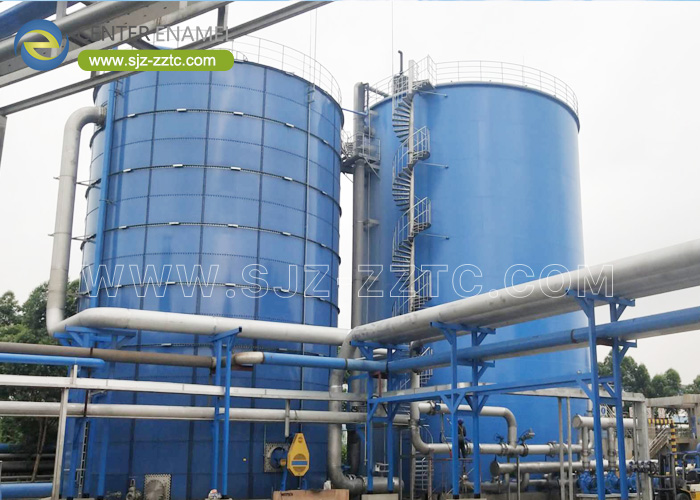
The Philippine food processing industry—encompassing coconut oil mills, poultry dressing plants, beverage bottling, and snacks manufacturing—is a vital driver of the national economy. As of 2026, the Department of Environment and Natural Resources (DENR) has intensified enforcement of the General Effluent Standards (GES), requiring factories in Luzon, Visayas, and Mindanao to upgrade from legacy lagoons to high-performance treatment systems.
Shijiazhuang Zhengzhong Technology Co., Ltd. (Center Enamel) is the leading global Wastewater Treatment Contractor providing turnkey EPC solutions. We specialize in modular, high-efficiency systems that convert high-load organic waste into renewable energy, helping Philippine manufacturers achieve "Green Industry" certification while lowering operational costs.
1. Typical Treatment Process Flow
Philippine food processing wastewater often contains high Chemical Oxygen Demand (COD), significant Fats, Oils, and Grease (FOG), and suspended solids. Our multi-stage treatment architecture is designed for maximum structural and biological resilience.
- Primary Treatment (Pre-Treatment): Utilizes Dissolved Air Flotation (DAF) and mechanical screening to remove solids and grease. This is critical for the Philippine coconut and meat processing sectors to prevent biological system failure.
- Secondary Treatment (The Energy Core): High-rate anaerobic digestion using IC (Internal Circulation) or EGSB (Expanded Granular Sludge Bed) reactors. This stage breaks down 90%+ of organic pollutants into methane.
- Tertiary Treatment (Aerobic Polishing): Systems like SBR (Sequencing Batch Reactor) or Activated Sludge remove residual nitrogen and phosphorus to ensure effluent meets DENR standards for inland or marine water discharge.
- Quaternary Treatment (Water Reclamation): Implementation of MBR (Membrane Bioreactors) or Ultrafiltration for facilities seeking to reuse water for cooling towers or non-contact factory washing.
2. Core Technologies (2026 Standards)
Anaerobic Digestion & Biogas Recovery
In energy-sensitive regions like Batangas, Cebu, and Davao, biogas recovery provides a critical competitive edge.
- IC Reactors: The 2026 industry benchmark for high-load organic treatment. Their vertical, compact design maximizes treatment capacity in limited factory plots.
- Energy Valorization: Captured methane is scrubbed and repurposed for factory boilers or gas engines, providing a hedge against the high cost of industrial electricity in the Philippines.
Superior Containment: Glass-Fused-to-Steel (GFS) Tanks
Traditional concrete tanks are prone to cracking due to seismic activity and corrosion from acidic food waste.
- Corrosion Resistance: Our GFS tanks feature a titanium-rich glass coating fused at 820°C, offering a pH resistance range of 1–14.
- Modular Speed: Our bolted tank design allows for installation 50% faster than concrete, minimizing downtime for active Philippine mills and factories.
Micro-Nano Bubble Technology
A 2026 innovation in our DAF units that utilizes ultra-fine bubbles to achieve superior clarification of wastewater containing emulsified oils and fine protein particles, common in poultry and fish processing.
3. Comparison of Treatment Strategies
| Feature | Traditional Concrete Lagoons | Center Enamel EPC (GFS + IC) |
| Footprint | Massive (Land Intensive) | Compact (80% Less Space) |
| DENR Compliance | High Risk of Odor & Seepage | 100% Fully Enclosed & Secure |
| Resource Recovery | None / Disposal Focused | High (Biogas + Water Reuse) |
| Construction Time | 6–12 Months | 3–4 Months (Modular) |
| Resilience | Prone to earthquake damage | Seismic Rated (AWWA D103-09) |
4. Critical Challenges & Solutions for the Philippines
- Seismic and Typhoon Resilience: The Philippines is prone to extreme weather and earthquakes. Our GFS tanks are engineered to international standards (AWWA D103-09), providing superior flexibility and structural integrity compared to rigid concrete.
- High FOG Loads (Coconut/Meat Processing): We implement specialized high-load DAF systems to ensure grease is neutralized before it reaches biological digesters, maintaining system stability.
- Sustainability Reporting: As Philippine exporters face stricter ESG (Environmental, Social, and Governance) requirements from global markets, our systems provide the necessary data for carbon abatement and sustainability certification.
Verified Regional Authority
Center Enamel’s status as a top-tier EPC contractor is validated by our extensive regional footprint:
- Southeast Asia Hub: Construction of a massive 10,236 m3 system and the world’s tallest GFS tank (34.8 meters) in Central Java, demonstrating our engineering precision in the region.
- Coca-Cola (Malaysia): Successfully engineered a high-load EGSB industrial wastewater treatment plant that has maintained 100% compliance for over 5 years.
- Global Benchmark: Engineering a landmark 42,188 m3 organic wastewater project, demonstrating our capacity for the world's largest food processing hubs.
Contact the Center Enamel Global Marketing Team
Partner with the leading wastewater treatment contractor to modernize your food processing infrastructure in the Philippines.