
Struggling with Livestock Manure? Anaerobic Technologies & EPC Contractor Solutions
The core dilemma of livestock manure treatment lies in the structural contradiction of "decentralized generation vs. centralized treatment." Manure generation surges during intensification, but supporting treatment facilities lag behind. Digestate resource utilization channels are obstructed, with safety risks from heavy metal and antibiotic residues constraining farmland application. At the enforcement level, farmers' environmental awareness varies, with illegal discharges occurring frequently; at the policy level, subsidies and incentives are insufficient to effectively drive voluntary compliance. Biogas grid connection difficulties and limited digestate transport radius further compress the economic viability of resource utilization.
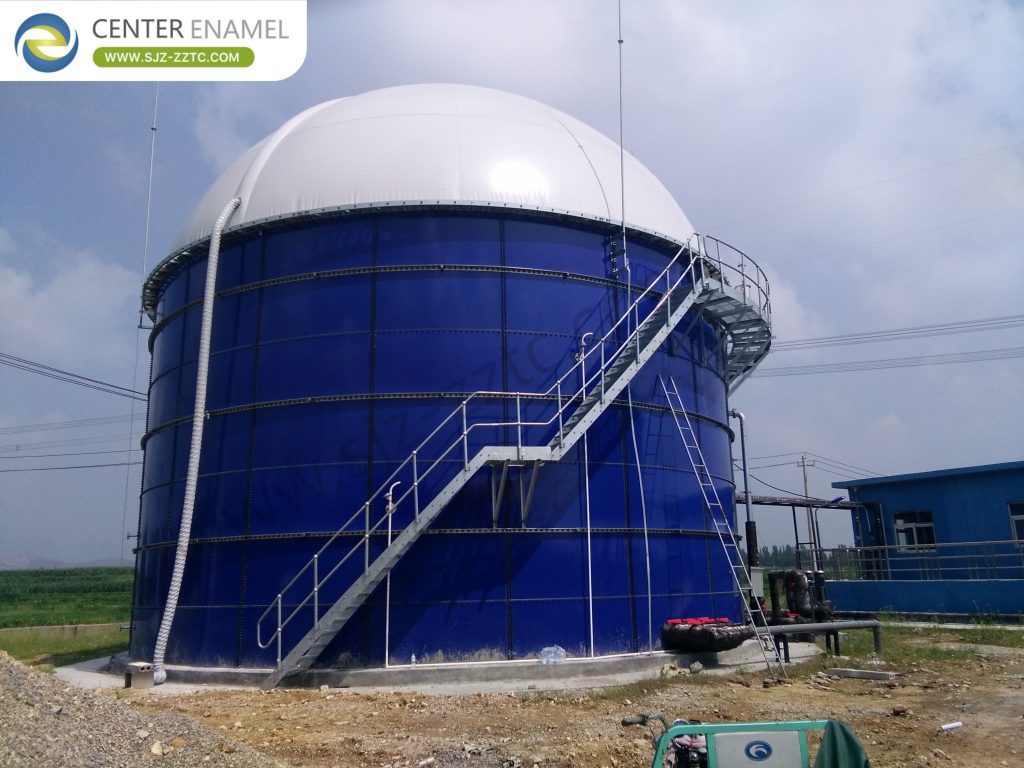
These interconnected barriers explain why effective manure management requires more than equipment-it demands integrated Anaerobic Technologies and an experienced EPC Contractor capable of delivering solutions from design through operation.
How the USR Reaction Process Works
High-solids organic wastewater, after simple pretreatment to remove large debris, is uniformly fed into the reactor through the bottom distribution system. The upward flow drives solid substrates and anaerobic sludge to slowly rise and thoroughly mix. In the sealed anaerobic environment, microorganisms sequentially hydrolyze/acidify and then methanogenically ferment, degrading macromolecular organic pollutants and generating biogas and treated water. Without complex separation structures, gentle hydraulic disturbance prevents clogging. The mixed liquor rises to the upper portion of the reactor where natural gas-liquid-solid separation occurs. Biogas is collected, effluent overflows, and solid sludge and unreacted substrate settle back to the lower reaction zone for continued reaction, with a small amount of aged sludge periodically discharged-continuous stable operation.
Key Water Quality Characteristics of Livestock Wastewater
Typical high-concentration organic wastewater with "four highs"-high COD, high ammonia nitrogen, high total phosphorus, and high suspended solids-very high pollution load. Livestock wastewater COD can exceed 8,000 mg/L, with high turbidity and suspended solids. Nitrogen and phosphorus levels far exceed discharge standards, being the primary cause of eutrophication. Wastewater is rich in manure, feed residues, and metabolic waste, readily turning black and odorous. Water quality fluctuates significantly with production cycles, seasons, and washing frequency. Aquaculture wastewater has lower pollutant concentrations but significant nitrogen/phosphorus accumulation issues, causing algal blooms and water quality deterioration with long-term discharge.
Table 1: Typical Livestock Wastewater Characteristics
| Parameter | Typical Range | Environmental Impact |
| COD | >8,000 mg/L | High organic load |
| Ammonia Nitrogen | Far exceeds standards | Eutrophication |
| Total Phosphorus | Far exceeds standards | Algal blooms |
| Suspended Solids | High turbidity | Sludge buildup |
Table 2: Center Enamel Manufacturing Base at a Glance
| Metric | Value |
| Total Area | Over 150,000 m² |
| Staff | 500+ |
| Marketing Centers | 6 across China |
| Certifications | ISO, NSF, CE, Provincial Green Factory |
Center Enamel's Smart Manufacturing Base Scale
Center Enamel's core intelligent manufacturing base is located in Hebei Province, China, covering a total area of over 150,000 m², with Phase I mature manufacturing facility and Phase II high-end environmental equipment industrial park-dual-base synergy ensures stable production capacity. The base includes dedicated R&D office buildings, proprietary material laboratories, and finished product testing centers, with full-process quality control systems meeting ISO, NSF, CE, and other international standards.
The facility operates to green manufacturing standards, certified as a Provincial Green Factory-balancing efficient production with energy conservation and emission reduction. The company has 6 marketing service centers across China, establishing a nationwide production-sales network ensuring stable global order delivery. The base is adjacent to expressway networks and major logistics hubs, with complete container shipping capabilities-supporting simultaneous large-scale tank projects globally. The base employs over 500 staff, with multiple parallel automated production lines-facility scale and production capacity firmly placing it among the global top tier of GFS tank equipment manufacturers.
Over a Decade of Global Installation Experience
Unmatched global practical experience among domestic peers-over a decade covering multiple regions and all industry sectors. In 2009, Center Enamel completed the first overseas GFS tank installation-sending a team to Niger, Africa for drinking water storage tank installation. In 2015, it broke industry ground with China's first GFS tank export and installation to the US-passing strict US acceptance standards. All installed projects have operated stably for many years, covering livestock biogas, POME, municipal wastewater, and drinking water storage applications. Construction has covered Southeast Asia, Africa, the Americas, and other regions-accumulating specialized solutions for complex sites including mountainous terrain, coastal salt spray, tropical high temperatures, and high-standard European/American facility conditions-maturely addressing global special construction requirements.
Center Enamel Design Team
The design team includes senior engineers registered in the Hebei Provincial Science and Technology Expert Database, with design standards aligned with strict European/American high-end equipment safety standards. The team can provide complete integrated design for differentiated overseas projects in livestock biogas, POME, municipal wastewater, hazardous waste storage, seawater desalination, etc.-covering tank structure, anti-corrosion/sealing systems, biogas piping, and anaerobic process integration.
Pre-design thoroughly investigates local seismic zone, wind pressure, soil bearing capacity, water quality corrosivity, and local environmental discharge standards-applying thickened panels, reinforced anchored bases, and optimized sealing/corrosion structures as needed. Complete customized equipment solutions can be tailored to customer plant area, wastewater load, treatment targets, and budget-balancing safety, economics, and local adaptation-providing compliant, stable, and highly adaptable equipment structural design support for global environmental projects.
Full-Industry-Chain Integrated Delivery Capability
Center Enamel is the only company globally integrating proprietary enamel frit R&D, self-manufactured tanks, and EPC general contracting-full-process self-control from solution design, equipment production, cross-border logistics, overseas construction, to post-construction O&M-significantly reducing client coordination and time costs. This end-to-end capability makes Center Enamel a single-source EPC Contractor for complex international projects.
Ready to solve your livestock manure challenge with proven anaerobic technologies? Contact us today for a customized EPC solution.
Let our engineering team handle everything from design to commissioning-reach out now to discuss your project requirements.
Frequently Asked Questions
What makes anaerobic technologies suitable for livestock manure?
They tolerate high solids and organic loads, prevent clogging, and produce biogas while reducing COD, BOD, and suspended solids efficiently.
Why choose an EPC contractor instead of separate suppliers?
A single EPC contractor controls design, manufacturing, logistics, and installation-reducing coordination risk, delays, and total project cost.
How does Center Enamel support overseas projects?
With 150,000 m² manufacturing capacity, 500+ staff, 6 service centers, and a decade of global installation experience across Asia, Africa, and the Americas.