
Sugarcane Bagasse Biogas Project in Philippines: Leading GFS Tanks + CSTR Process Solutions
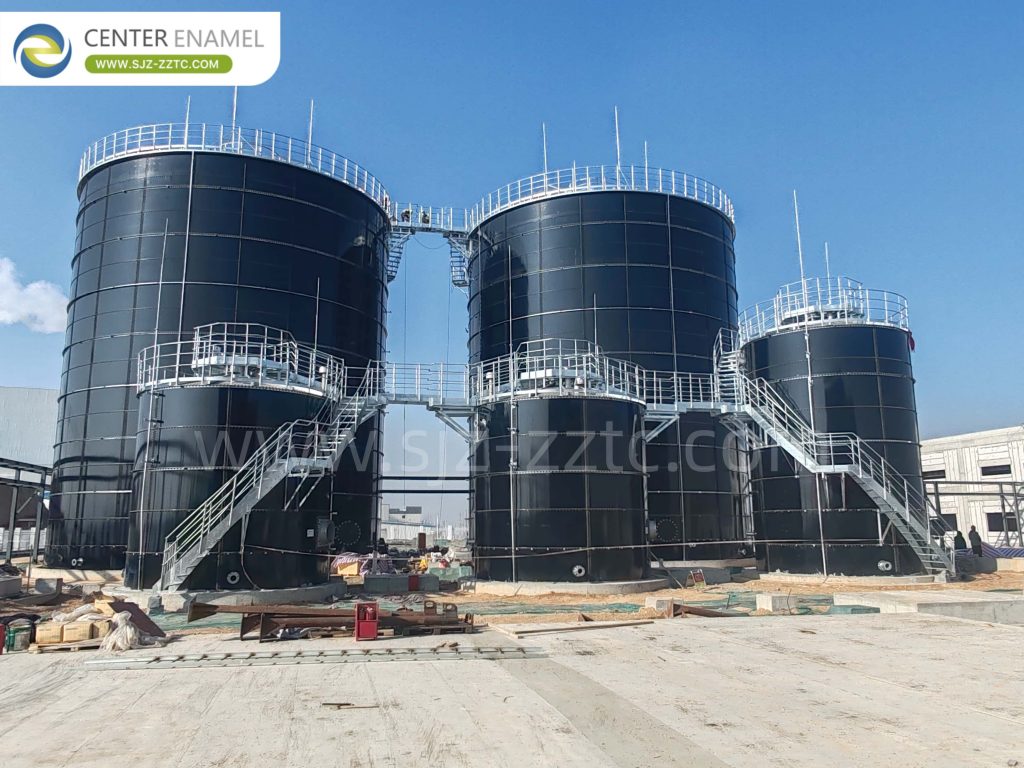
The Philippines is a significant agricultural producer, with sugarcane being a cornerstone of its economy. Data indicates that bagasse, the fibrous residue left after sugarcane crushing, is one of the most abundant agricultural by-products generated in the country, with millions of tons produced annually . This vast agricultural output is concentrated in major sugar-producing regions such as Negros, where it drives substantial economic activity .
However, this productivity comes with a significant environmental challenge: the management of sugarcane bagasse. Traditionally, much of this biomass has been underutilized or disposed of in ways that are harmful to the environment. While some is used as fuel in sugar mills, large quantities can be left to decompose in the open, releasing methane and contributing to greenhouse gas emissions. Improper disposal also poses risks to local ecosystems and communities through leachate contamination and air pollution. The increasing urgency to adopt sustainable waste management and renewable energy sources makes the Philippines an ideal location for innovative solutions that convert this waste into a valuable resource.
Converting Sugarcane Bagasse into Biogas
The conversion of sugarcane bagasse into biogas is achieved through a well-established biological process known as anaerobic digestion. In this oxygen-free environment, a consortium of microorganisms breaks down the complex organic matter found in bagasse—such as cellulose, hemicellulose, and lignin—into simpler compounds .
The process involves four key stages:
Hydrolysis: Complex polymers are broken down into soluble monomers.
Acidogenesis: Monomers are fermented into volatile fatty acids.
Acetogenesis: Volatile fatty acids are converted into acetic acid and hydrogen.
Methanogenesis: Methanogenic archaea produce biogas, a mixture of methane (CH₄) and carbon dioxide (CO₂) .
This biogas is a potent renewable energy source that can be used to generate electricity, provide heat, or be upgraded to biomethane for vehicle fuel. Research confirms that sugarcane bagasse is a highly suitable substrate for anaerobic digestion, with studies achieving high methane yields . By converting this waste into energy, the Philippines can significantly reduce its environmental footprint while creating a new, sustainable energy stream.
The CSTR Process: The Core of Biogas Technology
At the heart of an efficient Biogas Project is the CSTR Process (Continuous Stirred-Tank Reactor). This technology is specifically designed to handle the challenging characteristics of high-solid organic waste like sugarcane bagasse. The CSTR reactor operates as a completely mixed, closed tank, ensuring that the fermentation raw materials and anaerobic microorganisms are in constant and thorough contact. This is achieved through a mechanical stirring device that keeps the slurry homogenous, prevents the formation of surface scum, and optimizes the degradation of organic matter. By feeding the reactor continuously or semi-continuously at a constant temperature, the CSTR Process effectively and reliably degrades organic waste, maximizing biogas production.
Center Enamel’s Professional Biogas Project Design
Center Enamel is a globally recognized leader in providing comprehensive biogas solutions, with over three decades of experience. As the largest manufacturer of Glass-Fused-to-Steel (GFS) tanks in Asia, the company offers unparalleled expertise in designing and executing turnkey Biogas Projects . Our services cover every aspect of the project lifecycle, including:
EPC Service: Full Engineering, Procurement, and Construction management.
Process Package: Design and supply of specialized anaerobic digestion processes.
Equipment Supply: Provision of all necessary components for a complete biogas system.
Center Enamel’s commitment to quality is reflected in its rigorous international certifications, including CE/EN1090, ISO 9001, NSF 61, and EN 28765, ensuring that every solution meets the highest standards of safety, durability, and performance. We provide a robust, one-stop solution tailored to the specific needs of projects in the Philippines.
GFS Tanks & Double Membrane Roof: The Premier Solution
For optimal biogas capture and storage, Center Enamel recommends the combination of GFS Tanks and a Double Membrane Roof. These two products are perfectly suited for the demanding environment of an anaerobic digester.
GFS Tanks: Center Enamel's GFS Tanks are engineered for exceptional durability. The Glass-Fused-to-Steel coating is applied by firing at 820-930°C, creating an inert, inorganic bond that combines the strength and flexibility of steel with the outstanding corrosion resistance of glass. This coating is impermeable to the corrosive gases and organic acids generated during digestion, ensuring a long service life of over 30 years with minimal maintenance .
Double Membrane Roof: The Double Membrane Roof is the preferred top cover for biogas projects due to its cost and space efficiency. It provides superior airtightness necessary for gas collection and odor control, making it a superior option for anaerobic digestion processes. The integrated design forms a single, efficient structure that also saves on the cost and space of a separate ground-mounted gas holder.
Diversified Storage Tank Cover Solutions
Center Enamel understands that a biogas project may have specific site or budget requirements, which is why we offer a diverse range of tank cover solutions. Our options include:
Aluminum Geodesic Dome Roof: Offers advanced corrosion resistance, expansive clear span capability, and minimal maintenance costs.
Glass-Fused-to-Steel Roof: A cone-shaped roof that provides excellent airtightness and is often utilized for pressurized structures, making it a viable option for demanding applications requiring odour control.
Aluminum Alloy Trough Deck Roof: An economical option for applications that primarily need to keep out rain and wind, providing some odour control without requiring full airtightness. This is often used for potable water, wastewater, and firewater storage.
Stainless Steel Roof: Provides super anti-corrosion performance and a long service life. It ensures airtightness and is a viable solution for harsh environments.
FRP Roof: Suitable for situations where airtightness is not required, such as drinking water, agriculture, and firewater storage. FRP roofs can be fabricated in dome or flat shapes.
Essential Biogas Project Equipment
A complete Biogas Project relies on a network of interconnected equipment to ensure efficient and safe operation. In addition to the core reactor and roof, Center Enamel provides a full suite of supplementary products:
Gas Holder: For the safe storage of the produced biogas.
Solid-liquid Separator: To separate the digestate into solid and liquid fractions for easier handling and use as fertilizer.
Torch System: A safety device to safely burn off excess or unusable biogas.
Dehydration and Desulfurization Tank: For conditioning the raw biogas by removing moisture and corrosive hydrogen sulfide (H₂S) before it is used in engines or boilers.
Screw Sludge Dewatering Machine: For further reducing the moisture content of the solid digestate, making it more manageable and cost-effective for transport or composting.
Efficient Installation of GFS Tanks
Center Enamel’s GFS Tanks are renowned not only for their durability but also for their fast, efficient installation. Key advantages include:
Short Construction Times: The modular, bolted design allows for rapid on-site assembly, significantly reducing project timelines compared to cast-in-place concrete structures .
Easy to Ship and Relocate: Panels are factory-manufactured and shipped in containers, making them easy to transport to even remote locations in the Philippines. The tanks are also demountable and relocatable .
No Need for Large Equipment: The bolted assembly process typically requires less heavy lifting equipment than other tank types, simplifying logistics and reducing costs .
Simple Foundation: The tanks require a simple, reinforced concrete foundation, further reducing construction complexity and cost.
Expandable: The modular design allows for future tank capacity expansion if needed .
Beautiful Appearance: The glass coating provides a smooth, glossy, and attractive finish.
Center Enamel: Your One-Stop Biogas Project Partner
Center Enamel is your comprehensive partner for delivering a successful Biogas Project in the Philippines. We offer:
A Complete Solution: From design and engineering to equipment manufacturing and project management, Center Enamel provides a truly integrated, single-source solution.
Superior Technology: Our industry-leading GFS Tanks, CSTR Process, and diverse roof options ensure a reliable, long-term, and high-performance biogas system.
Proven Expertise: With 36+ years of history and a strong track record in the bio-energy sector, we have the experience to handle projects of any scale.
Global Quality Standards: All our products are manufactured to meet rigorous international standards, ensuring durability and compliance .
Tailored Solutions: We understand that each project is unique and offer customized design and engineering to meet the specific feedstock, space, and budget requirements of our clients.
Successful Biogas Project References
Center Enamel’s reputation is built on a global portfolio of successful projects.
Biogas Project in Malaysia
Tank dimensions: φ22.93m x 12.325m (H) (1 unit)
Total volume: 5,087 m³ (1 unit)
Completion year: 2025
Biogas Project in France
Process: CSTR
Tank dimensions: φ18.33m x 8.4m (H) (1 unit)
Total volume: 2,215 m³ (1 unit)
Completion year: 2021
A Sustainable Future for Philippine Agriculture
Transforming sugarcane bagasse from a waste problem into a renewable energy asset is a powerful strategy for the Philippines. By implementing a Biogas Project that utilizes the robust CSTR Process and durable GFS Tanks from Center Enamel, the country can achieve significant environmental and economic benefits. This solution not only mitigates the harmful effects of agricultural waste but also generates clean energy, creates a sustainable circular economy, and contributes to national energy security. Partner with Center Enamel to turn a burden into a valuable resource for a greener, more prosperous Philippines.
Frequently Asked Questions (FAQ)
1. Why are GFS Tanks more suitable for biogas projects than other storage options?
GFS Tanks offer superior corrosion resistance compared to materials like carbon steel. The glass coating is fused to the steel, creating an inert, non-porous barrier that is impervious to the corrosive hydrogen sulfide and organic acids produced during anaerobic digestion. This ensures a longer service life and lower maintenance costs .
2. What makes the CSTR Process effective for digesting sugarcane bagasse?
The CSTR Process uses a mechanical mixing device to keep the reactor contents in a constant, homogeneous state. This ensures that the high-solid sugarcane bagasse is uniformly mixed with the microorganisms, which prevents the formation of a floating scum layer and maximizes the breakdown of organic material for optimal biogas yield .
3. Can Center Enamel provide a complete turnkey biogas solution?
Yes, Center Enamel is an expert EPC (Engineering, Procurement, and Construction) contractor. The company provides a comprehensive one-stop solution that covers the design, supply, and installation of the entire Biogas Project, including the CSTR Process, GFS Tanks, roof covers, and all associated equipment .