
Sustainable Fuel Production: The Synergy of Napier Grass and Rice Straw in a Compressed Biogas (CBG) Plant
The global energy landscape is undergoing a profound transformation, shifting away from carbon-intensive fossil fuels toward decentralized, renewable alternatives. In agricultural economies, the quest for energy independence is increasingly centered on the valorization of lignocellulosic biomass. Central to this movement is the operation of a high-performance Compressed Biogas (CBG) Plant, which utilizes the powerful synergy between Napier Grass and Rice Straw. By combining these two abundant feedstocks, producers can overcome traditional seasonal supply constraints while achieving superior methane yields.
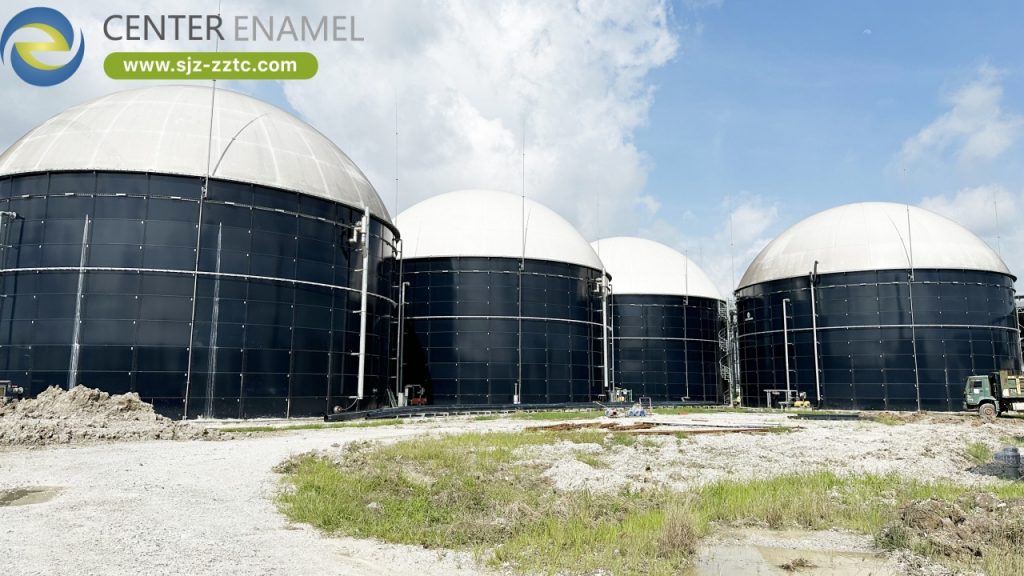
Shijiazhuang Zhengzhong Technology Co., Ltd, operating under the world-renowned brand Center Enamel, stands as a global leader in providing the specialized engineering infrastructure necessary for this green energy transition. With over thirty years of innovation and a project footprint extending to more than one hundred countries, we provide the turnkey containment and processing solutions that make the co-digestion of agricultural residues a reality. Our expertise lies in the integration of Glass-Fused-to-Steel (GFS) technology, high-performance Epoxy Coated Tanks, and advanced Double Membrane Roofs, creating a cohesive system designed to maximize the conversion of biomass into high-value fuel.
Technical Synergy of Napier Grass and Rice Straw
To optimize the Compressed Biogas (CBG) Plant, it is essential to understand the biological and physical synergy between Napier Grass and Rice Straw. When processed together, these materials create a balanced environment that enhances microbial activity and biogas production stability.
1. Balanced Carbon-to-Nitrogen Ratios
Napier Grass, known for its rapid growth and high biomass yield, provides a high concentration of easily degradable organic matter. However, its high moisture content and nitrogen levels can sometimes lead to process instability if not balanced. Rice Straw, on the other hand, is rich in carbon but has a more complex lignocellulosic structure. By co-digesting these two materials, the system achieves an optimal carbon-to-nitrogen ratio. This balance prevents the accumulation of ammonia—which can inhibit methanogenic bacteria—while ensuring there is enough carbon available to sustain high gas production rates.
2. Enhanced Fiber Breakdown and Digester Homogeneity
Rice straw often requires physical or chemical pre-treatment to break down its tough lignin-hemicellulose shield. When mixed with the softer tissues of Napier grass, the mechanical stirring within the digester becomes more effective. The resulting slurry maintains a better homogeneity, preventing the formation of thick surface crusts that can trap biogas and reduce the efficiency of a Compressed Biogas (CBG) Plant.
Core Technology: The Double Membrane Roof System
In the production of fuel from Napier Grass and Rice Straw, the efficient capture, storage, and pressure regulation of the produced biogas are the most critical factors for achieving a positive return on investment. Center Enamel’s Double Membrane Roofs are engineered as a dynamic, integrated gas management solution.
1. Advanced Structural Mechanics and Dual-Layer Architecture
The Double Membrane Roof is a sophisticated pressurized system consisting of two high-specification membranes working in synergy:
The Inner Membrane: This layer serves as the primary seal for the anaerobic digestion process. It is in direct contact with the biogas produced from the biomass. Its flexible nature allows it to expand and contract freely based on real-time gas volume. This variable-volume functionality ensures that the reactor maintains a consistent internal pressure, preventing mechanical stress on the tank structure.
The Outer Membrane: This layer is constantly pressurized by an automated, high-performance blower system. It forms a rigid, permanent aerodynamic dome that protects the inner gas-storage membrane. This outer shell serves as the primary defense against external environmental forces, such as wind pressure, heavy rainfall, and snow accumulation.
2. Material Science and Gas Integrity
Biogas derived from agricultural residues contains moisture and sulfur vapors. Our membranes are manufactured from high-tenacity polyester fabrics with specialized multi-layer coatings:
Gas Permeability Resistance: The inner membrane features a specialized coating that minimizes gas loss, ensuring every cubic meter of renewable energy is captured for compression.
Industrial Corrosion Protection: The fabric is chemically inert, resisting the acidic vapors common in industrial anaerobic environments.
Environmental Durability: The outer membrane is UV-stabilized and features a self-cleaning surface, ensuring long-term structural integrity in open agricultural settings.
3. EPC Integration: Intelligent Safety and Pressure Control
As part of our EPC services for a Compressed Biogas (CBG) Plant, we integrate a comprehensive suite of monitoring devices:
Automated Air Management: Sensors monitor the air pressure between the membranes, and the blower system adjusts automatically to maintain optimal tension.
Volume Monitoring: High-precision sensors track the height of the inner membrane, providing real-time data on biogas storage levels.
Safety Relief: Integrated safety valves ensure that any unexpected pressure spikes are managed safely, protecting both the roof and the reactor.
Containment Infrastructure: GFS and Epoxy Coated Tank Solutions
A successful Compressed Biogas (CBG) Plant requires containment that can handle the aggressive nature of organic acids produced during the early stages of hydrolysis.
1. Glass-Fused-to-Steel (GFS) Technology: The Premier Choice
Our flagship GFS tanks are the global benchmark for the core anaerobic reactor. By fusing high-tech glass enamel to specialized steel at high temperatures, we create a material with unparalleled properties:
Superior Chemical Resistance: The glass interior is completely impervious to the organic acids and corrosive gases generated during the digestion of Napier Grass and Rice Straw.
Rapid Modular Construction: The bolted design allows for significantly faster installation times compared to traditional concrete, which is vital for rural energy projects.
2. Epoxy Coated Tanks: High-Performance Industrial Storage
As a critical part of our infrastructure portfolio, Center Enamel’s Epoxy Coated Tanks provide an excellent solution for various stages of the bioenergy facility.
Advanced Coating Technology: Our epoxy tanks utilize a high-specification electrostatic powder coating process. This results in a smooth, durable finish that provides excellent resistance against industrial chemicals and agricultural residues.
Versatile Application: These tanks are ideal for equalization, storage of digestate, or as pre-treatment vessels. They offer a cost-effective yet highly durable alternative where high corrosion resistance is essential.
Quality Control: Every tank is manufactured under strict factory-controlled conditions to ensure consistent coating thickness and superior bond strength.
3. Aluminum Dome Roofs: Efficient Secondary Containment
For the storage of liquid digestate or process water, Center Enamel offers specialized Aluminum Dome Roofs . These self-supporting geodesic structures are used where gas capture is not the primary requirement. Constructed from high-strength aluminum alloy, they are naturally resistant to corrosion and require no internal support columns, providing a maintenance-free solution for secondary storage.
Sustainability and Economic ROI for CBG Production
The integration of Napier Grass and Rice Straw in a Compressed Biogas (CBG) Plant through Center Enamel’s EPC services is a strategic economic decision:
Year-Round Feedstock Stability: Co-digesting allows plants to utilize rice straw during harvest seasons and Napier grass as a consistent perennial supply, ensuring 365 days of energy production.
Renewable Fuel Revenue: The compressed biogas (biomethane) can be sold as a vehicle fuel or industrial gas, providing a significant and stable revenue stream.
High-Value Organic Fertilizer: The digestate remaining after the process is a nutrient-rich organic fertilizer, providing an additional income stream or reducing the need for chemical fertilizers in the local farming community.
Global Project Excellence: Center Enamel in Action
Our expertise in providing containment for complex agricultural biomass is proven through successful installations:
Shandong Heze Biogas Project This major regional initiative utilized 3 units of our high-performance GFS tanks. The project successfully transforms concentrated organic residues into a stable energy stream, demonstrating the reliability of our integrated gas storage systems and reactor technology.
Inner Mongolia Hinggan League Bio-Natural Gas Project In a region characterized by extreme temperature fluctuations, this installation integrated 4 units of our bolted steel tanks. These vessels and their Double Membrane Roofs provide the stable environment necessary for the high-efficiency production of bio-natural gas, proving the resilience of our engineering against extreme snow loads.
Jiangsu Xuzhou Biogas Project This project involved the deployment of 4 units of our advanced containment technology. It serves as a model for how Center Enamel’s EPC services, featuring GFS and high-durability coatings, can be used to rapidly build essential infrastructure for modern industrial and agricultural energy recovery.
Leading the Future of Sustainable Bioenergy
The implementation of a high-performance Compressed Biogas (CBG) Plant utilizing Napier Grass and Rice Straw represents a transformative step toward a more sustainable and secure energy industry. By converting agricultural residues into a renewable energy asset, producers can protect the environment while securing their energy future.
At Shijiazhuang Zhengzhong Technology Co., Ltd (Center Enamel), we are dedicated to providing the innovation and engineering excellence that make these projects a success. From our premier GFS tanks and high-performance Epoxy Coated Tanks to our specialized Double Membrane Roofs and Aluminum Dome Roofs, we offer a total containment solution designed for the future of industrial sustainability.