
System Components of a Biogas Plant: A Comprehensive Engineering Guide
As global industries and municipalities pivot toward circular economies and net-zero energy frameworks, biogas technology has become a premier solution for converting organic waste into clean, renewable power. A commercial or industrial biogas facility is not a single standalone unit; rather, it is a sophisticated, integrated network of mechanical, biological, and chemical engineering subsystems working in unison.
Understanding the core system components of a biogas plant is essential for engineers, project developers, and facility managers aiming to optimize operational efficiency, maximize gas yield, and ensure long-term structural reliability.
1. Feedstock Preparation and Pre-Treatment System
Before organic material enters the biological reactor, it must be properly prepared to prevent mechanical clogs, pump failures, and microbial inhibition.
- Receiving Pits and Hoppers: Contain solid or semi-solid feedstocks such as agricultural manure, food waste, or industrial sludge.
- Mechanical Screens and Grinders: Remove foreign inorganic debris (plastics, metals, grit) and shred fibrous matter into uniform particle sizes.
- Mixing and Homogenization Tanks: Blend diverse waste streams with recycled liquid digestate to achieve the optimal solids percentage and consistent organic loading rate before feeding into the digester.
2. The Anaerobic Digester Vessel (The Biological Core)
The digester is the primary reactor vessel where the biological conversion of organic waste into biogas takes place under strictly oxygen-free (anaerobic) conditions.
- Reactor Architecture: Depending on feedstock characteristics, facilities utilize Continuously Stirred Tank Reactors (CSTR), Upflow Sludge Bed Reactors (UASB/USR), or Internal Circulation (IC) systems.
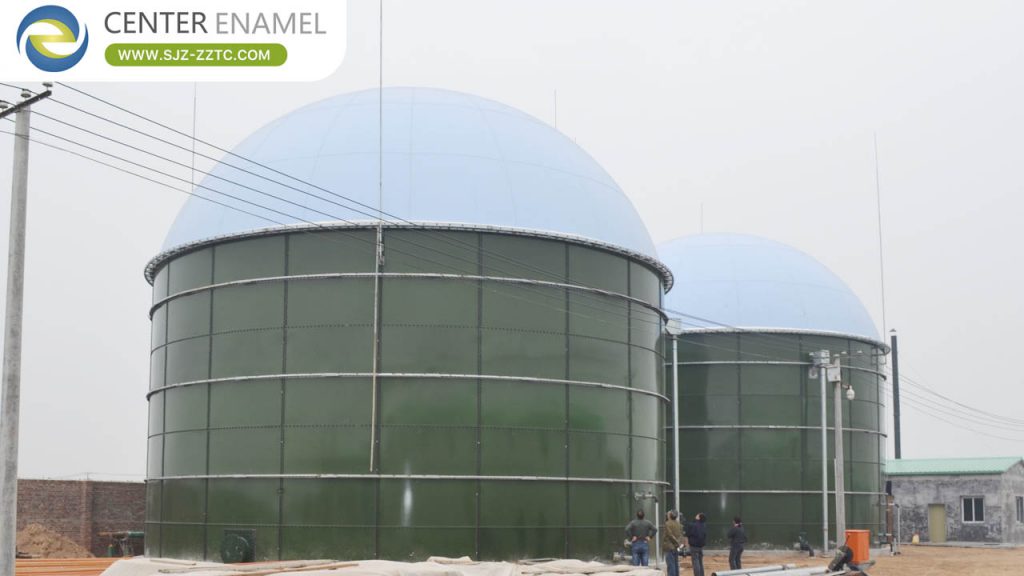
- Structural Containment: Because anaerobic digesters process corrosive organic acids and hydrogen sulfide, modern installations rely heavily on Glass-Fused-to-Steel (GFS) bolted tanks. Fusing titanium-rich glass to industrial steel provides an exceptional pH resistance range (1 to 14) and a 30+ year structural service life.
- Internal Agitation Systems: Mechanical mixers or biogas recirculation pumps keep the microbial biomass in constant contact with the organic substrate, preventing dead zones and scum layer formation.
3. Heating and Temperature Control System
Microbial activity depends heavily on maintaining a stable operating temperature inside the digester.
- Mesophilic vs. Thermophilic Ranges: Systems typically operate under mesophilic (35°C–37°C) or thermophilic (50°C–55°C) conditions.
- Heat Exchangers & Boilers: Hot water boilers or waste heat recovered from combined heat and power (CHP) generators circulate thermal energy through internal pipe coils or external heat exchangers to maintain precise reactor temperatures, even during seasonal climate shifts.
4. Biogas Collection and Storage System
As microorganisms break down organic matter, biogas (CH4 and CO2) rises to the headspace of the reactor.
- Gas Collection Piping: Sealed corrosion-resistant piping safely channels raw gas away from the reactor under controlled pressure.
- Double-Membrane Gasholders: Fabricated from high-strength, UV-resistant synthetic membranes (typically mounted directly on top of GFS digester tanks or as standalone units), these holders expand and contract to buffer fluctuating gas production and consumption rates.
5. Biogas Desulfurization and Upgrading System
Raw biogas contains trace impurities and moisture that can corrode combustion engines if left untreated.
- Biological or Chemical Desulfurization: Removes corrosive hydrogen sulfide (H2S) via iron sponge filters, chemical scrubbers, or controlled air injection into the digester headspace.
- Moisture Traps and Chillers: Condense and strip water vapor out of the gas stream.
- Biogas Upgrading Units: For grid injection or vehicle fuel, systems utilize pressure swing adsorption (PSA), water washing, or membrane separation to remove carbon dioxide (CO2), producing high-purity biomethane (>95\% CH4).
6. Digestate Management and Processing System
The residual material remaining after anaerobic digestion is called digestate, which is packed with bioavailable nutrients.
- Solid-Liquid Separators: Mechanical screw presses or centrifuges separate the digestate into a nutrient-rich solid cake (used for compost/soil conditioner) and a liquid fraction.
- Storage Lagoons or Tanks: Enclosed storage tanks hold liquid digestate safely prior to agricultural land application, preventing nutrient runoff and fugitive odor emissions.
Comparative Data Table: Key Biogas Plant Components & Functions
| System Component | Primary Engineering Function | Typical Materials / Technology Used |
| Feedstock Pre-Treatment | Sorting, shredding, and homogenizing waste | Industrial grinders, augers, stainless steel mixing tanks |
| Digester Vessel | Enclosed oxygen-free biological reaction | Glass-Fused-to-Steel (GFS) bolted tanks, reinforced concrete |
| Heating Subsystem | Maintaining stable microbial digestion temperatures | Heat exchangers, CHP waste-heat recovery boilers |
| Gas Storage Dome | Buffering and storing generated biogas safely | Dual-membrane fabric gasholders, PVC/PTFE materials |
| Upgrading & Scrubbing | Removing H2S, moisture, and CO2 impurities | Activated carbon filters, membrane separators, chillers |
| Digestate Processing | Separating and storing nutrient-rich byproducts | Screw press separators, sealed GFS storage tanks |
Frequently Asked Questions (FAQ)
Q1: What is the most important component of a biogas plant?
A: While every subsystem is vital, the anaerobic digester vessel is the core component. It provides the engineered, oxygen-free environment where specialized microorganisms break down organic waste and generate renewable biogas.
Q2: Why are Glass-Fused-to-Steel (GFS) tanks preferred for biogas digesters?
A: GFS tanks combine the structural strength of industrial steel with the chemical inertness of fused glass. They withstand the corrosive organic acids and hydrogen sulfide generated inside anaerobic digesters, offer rapid modular installation, and provide an operating lifespan exceeding 30 years.
Q3: How is temperature regulated inside a biogas plant digester?
A: Temperature is regulated using internal heating coils or external heat exchangers connected to boilers or waste-heat recovery systems from combined heat and power (CHP) engines, maintaining steady mesophilic (35°C–37°C) or thermophilic (50°C–55°C) conditions.