
Trusted Textile Wastewater Treatment Project EPC Contractor Delivering UASB Process Solutions Worldwide
Industrial wastewater treatment markets vary significantly across regions, creating diverse opportunities and challenges for EPC contractors. The Asia-Pacific region, particularly China, has become the world's largest industrial wastewater treatment market, with the operation and maintenance service segment's contribution continuing to rise, marking a shift from project construction to long-term operational management. The North American market focuses on upgrading existing facilities, while Europe emphasizes high-value-added resource recovery technologies.
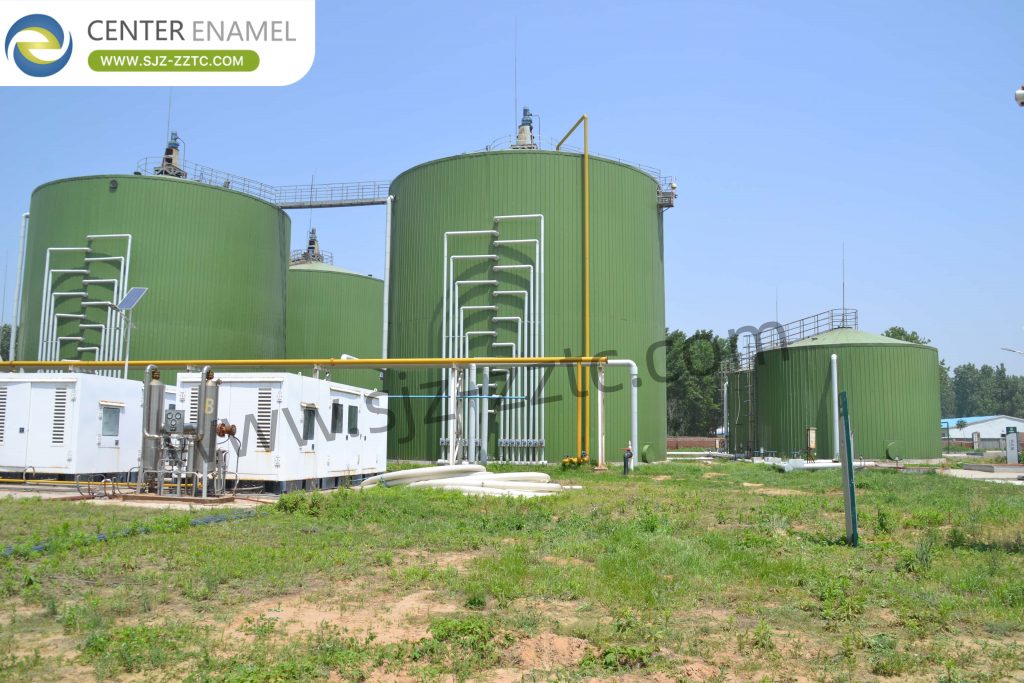
For any textile wastewater treatment project EPC contractor, understanding these regional nuances is essential for delivering appropriate solutions. Wastewater from the new energy industry chain, including lithium batteries, photovoltaics, and hydrogen, has become the most notable emerging growth area due to its complex composition and high treatment difficulty, generating significant demand for customized solutions. The maturity of third-party treatment models in industrial parks continues to improve, driving consolidation in the professional operation market. The Middle East has strong demand for advanced treatment and reuse of industrial wastewater due to water scarcity, while manufacturing transfer in Southeast Asia drives local industrial wastewater treatment facility construction demand.
GFS Tanks Enable Flexible Infrastructure for Modern Plant Layouts
Modern industrial facilities require infrastructure that adapts to both current operations and future expansion plans. GFS tanks offer flexible customization of size and appearance, with higher land utilization rates ideally suited for modern compact plant layouts, presenting significant advantages over fixed poured concrete tanks. Concrete tanks cannot alter volume or shape after pouring, with heavy bases occupying large areas, making placement difficult on narrow or irregular plots. Their rough, uniform appearance similarly fails to meet modern facility aesthetic requirements.
As a textile wastewater treatment project EPC contractor, selecting the right tank technology directly impacts project success. GFS tank volume can be precisely customized as needed, with capacities ranging from dozens of cubic meters to 50,000 cubic meters freely selectable. Tank height and diameter can be flexibly combined to fit narrow or irregularly shaped plots, effectively saving plant land occupation. Enamel color customization is also supported, achieving visual harmony with plant buildings and environmental facilities. During later plant expansion, GFS tanks can be directly adjusted in layout and expanded, whereas concrete tanks, being monolithic structures, must be demolished and rebuilt, offering less flexibility in land resource utilization.
Essential UASB Process Supporting Equipment for Reliable Operation
The UASB process requires a comprehensive equipment suite to maintain stable, efficient treatment performance. Core equipment includes the GFS anaerobic reactor tank, with the internal three-phase separator being the key component for gas-liquid-solid separation and sludge retention. The bottom high-precision distribution system, comprising distribution pipes, distributors, and pressure regulators, ensures uniform influent distribution, preventing short-circuiting and sludge accumulation.
For any textile wastewater treatment project EPC contractor, proper equipment integration is critical. Supporting equipment includes influent lift pumps, equalization tanks, and flow meters to stabilize influent conditions. The top biogas collection system includes gas collection hoods, gas piping, desulfurization and dehydration equipment, and gas storage. Online temperature, pH, and COD monitoring instruments are integrated for real-time process control. Bottom sludge discharge pipes and pumps periodically remove excess sludge. The complete equipment package is compact, with no rotating wear parts, resulting in low equipment loss and high operational stability that reduces long-term maintenance burdens.
Standardized Treatment Solutions for Textile Wastewater Challenges
Textile wastewater demands a comprehensive treatment approach due to its complex pollutant profile. The standardized solution uses a combined treatment train of "pretreatment + anaerobic digestion + aerobic treatment + advanced decolorization," primarily addressing high color, high alkalinity, and recalcitrant dye pollution. Pretreatment uses screens and equalization tanks to balance quality and flow, with acid addition to neutralize pH to neutral. Coagulation and sedimentation with DAF remove suspended solids, some dyes, and colloidal impurities, reducing color load.
The main stage employs UASB or IC anaerobic processes for high-concentration organic degradation, where the anaerobic environment can break down some dye molecular structures to improve biodegradability. As a textile wastewater treatment project EPC contractor, selecting the appropriate UASB process configuration is essential for optimal performance. Subsequent A/O, contact oxidation, or SBR aerobic processes deeply degrade residual organics and remove nitrogen and phosphorus. Final advanced decolorization uses coagulation decolorization, chemical oxidation with ozone or Fenton, or activated carbon adsorption to ensure color compliance. Membrane treatment is added where water reuse is required. Anaerobic digesters use Center Enamel GFS tanks resistant to high alkalinity and dye auxiliaries, while high-temperature wastewater requires heat exchange cooling to control biological system temperatures.
Global Standardized Service System Supporting International Projects
Delivering successful EPC projects requires robust service infrastructure across all project phases. Leveraging regional sales centers in China and overseas local agent networks, Center Enamel has established a complete after-sales service loop covering all markets. The system provides four core service pillars: 24/7 rapid response mechanism, on-site domestic and overseas installation services, full-project-cycle after-sales support, and long-term warranty protection.
This comprehensive service chain covers everything from preliminary site survey through mid-term construction management to long-term inspection and maintenance. The entire system is uniformly adapted to both domestic and international project service standards, coordinating personnel scheduling, material support, and on-site coordination for simultaneous projects across multiple regions. For any textile wastewater treatment project EPC contractor, this integrated service approach significantly reduces customer multi-party coordination costs and ensures efficient domestic and overseas project delivery.
Comprehensive International Certifications Enable Global Project Access
International certifications provide essential credentials for winning global EPC projects. Center Enamel holds CE, NSF, WRAS, ISO9001, BSCI, ASME, and other global certifications, fully clearing EU, North American, Southeast Asian, and African project tendering barriers. These credentials provide critical hard credential advantages for large overseas project bidding, demonstrating compliance with diverse international standards. For a textile wastewater treatment project EPC contractor, these certifications validate the quality and reliability of equipment and systems delivered to clients worldwide.
FRP Roof Cover Solutions for Atmospheric Storage Applications
Different tank applications require appropriate roof solutions based on operational requirements. The FRP Roof is a general-purpose economical roof for atmospheric pressure storage tanks without air-tightness requirements, suitable for drinking water storage, agricultural irrigation water, firewater reserve, and general production wastewater temporary storage. It is available in two styles: flat and dome, allowing flexible selection based on tank specifications and site aesthetic requirements.
The roof is integrally molded from resin and fiberglass, making it lightweight with natural water resistance and mild acid and alkali corrosion resistance. It will not rust or rot in long-term humid environments, eliminating the frequent anti-corrosion maintenance required for metal roofs. The dome style features excellent drainage performance due to its curved structure, resisting water accumulation, dust buildup, snow load, and strong winds. The flat style facilitates the installation of maintenance walkways, level gauges, and vents on top, making inspection and operation convenient.
The product is fully insulated with no risk of galvanic corrosion, will not contaminate drinking water quality, and meets environmental standards for domestic water storage. The modular design with low individual component weight allows for simple on-site hoisting and assembly, offering high construction efficiency and affordable procurement and installation costs. It is only suitable for atmospheric pressure water storage tanks without biogas collection or pressurization requirements, and is not recommended for anaerobic fermentation gas-producing conditions. It is widely used in rural agricultural water storage tanks, industrial park firewater tanks, waterworks buffer tanks, and small to medium-sized domestic wastewater temporary storage facilities, making it a cost-effective general-purpose roof choice for conventional water storage applications.
Frequently Asked Questions
Q: What makes an experienced textile wastewater treatment project EPC contractor essential for industrial facilities?
An experienced EPC contractor provides integrated design, procurement, and construction services that ensure regulatory compliance, optimized UASB process performance, and reliable GFS tank infrastructure. This single-source responsibility reduces project risks, coordination costs, and delivery timelines.
Q: How does the UASB process benefit textile wastewater treatment specifically?
The UASB process effectively breaks down complex dye molecules, improves overall biodegradability, and reduces COD loads by over 90% while generating biogas as a renewable energy source. Its compact design and low energy requirements make it ideal for high-color, high-alkalinity textile effluent.
Q: What certifications should a textile wastewater treatment project EPC contractor hold?
Key certifications include CE for European markets, NSF for North American water quality compliance, WRAS for UK potable water applications, and ISO9001 for quality management. These credentials enable seamless project execution across diverse international regulatory frameworks.