
Thailand Bagasse Biogas Projects-Leading Biogas Technology by Center Enamel
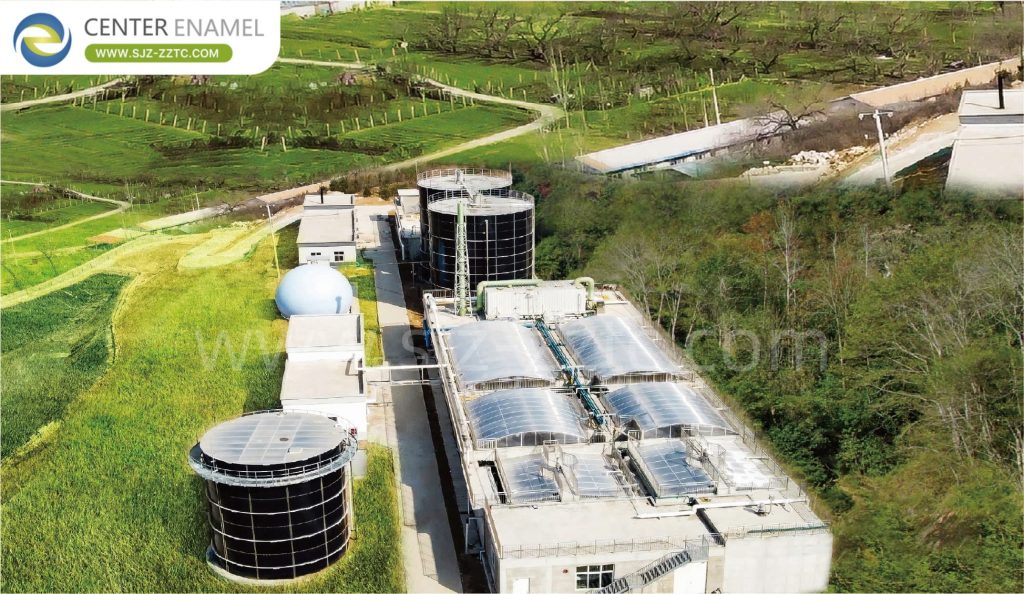
Thailand is one of the world’s top sugar producers and generates massive volumes of bagasse annually during sugar milling. Traditional disposal such as open burning, landfilling, and simple composting causes severe air pollution, land occupation, high treatment costs, and low resource efficiency. Under Thailand’s renewable energy and circular economy policies, the Bagasse Biogas Project has become the optimal pathway for organic waste valorization and low-carbon energy supply.
Center Enamel is a leading global EPC contractor specializing in waste-to-energy and environmental engineering. With mature Biogas Technology including CSTR, UASB, USR, and IC anaerobic processes, high-quality GFS Tanks, and full-cycle turnkey EPC services, Center Enamel delivers customized, stable, and cost-effective bagasse-to-biogas systems for Thailand’s sugar mills, industrial zones, and agricultural parks. We help local clients achieve waste reduction, energy self-sufficiency, carbon emission reduction, and sustainable green development.
What Is Bagasse & Main Sources in Thailand
Bagasse is the fibrous biomass residue left after sugarcane stalks are crushed to extract juice. As a major sugar exporter, Thailand has a dense distribution of sugar mills, creating a steady and huge supply of bagasse throughout the crushing season.
Main sources of bagasse in Thailand:
- Fibrous residues from sugarcane crushing in industrial sugar mills
- Dry bagasse piles from sugar processing plants and storage yards
- Mixed residues including cane tips, leaves, and small stems from sugarcane fields
- Surplus bagasse from ethanol and sugar by-product production lines
Thailand’s tropical climate supports high sugarcane yields, resulting in abundant bagasse rich in cellulose, hemicellulose, and organic matter. These components are highly biodegradable and ideal feedstock for anaerobic digestion to produce biogas.
Bagasse Treatment Challenges in Thailand
Thailand’s sugar industry faces mounting pressure in bagasse management, which has become a key environmental and economic issue:
Landfill saturation: Limited land resources and large bagasse volumes accelerate landfill depletion while generating leachate and methane emissions.
Open burning air pollution: Burning bagasse releases large amounts of smoke, particulate matter, and toxic gases, violating Thailand’s strict air-quality standards.
High logistics and disposal costs: Frequent collection, long-haul transportation, and landfill fees place heavy financial burdens on sugar mills.
Ecological risks: Improper stacking causes odor, insect breeding, drainage blockage, and soil and groundwater contamination.
Low utilization efficiency: Traditional composting is slow, space-consuming, and unsuitable for large-scale continuous treatment.
These pain points make the Bagasse Biogas Project the most practical and sustainable solution for Thailand’s sugar industry.
Why Bagasse Produces Biogas & Anaerobic Digestion Process
Bagasse contains abundant biodegradable organics such as cellulose, lignin, sugars, and residual molasses. Under sealed anaerobic conditions, microbes decompose these materials into biogas through four stable stages:
Hydrolysis: Hydrolytic bacteria break down macromolecular organics into small soluble sugars, amino acids, and fatty acids.
Acidification: Acidogenic bacteria convert small molecules into volatile fatty acids, hydrogen, and carbon dioxide.
Acetogenesis: Intermediates are further degraded into acetic acid, the critical precursor of methane.
Methanogenesis: Methanogenic bacteria produce biogas typically composed of 55%–70% methane and 30%–45% carbon dioxide.
Biogas can be directly used for power generation, steam production, or heating. The fermented digestate becomes high-grade organic fertilizer, forming a closed-loop circular economy model.
Benefits of Bagasse Biogas Projects for Thailand
Developing Bagasse Biogas Projects brings comprehensive economic, environmental, and social benefits to Thailand:
Solve organic waste pollution: Anaerobic digestion eliminates odor and leachate, bans open burning, and protects ecosystems.
Boost renewable energy: Biogas displaces fossil fuels, optimizes the national energy mix, and strengthens energy security.
Reduce operational costs: Biogas cuts electricity and fuel expenses; organic fertilizer creates additional revenue streams.
Comply with low-carbon policies: Projects reduce greenhouse gas emissions and meet Thailand’s environmental and climate targets.
Promote circular economy: Convert waste into energy and organic fertilizer, improving resource efficiency and urban-rural sustainability.
Advanced Biogas Technology for Thailand Bagasse Biogas Projects
Center Enamel provides four proven anaerobic processes as core Biogas Technology for Thailand’s bagasse utilization:
CSTR (Completely Stirred Tank Reactor)
Best for high-solid bagasse. Full mechanical mixing prevents scum and sediment, ensures stable fermentation and high biogas yield, and adapts well to tropical climates.
UASB (Upflow Anaerobic Sludge Blanket)
Ideal for low-solid leachate and preprocessed bagasse slurry. High efficiency, low operation cost, suitable for medium-scale projects.
USR (Upflow Solids Reactor)
Simple structure, low investment, easy maintenance. Perfect for small-scale decentralized treatment at sugar mills.
IC (Internal Circulation)
Biogas-driven internal circulation increases organic loading rate by 3–5 times. Small footprint, high efficiency for urban and industrial zones with limited land.
Core Equipment for Thailand Bagasse Biogas Projects
Center Enamel provides full-set equipment customized for Thailand’s high temperature, humidity, and coastal corrosion environment:
GFS Tanks (Glass-Fused-to-Steel Tanks)
Fused at over 820°C, with pH 1–14 corrosion resistance, acid resistance, UV stability, and service life exceeding 30 years. Bolted assembly enables fast installation and expansion.
Double Membrane Gas Holders
High airtightness and automatic pressure control ensure safe biogas storage and stable energy supply.
FBE (Fusion Bonded Epoxy) Tanks
Cost-effective anti-corrosion tanks for process water, regulation, and storage.
Various Tank Roof Systems
Air membrane, enamel, aluminum, FRP, and aluminum dome roofs adapt to Thailand’s rainy and typhoon-prone climate.
Agitation, Feeding & Discharging Systems
Customized for stable material circulation and intelligent unmanned operation.
Why Choose Center Enamel as Your EPC Contractor
As a professional global EPC provider for Bagasse Biogas Project, Center Enamel offers unique strengths for Thailand:
Customized Biogas Technology: Tailored processes based on bagasse composition, climate, and project scale.
Strong R&D and manufacturing: 200+ patented enamel formulas and Asia’s largest GFS Tanks production base.
International certifications: Comply with ISO 28765, AWWA D103, NSF/ANSI 61, CE, OSHA; 1500V spark test for every tank.
Industry standard leadership: Main drafter of China’s GFS Tanks industry standards.
Rich Southeast Asia experience: Deeply familiar with Thailand’s policies, construction norms, and tropical conditions.
Full-cycle turnkey EPC: One-stop solution from design, manufacturing, installation to commissioning and after-sales.
Center Enamel’s Professional GFS Tanks Installation Process
Center Enamel adopts efficient, safe installation methods suitable for Thailand’s sugar mill and rural sites:
Hydraulic jacking top-down installation: No scaffolding or large cranes, ideal for narrow spaces.
Zero on-site welding: Factory-prefabricated bolted components avoid weather-related defects.
Fast commissioning: Shorten construction period and accelerate investment return.
Local after-sales support: Dedicated Southeast Asia team provides timely maintenance and optimization.
Successful Project Cases
With thousands of successful biogas projects delivered worldwide and a proven track record in tropical and Southeast Asian markets, Center Enamel has established itself as a reliable and capable partner for large-scale biomass-to-energy initiatives. Our integrated technical, manufacturing, and service capabilities ensure that every Bagasse Biogas Project achieves stable operation, high efficiency, and long-term value.
Case 1: Sweden Biogas Project
Tank Dimensions: φ19.11 × 19.2 m (H) — 1 Unit
Total Volume: 5,510 m³
Completion Date: 2024
Case 2: Singapore Biogas Project
Process Stage: CSTR
Tank Dimensions:
φ18.34 × 8.4 m (H) — 1 Unit
φ8.41 × 9.0 m (H) — 1 Unit
φ11.46 × 7.2 m (H) — 1 Unit
Total Volume: 3,458 m³
Completion Date: 2021
Thailand’s huge bagasse output creates both environmental pressure and valuable resource potential. Building a professional Bagasse Biogas Project with advanced Biogas Technology and durable GFS Tanks is the best way to balance environmental protection and energy recycling. As a trusted EPC contractor, Center Enamel provides customized anaerobic systems, high-performance storage solutions, and full-cycle turnkey services to help Thailand convert bagasse into clean biogas and organic fertilizer, reduce pollution and carbon emissions, and support the sustainable development of the circular economy and renewable energy.