
Thailand Biogas Solutions: Advanced USR Process and Durable GFS Tanks for Palm Oil Mill Waste
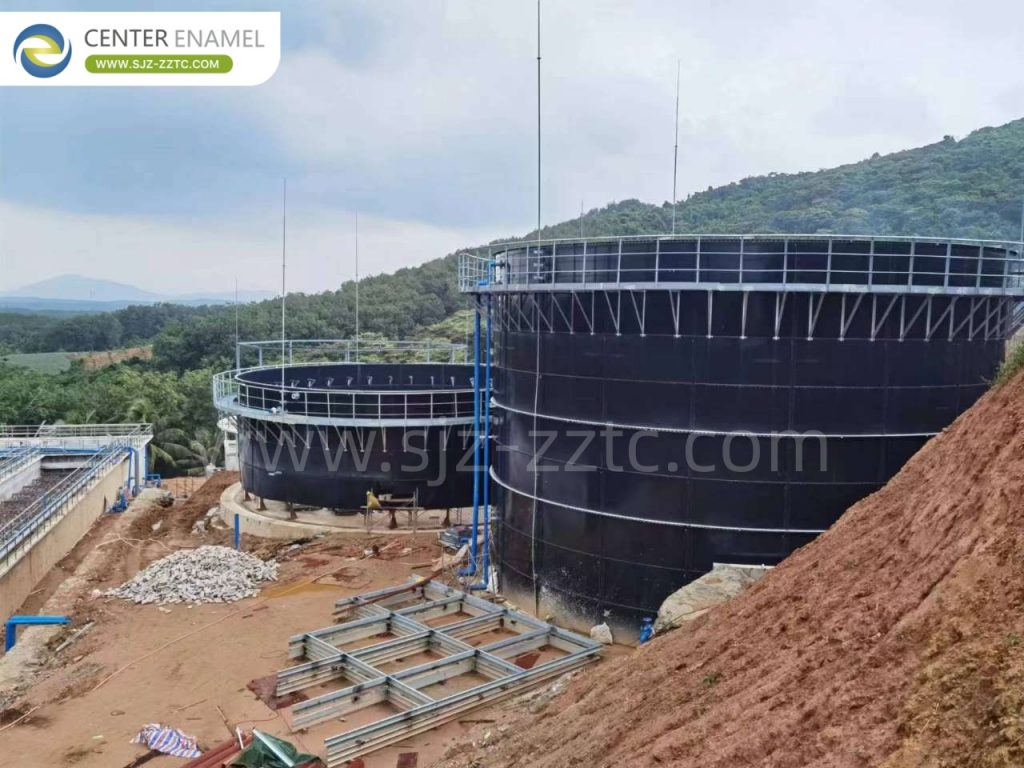
Thailand stands as one of the world’s leading producers of palm oil, with a vast network of mills scattered across the southern provinces. While this industry drives economic growth, it also generates a significant environmental challenge: Palm Oil Mill Effluent (POME). For every ton of fresh fruit bunches (FFBs) processed, a mill discharges approximately 0.7 to 1 cubic meter of POME. Fresh POME is hot (60-80°C), acidic (pH 3.3-4.6), and thick with high solids, oil, grease, and organic content. Without proper treatment, this wastewater can severely harm local ecosystems. However, within this challenge lies a remarkable opportunity. When managed correctly, POME transforms from a pollutant into a powerful energy source.
Advantages of Converting POME into Biogas
Converting POME into biogas offers a closed-loop solution that benefits both the environment and the mill’s bottom line. Instead of releasing methane-a potent greenhouse gas-into the atmosphere from open lagoons, modern Biogas Solutions capture it for energy use. The advantages are clear:
Renewable Energy Generation: Biogas can power mill boilers or generate electricity, reducing reliance on fossil fuels and lowering energy costs.
Odor and Pollution Control: Anaerobic digestion significantly reduces the biological oxygen demand (BOD) and chemical oxygen demand (COD) of POME, mitigating water pollution and unpleasant smells.
Nutrient-Rich Fertilizer: The effluent remaining after biogas extraction contains nitrogen, phosphate, potassium, magnesium, and calcium, making an excellent, safe fertilizer for palm oil plantations.
Regulatory Compliance: Pre-treating POME through anaerobic digestion helps mills meet increasingly stringent environmental regulations.
Center Enamel: Expert Design for Biogas Projects
For over 36 years, Center Enamel has been a trusted leader in water, wastewater, and biogas projects. As the largest manufacturer of Glass-Fused-to-Steel (GFS) tanks in Asia, the company brings unmatched R&D and production capability to every project. Center Enamel provides professional, custom-engineered designs for biogas projects, ensuring optimal performance, durability, and cost-efficiency. Whether you need a complete EPC service or specific process packages, their team tailors every solution to the unique characteristics of POME and the client’s operational goals. Their certifications-including ISO9001, NSF61, and EN28765-guarantee quality and reliability.
Wastewater Pretreatment Process
Before POME enters the anaerobic reactor, effective pretreatment is essential. This stage removes large solids and grease to protect downstream equipment and stabilize the process. Center Enamel’s pretreatment system includes:
Screen Machine: Mechanical bar screens remove large suspended solids and floating objects, preventing blockages and damage to pumps and piping.
Horizontal Flow Oil Separator: This unit specifically targets grease and oil, using horizontal flow design and optimized residence time to reduce the load on the biological treatment stages.
Regulating Tanks: POME flow and composition vary greatly between production periods. Regulating tanks balance these fluctuations by temporarily storing influent, mixing different concentrations, adjusting pH, and providing physical cooling. They also facilitate hydrolysis and acidification, where microorganisms break down complex organic molecules into simpler forms, preparing the wastewater for efficient anaerobic digestion.
Introduction to the USR Process
The Upflow Solids Reactor (USR) is a highly effective anaerobic digestion technology for treating organic wastewater with solid content (TS) between 3% and 6%-a perfect match for raw POME. In the USR Process, wastewater is distributed evenly at the bottom of a vertical, cylindrical, air-tight reactor tank. As it flows upward, a dense bed of anaerobic solids digests the organic material, producing biogas. The treated effluent overflows through an outlet, while excess sludge is discharged from the bottom. Center Enamel determines reactor volume based on volumetric load, typically 3-5 kg COD/(m³·d) for POME under mesophilic digestion. This design ensures high removal efficiency and stable biogas production, making it the core of modern Biogas Solutions for palm oil mills.
Core Products: GFS Tanks + Double Membrane Roof
Center Enamel manufactures two primary products that work in perfect synergy for biogas projects:
Glass-Fused-to-Steel (GFS) Tanks: These tanks combine the strength of steel with the corrosion resistance of glass. The enamel is fused to the steel at high temperatures, creating a hard, inert, and durable surface that withstands the acidic, abrasive nature of POME and biogas. GFS tanks are engineered to meet rigorous standards like AWWA D103 and EuroCode, ensuring longevity even in harsh environments.
Double Membrane Roof: For most working conditions, Center Enamel recommends the double membrane roof. Its advantages include direct cost optimization (lower roof cost), space efficiency (reducing footprint compared to traditional structures), and eliminating the need for separate ground-mounted gas holders. However, for sites with extreme weather (high wind or heavy snow loads) or when a ground-mounted gas holder is preferred, a Glass-Fused-to-Steel roof is available, especially for tank diameters under 23 meters.
Together, GFS Tanks and the double membrane roof form a complete, sealed, and efficient biogas capture system.
Supporting Equipment for Complete Biogas Plants
Beyond the main reactor and roof, a fully functional biogas plant includes several other critical components. Center Enamel supplies all necessary auxiliary equipment to ensure seamless operation:
Gas Holder: For storing biogas prior to use.
Lagoon / Black Membrane: For post-treatment polishing or effluent storage.
Hot Water Boiler: To maintain optimal mesophilic temperatures in the USR reactor.
Emergency Torch System: Safely combusts excess biogas when production exceeds demand.
Lifting Pumps: To transfer POME between treatment stages.
Dehydration and Desulfurization Tank: Removes moisture and hydrogen sulfide from raw biogas, protecting downstream equipment.
Screw Sludge Dewatering Machine: Reduces the volume of digested sludge for easier disposal or use as fertilizer.
Center Enamel’s Efficient Installation Capability
One of Center Enamel’s key strengths is rapid, on-site installation. With over 250,000 GFS tank sheets produced annually, they have streamlined logistics and assembly. Their bolted tank design requires no heavy welding or specialized construction equipment, significantly cutting installation time and labor costs. The modular nature of GFS Tanks allows for easy transportation and erection even in remote mill locations. A professional technical team guides the process, ensuring that every bolted joint and seal meets strict quality standards. This efficiency means less downtime for the mill and faster return on investment.
One-Stop Biogas Solutions for Thai Palm Oil Mills
Center Enamel is not just a tank manufacturer; they are a complete one-stop solution provider for palm oil mills in Thailand and worldwide. Their business scope covers everything from initial concept to operational handover: EPC service, Process Package, and Equipment Supply. For a Thai palm oil mill owner, this single-source responsibility means less complexity, better coordination, and guaranteed performance.
They handle site assessment, civil design, mechanical installation, and commissioning. By offering integrated Biogas Solutions built around the efficient USR Process and durable GFS Tanks, Center Enamel enables mill operators to turn a costly waste problem into a profitable energy asset. This holistic approach is why hundreds of clients across more than 100 countries trust Center Enamel for their environmental and energy projects.
Frequently Asked Questions (FAQ)
Q1: Why is the USR Process more suitable for POME treatment compared to other anaerobic methods?
The USR (Upflow Solids Reactor) process is specifically designed for high-solids organic wastewater like POME (TS 3-6%). It retains active biomass effectively without needing expensive separation equipment, handles fluctuating loads well, and achieves high COD removal efficiency, making it both robust and cost-effective for palm oil mill effluents.
Q2: What makes GFS Tanks the preferred choice for biogas plant equipment?
Glass-Fused-to-Steel (GFS) tanks offer exceptional corrosion resistance against acidic POME and biogas. The inert glass coating prevents rust and chemical attack, ensuring a 30+ year service life with minimal maintenance. They are modular, rapidly installed, and comply with international standards like AWWA D103 and NSF61.
Q3: How does Center Enamel guarantee project success for my palm oil mill in Thailand?
Center Enamel provides a complete turnkey solution: from lab testing and process design to manufacturing, installation, and commissioning. With over 36 years of experience, Asia’s largest GFS production base, and certifications like ISO9001, CE, and EN28765, they ensure high-quality engineering and reliable after-sales support for biogas solutions worldwide.