
Top China Beverage Wastewater Treatment Project EPC Contractor: Provide Leading Anaerobic Technologies and GFS Tanks
As a leading China Beverage Wastewater Treatment Project EPC Contractor, Shijiazhuang Zhengzhong Technology Co., Ltd (Center Enamel) delivers integrated solutions that combine advanced Anaerobic Technologies with premium GFS Tanks to address the most pressing industrial wastewater challenges. The core difficulties in this sector revolve around the "three highs"-high treatment difficulty, high operational costs, and high energy consumption-which require innovative and reliable engineering approaches .
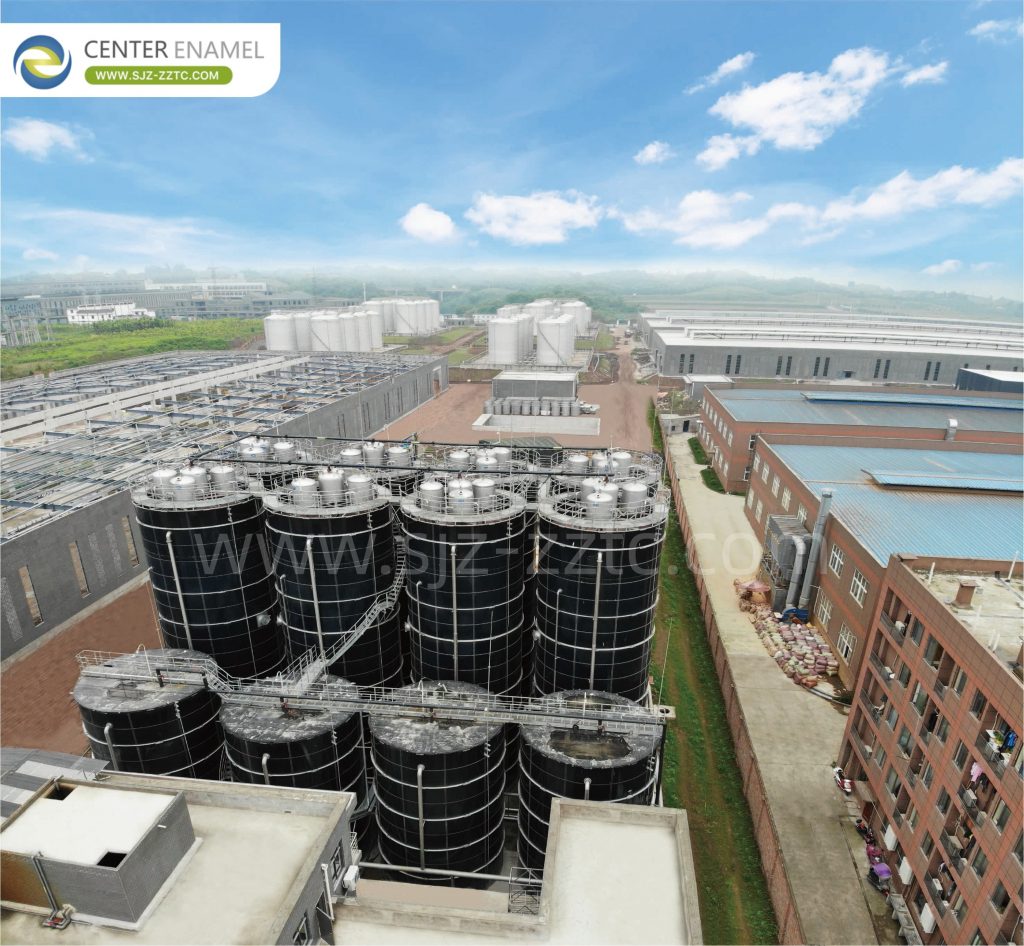
Industrial Wastewater Core Challenges Demand Robust Treatment Infrastructure
The core challenges of industrial wastewater treatment center on the "three highs"-high difficulty, high cost, and high energy consumption. Wastewater from new energy, chemical, and pharmaceutical industries is complex in composition with numerous characteristic pollutants, and traditional treatment processes are difficult to remove effectively. Chinese companies have significant price advantages in the mid-to-low-end equipment segment. The industry also faces continuous technological upgrade pressure from increasingly stringent emission standards, as well as new requirements for digitalization and low-carbon transformation on operational refinement management capabilities.
To overcome these inherent challenges, selecting a competent EPC contractor with proven Anaerobic Technologies and high-quality GFS Tanks is essential. Center Enamel, as a premier China Beverage Wastewater Treatment Project EPC Contractor, specializes in engineering systems that directly mitigate high costs and energy consumption through process optimization and durable equipment design.
GFS Tank Bolted Assembly Construction Offers Superior Flexibility and Speed
The physical infrastructure must be as adaptable as the treatment processes it houses. GFS tanks are assembled on-site from prefabricated panels, with short construction periods and support for expansion, relocation, and reuse-advantages distinctly different from immovable concrete tanks. Concrete tank pouring requires formwork, rebar tying, pouring, and long curing periods, with a single tank construction taking months. Rain, snow, and low temperatures force work stoppages and delays. Once poured, they are permanent fixed structures that cannot be dismantled, expanded, or relocated-project relocation means complete abandonment.
GFS tank panels are all factory-prefabricated, transported to site, and directly assembled in panels with simple procedures. Construction can proceed even in low-temperature, light-rain conditions, with installation time only one-third that of concrete tanks-construction schedules are controllable. For expansion, additional steel panels can be installed to increase volume; for plant relocation, tanks can be fully disassembled with panels transported to new sites for reassembly and reuse, significantly reducing material and construction costs for new construction and reconstruction. This is ideally suited for short-term environmental projects, phased expansion projects, and relocated construction projects. The modular bolted design of Center Enamel's GFS Tanks ensures that the infrastructure for any Beverage Wastewater Treatment Project can be deployed rapidly and adapted to changing site conditions, a key advantage for complex EPC projects.
UASB Process Advantages Ensure High Efficiency and Low Energy Consumption
The biological treatment stage is where energy recovery and cost savings are realized. No mechanical mixing equipment is required, with sludge suspension achieved through hydraulic action, resulting in very low overall energy consumption. High-concentration anaerobic granular sludge can be cultivated, with high sludge concentration, strong activity, excellent settleability, low sludge washout, and low sludge yield, significantly reducing sludge disposal costs. The integrated design combines reaction, sedimentation, and separation simultaneously, with small footprint and moderate capital investment. Simple structure with low failure rates and convenient maintenance. High volumetric loading rate with excellent organic pollutant degradation efficiency and good shock load resistance. Stable biogas production with high resource recovery value. The process is mature and widely adopted, with well-established construction, commissioning, and O&M systems, suitable for large-scale industrial wastewater treatment.
These inherent advantages of the UASB process make it the cornerstone of Center Enamel's Anaerobic Technologies offering. For any China Beverage Wastewater Treatment Project EPC Contractor, deploying this process ensures compliance, energy efficiency, and low operational costs, directly addressing the industry's "three highs" challenges.
Beverage Wastewater Environmental Toxicity Profile Highlights Biodegradability
The specific characteristics of beverage wastewater make it ideally suited for biological treatment. Beverage wastewater pollutants are entirely natural food components (sugars, fruit juice, tea)-no synthetic toxic chemicals-extremely low chemical toxicity and good environmental safety. Core pollutants are high-concentration soluble sugars-non-toxic to aquatic organisms, but direct discharge leads to rapid aerobic decomposition, severely depleting dissolved oxygen and causing fish suffocation-a classic oxygen-demanding pollution problem. Fruit juice organic acids lower receiving water pH, affecting aquatic life. Tea polyphenols affect water color and taste at trace levels. High sugar content promotes rapid microbial growth, mold, and decomposition/odor. Long-term discharge causes organic pollution, algal blooms, and eutrophication. Overall pollution is primarily oxygen-demanding organic pollution-no heavy metals or persistent organic accumulation risks-pollutants are rapidly naturally degradable with short environmental recovery periods.
Understanding this pollutant profile is critical for designing a successful Beverage Wastewater Treatment Project. The high organic load and excellent biodegradability make Anaerobic Technologies the most effective and energy-positive primary treatment step, which is why Center Enamel, as a leading China Beverage Wastewater Treatment Project EPC Contractor, integrates these processes as standard in its project designs.
Core R&D Capabilities and Global Certifications Underpin Reliable Delivery
The engineering expertise is supported by significant manufacturing and quality assurance capabilities. Technology R&D is Center Enamel's core competitive advantage. The company independently masters over 200 differentiated anti-corrosion enamel formulations, with full self-control over the enamel raw material chain, holding nearly 100 invention and utility patents. Products have passed NSF, WRAS, ASME, BSCI, CE, ISO9001, and other global certifications.
Company certifications and honors include: National High-Tech Enterprise, National Specialized and Sophisticated "Little Giant," Hebei Manufacturing Single Champion, Provincial Smart Factory, Provincial Green Factory; complete environmental engineering and special equipment manufacturing compliance qualifications. The company maintains long-term collaborative research with multiple universities through joint materials laboratories-continuously iterating anti-corrosion coatings and large bolted tank structural design technologies. The proprietary material technology barrier creates an irreplaceable competitive advantage, with product performance comparable to high-end imported European/American storage equipment. This robust R&D and certification framework ensures that as a China Beverage Wastewater Treatment Project EPC Contractor, Center Enamel provides GFS Tanks and Anaerobic Technologies that meet the highest international standards for safety and durability.
Installation and Construction Team Delivers Global Project Success
Field execution is the final critical step in realizing a successful EPC project. The installation team has practical experience from over 10,000 GFS tank projects globally, strictly following standardized construction procedures-full control over project mobilization, civil coordination, tank assembly, piping, and commissioning schedules and quality.
The team is proficient in complete standardized installation processes for GFS tanks, dual-membrane gas storage covers, USR/CSTR/IC anaerobic reactors, and biogas desulfurization/piping systems-adaptable to large-scale farms, industrial parks, remote mountainous sites, coastal high-corrosion sites, and other complex locations-strictly implementing unified global safety construction standards. For large overseas cross-border projects, the team can be deployed as complete units for on-site construction, technical training, and local worker practical instruction-full control over construction details, air-tightness testing, and corrosion protection-ensuring timely and stable commissioning of global environmental projects through standardized delivery capability. This experienced team is the backbone of Center Enamel's reputation as a dependable China Beverage Wastewater Treatment Project EPC Contractor, ensuring that every installation of Anaerobic Technologies and GFS Tanks performs to specification from day one.
Aluminum Alloy Trough Deck Roof Provides Cost-Effective Tank Cover Solutions
For non-pressurized storage applications, a practical cover solution complements the primary treatment infrastructure. Aluminum Alloy Trough Deck Roof is a cost-effective economical tank cover solution for clean water and wastewater storage scenarios, primarily designed for drinking water, production wastewater, and firewater reserve tanks, balancing practicality and cost advantages. The main body is integrally formed from anti-corrosion aluminum alloy plates, paired with aluminum support trusses. Its lightweight design imposes less load on the tank foundation, reducing civil construction investment. A naturally formed dense oxide protective layer on the surface resists rain and mild wastewater corrosion, withstands outdoor sun and rain exposure, and effectively blocks wind, rain, insects, fallen leaves, and odor volatilization, protecting water quality by preventing dust and debris from falling in and causing secondary contamination.
The flat roof structure is neat and orderly, allowing installation of maintenance walkways, guardrails, vents, and level monitoring ports on top, facilitating daily inspection and equipment maintenance. The simple sealing structure enables straightforward installation with short construction timelines, and virtually eliminates the need for anti-corrosion painting maintenance, resulting in extremely low operational costs. It is suitable for various small, medium, and large atmospheric pressure water storage tanks, and has been widely implemented in waterworks clear water tanks, industrial circulating water tanks, park firewater tanks, and domestic wastewater temporary storage facilities. It is highly compatible with water storage applications that do not require biogas collection or high-pressure sealing.
Frequently Asked Questions (FAQ)
1. What specific advantages does Center Enamel offer as a China Beverage Wastewater Treatment Project EPC Contractor?
As an EPC contractor, Center Enamel provides end-to-end solutions, from design and equipment manufacturing (including advanced Anaerobic Technologies and GFS Tanks) to installation and commissioning. Our comprehensive in-house capabilities, international certifications (NSF, ASME, CE), and over 10,000 global project experiences ensure a single point of accountability and reduced project risk.
2. How do your Anaerobic Technologies help reduce the "high energy consumption" challenge in industrial treatment?
Our UASB-based Anaerobic Technologies require no mechanical mixing, using hydraulic action for sludge suspension, which significantly lowers energy use. Furthermore, the process produces valuable biogas that can be captured and used as renewable energy to offset plant power costs, directly tackling the cost and energy pillars of the industry's core challenges.
3. Why are GFS Tanks preferred for beverage wastewater projects over other materials?
Center Enamel's GFS Tanks offer superior corrosion resistance to the organic acids formed during sugar fermentation, a 30+ year service life, and a modular bolted design. This allows for rapid installation, easy future expansion, and even relocation-critical flexibility for EPC projects where budget and timeline adherence are paramount.