
Transforming Chad’s Cow Dung into Energy: GFS Tanks and CSTR Process Solution
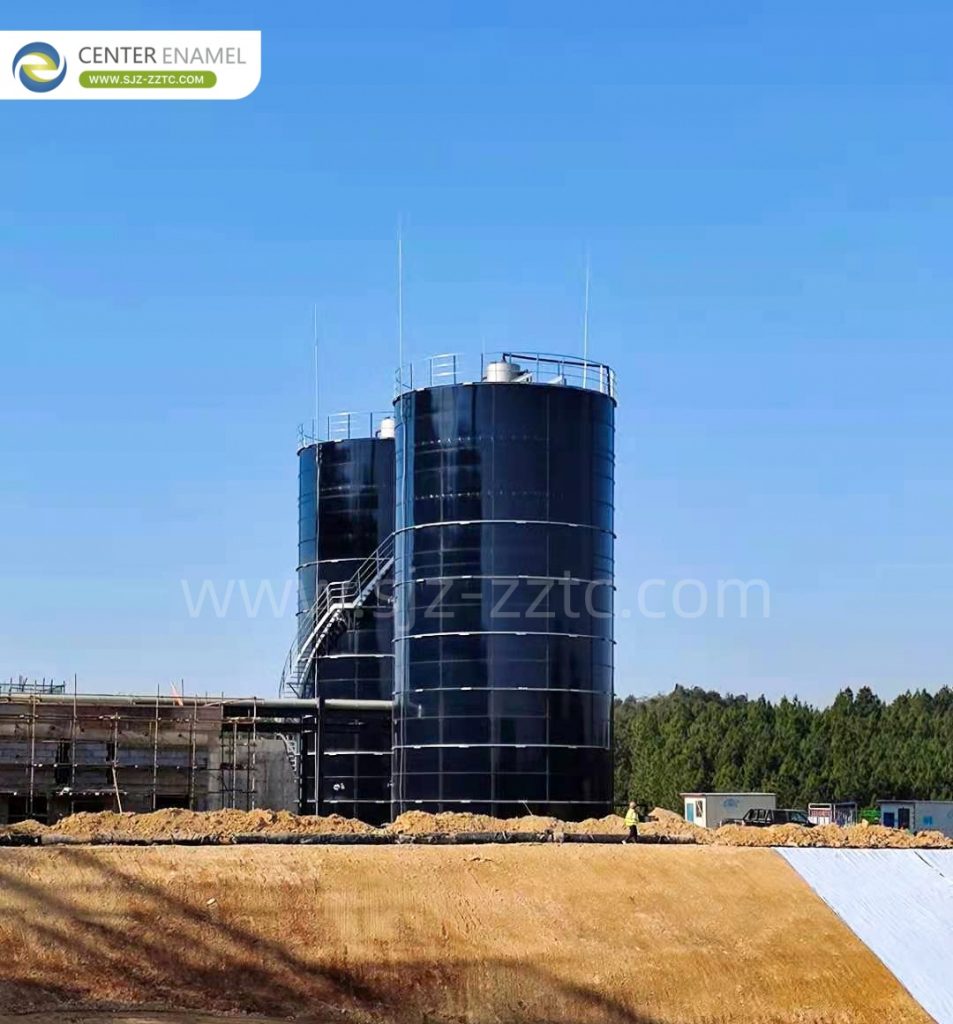
Chad’s pastoral economy produces vast quantities of cow dung annually, creating environmental and health challenges. By leveraging advanced anaerobic digestion with GFS Tanks and the CSTR Process, Chad can transform this waste into a sustainable energy source for its Biogas Project initiatives.
The Challenge of Livestock Waste in Chad
Livestock farming is the backbone of Chad’s economy, contributing significantly to GDP and supporting the livelihoods of approximately 40% of the population . However, the massive cattle population generates substantial cow dung daily, posing critical environmental challenges . Inadequate disposal methods lead to greenhouse gas emissions, water contamination, and public health risks . As Chad pursues sustainable development and pastoral infrastructure improvement, managing this vast resource is essential.
Transforming Cow Dung into Renewable Energy
Cow dung can be converted into biogas through anaerobic digestion, a process where organic matter decomposes without oxygen . This produces methane-rich biogas suitable for electricity generation, cooking, and heating. The benefits are significant: reduced methane emissions, renewable energy production, and nutrient-rich digestate for fertilizer . This closed-loop system enhances agricultural productivity and reduces reliance on imported fossil fuels.
The Core Technology: CSTR Process
The CSTR Process (Continuous Stirred-Tank Reactor) is the optimal anaerobic technology for cow dung biogas projects in Chad . Featuring a mechanical stirring device, this system ensures complete mixing of feedstock and microorganisms within a sealed tank. Continuous feeding at constant temperature maintains stable fermentation, preventing scum and sediment formation . The CSTR Process effectively handles high-suspended-solids organic waste, delivering consistent and reliable biogas production.
Center Enamel: Expert Biogas Project Partner
Center Enamel is a global leader in biogas and storage solutions, offering professional EPC services worldwide . With over 36 years of experience and a 150,000㎡ production base, they provide comprehensive project management from design to commissioning . All products meet international standards including ISO9001, CE/EN1090, and NSF61, ensuring reliable performance for Chad’s challenging arid climate .
Engineered for Biogas: GFS Tanks and Double Membrane Roof
Reliable containment is critical for any Biogas Project. Center Enamel’s GFS Tanks are manufactured by fusing glass enamel to steel at 820°C–930°C, creating a corrosion-resistant bond ideal for acidic digestion environments . This ensures over 30 years of service life with minimal maintenance. The modular bolted design enables rapid on-site assembly, suitable for Chad’s remote locations . For gas storage, the Double Membrane Roof is the preferred solution, reducing project costs by integrating storage on top of the digester, eliminating separate ground-mounted gas holders .
Comprehensive Storage and Roof Solutions
Center Enamel offers diverse tank and roof configurations to meet project needs:
Tank Options:
Galvanized Steel Tanks: Tough, wear-resistant coating with superior corrosion protection.
Fusion Bonded Epoxy Tanks: Innovative coating technology developed with AkzoNobel.
Stainless Steel Tanks: AISI 304/316 stainless steel for harsh environments and high-purity applications.
Roof Solutions:
Aluminum Geodesic Dome Roof: Corrosion-resistant with expansive clear span and minimal maintenance.
Glass-Fused-to-Steel Roof: Airtight design for pressurized structures and odor control.
Single and Double Membrane Roof: Superior for anaerobic digestion with airtight biogas collection.
Aluminum Alloy Trough Deck Roof: Economical for water storage with odor control (non-airtight).
Stainless Steel Roof: Airtight with super anti-corrosion performance for harsh conditions.
FRP Roof: Suitable for non-airtight applications like drinking water and wastewater storage.
Essential Biogas Ancillary Equipment
A complete Biogas Project requires supporting equipment:
Gas Holder: Biogas storage and pressure regulation.
Black Membrane: Secondary containment or lagoon cover.
Solid-Liquid Separator: Processes digestate into fertilizer and liquid nutrients.
Torch System: Safely flares excess biogas.
Lifting Pump: Reliable slurry transfer.
Dehydration and Desulfurization Tank: Purifies raw biogas by removing moisture and hydrogen sulfide.
Screw Sludge Dewatering Machine: Reduces sludge volume for disposal or reuse.
Efficient GFS Tanks Installation
Center Enamel’s installation expertise benefits Chad projects:
Short Construction Timelines: Prefabricated panels enable rapid assembly.
Ease of Transport: Modular design simplifies shipping to remote areas.
Zero On-site Welding: Bolted assembly eliminates weld failures.
Cost-Effective Foundation: Lightweight structure reduces foundation requirements.
Professional Supervision: Experienced engineers ensure quality installation.
One-Stop Biogas Project Provider
Center Enamel offers complete EPC solutions for Chad:
Full EPC Service: End-to-end project management from design to commissioning.
International Certifications: Products meet ISO9001, CE/EN1090, and NSF61 standards.
Decades of Expertise: Over 36 years of proven global experience.
Proven Global Track Record: Successful projects across more than 100 countries.
Proven Project Success
Biogas Project in France
Process: CSTR
Tank dimensions: φ18.33m x 8.4m (H) (1 unit)
Total volume: 2,215 m³ (1 unit)
Completion year: 2021
Biogas Project in Singapore
Process: CSTR
Tank dimensions:
φ18.34m x 8.4m (H) (1 unit)
φ8.41m x 9.0m (H) (1 unit)
φ11.46m x 7.2m (H) (1 unit)
Total volume: 3,458 m³
Completion year: 2021
Conclusion
Adopting advanced biogas technology is a strategic investment for Chad’s sustainable development. By implementing the CSTR Process and utilizing robust GFS Tanks, livestock operators can resolve waste management challenges while generating renewable energy. Center Enamel’s comprehensive EPC solutions ensure long-term economic and environmental benefits for Chad.
Frequently Asked Questions
Q1: Why is the CSTR Process best for cow dung in Chad?
A: The CSTR Process is specifically designed for high-suspended-solids feedstocks like cow dung. Its mechanical stirring ensures uniform mixing, preventing sedimentation and maximizing biogas yield .
Q2: How do GFS Tanks perform in Chad’s arid climate?
A: GFS Tanks offer exceptional corrosion resistance and durability, with a service life exceeding 30 years, making them ideal for Chad’s harsh, arid conditions .
Q3: How does a Double Membrane Roof reduce project costs?
A: The Double Membrane Roof integrates gas storage on the digester, saving space and eliminating foundation costs for separate gas holders, significantly reducing overall project expenses .