
Transforming Thailand's Kitchen Waste into Energy: Leading EPC Contractor with GFS Tanks and CSTR Process
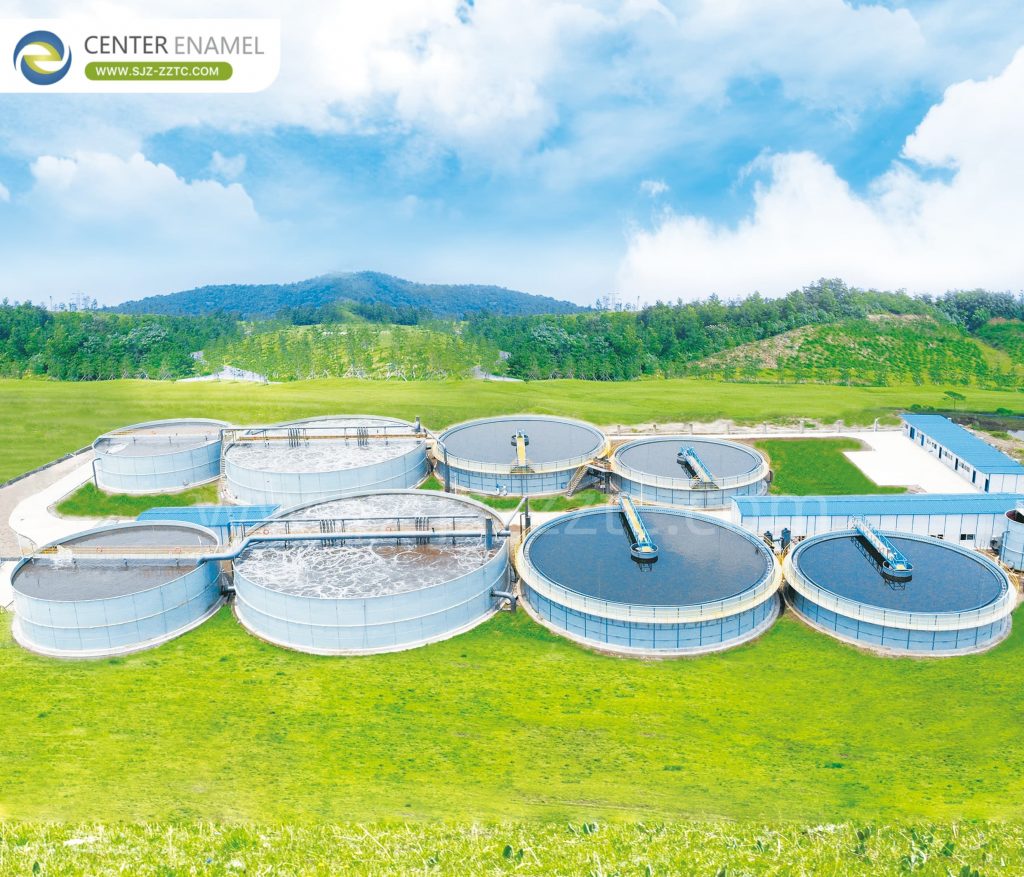
Thailand is turning the challenge of substantial kitchen waste into an opportunity for renewable energy production through advanced Biogas Solutions. By implementing the efficient CSTR Process and utilizing durable GFS Tanks, the nation is making significant strides in sustainable waste management and clean energy development with the support of a professional EPC Contractor.
The Scale of Thailand's Kitchen Waste Challenge
Thailand faces a significant environmental challenge from its substantial kitchen waste production. The country generates approximately 5.48 million tonnes of food waste annually, equivalent to 79 kg per person, surpassing the global average . Current food waste management practices in Thailand remain primarily reliant on outdated, costly, and environmentally unsustainable centralized systems . These centralized facilities introduce inefficiencies such as high transportation costs, significant carbon emissions, and limited community engagement in waste management.
Research confirms that in urban settings like Bangkok and major tourist destinations, food waste from households, restaurants, hotels, and fresh markets constitutes a major portion of municipal solid waste . The challenge is compounded by the fact that only a fraction of this organic waste is currently diverted for beneficial use, with the majority ending up in landfills where it decomposes and releases methane—a potent greenhouse gas. Studies have shown that food waste from Thai shopping malls has a moisture content of 75.6% and a carbon-to-nitrogen ratio of 12, making it an ideal candidate for anaerobic digestion .
The Transformative Potential of Converting Kitchen Waste to Biogas
Transforming Thailand's kitchen waste into biogas is a proven solution with multiple environmental and economic benefits. The conversion process through anaerobic digestion reduces greenhouse gas emissions from landfills, provides renewable energy for cooking and electricity generation, and produces nutrient-rich digestate that can be applied as organic fertilizer .
Research on community-based anaerobic digestion systems in Thailand has demonstrated significant results. The SUZDEE (Sustainable Zero Waste Digestant for Well-Being) system, implemented in 29 communities across 14 Thai provinces, processed 15,335 kg of food waste over one year, producing 747 m³ of biogas (equivalent to 15,579 MJ) and 13,941 liters of biofertilizer . This generated an estimated $8,282 for communities while reducing CO₂ emissions by 10,475 kg CO₂ equivalent, with a social return on investment ratio of 1.0914 . The biogas produced contains 50–70% methane, matching the performance of pioneering systems and providing a clean cooking fuel alternative .
Understanding the CSTR Process: Core Technology for High-Efficiency Digestion
At the core of Center Enamel's approach to treating Thai kitchen waste is the CSTR Process (Continuous Stirred-Tank Reactor). This advanced anaerobic treatment technology is ideally suited for the high-solids, high-concentration organic waste generated by the food service and household sectors .
The CSTR Process reactor is a closed, insulated tank equipped with a mechanical stirring device that ensures fermentation raw materials and microorganisms remain in a state of complete mixing . Through continuous or semi-continuous feeding at a constant temperature (mesophilic conditions around 35°C), the system creates an optimal environment for anaerobic microorganisms to thrive . Thailand's tropical climate naturally supports high-efficiency anaerobic digestion, as the warm and stable year-round temperature reduces heating costs and maintains strong microbial activity . Research confirms that CSTR systems operated under mesophilic conditions achieve specific methane production of up to 0.35 NL CH₄ per gram of COD removed . The co-digestion of food waste with other organic materials has been shown to enhance biogas yields, offering a promising approach for simultaneous waste treatment and renewable energy generation .
Center Enamel: Comprehensive Biogas Solutions Design and EPC Contractor Services
Center Enamel provides professional design solutions for Biogas Solutions applications, leveraging extensive expertise in anaerobic digestion systems. As a leading global EPC Contractor and premier manufacturer specializing in Glass-Fused-to-Steel technology, the company offers complete engineering, procurement, and construction services for projects of all scales .
The design approach begins with thorough feedstock analysis and process modeling to determine optimal reactor configuration, mixing requirements, and gas collection systems. Engineers evaluate specific project parameters including organic loading rates, hydraulic retention times, and biogas yield expectations to develop customized solutions that maximize efficiency and return on investment. Center Enamel integrates multiple critical components into each Biogas Solutions design, including pretreatment systems, the CSTR Process reactor with mechanical stirring, biogas purification equipment, and storage infrastructure . As a professional EPC Contractor, the company holds numerous international certifications including CE/EN1090, ISO 9001, NSF/ANSI 61, WRAS, and EN ISO 28765, ensuring all designs meet rigorous quality and safety standards .
Premium Storage Solutions: GFS Tanks and Double Membrane Roof
GFS Tanks (Glass-Fused-to-Steel) represent the premium coating technology in the storage tank market and are the cornerstone of Center Enamel's Biogas Solutions. These tanks are manufactured through a high-temperature fusion process where molten glass reacts with the steel plate surface at 820°C-930°C, forming an inert, inorganic bond that combines the strength and flexibility of steel with outstanding corrosion resistance of glass .
The exceptional durability of GFS Tanks makes them particularly suitable for Thailand's tropical climate, characterized by high humidity, heavy monsoon rains, and coastal salt spray . The glass-fused-to-steel coating provides superior protection against hydrogen sulfide and methane corrosion, with a wide pH tolerance of 1–14, ensuring long-term integrity even with diverse organic feedstocks . GFS Tanks require minimal maintenance, reducing operational costs and ensuring consistent performance over a 30+ year service life .
The Double Membrane Roof is the preferred cover solution for anaerobic digestion processes and biogas applications. Under normal working conditions, this innovative roof design offers significant advantages including cost optimization and improved space efficiency compared to traditional structures. The Double Membrane Roof provides excellent airtightness for biogas collection and odor control while integrating the AD tank with the cover on top for cost-effective operation . It significantly reduces the floor area required and eliminates the need for foundation construction costs associated with ground-mounted gas holders.
Comprehensive Storage Tank Solutions for Biogas Projects
Center Enamel offers a diverse range of tank options to meet specific project requirements. Galvanized Steel Tanks receive a tough, wear-resistant protective coating through the galvanizing process. Fusion Bonded Epoxy Tanks, developed in partnership with AkzoNobel, provide innovative coating technology for demanding applications. Stainless Steel Tanks in AISI 304/316 grades are designed to meet the most stringent requirements, including storage of high-purity water and liquids in harsh environments.
Diverse Cover Solutions for Every Application
Center Enamel provides multiple cover options for storage tanks . The Aluminum Geodesic Dome Roof offers advanced corrosion resistance, expansive clear span capability, and efficient construction with minimal maintenance—particularly suitable for Thailand's tropical coastal climate.
The Glass-Fused-to-Steel Roof provides airtightness for pressurized structures and odor control applications.
Single and Double Membrane Roofs deliver superior airtightness for anaerobic digestion processes.
Aluminum Alloy Trough Deck Roofs offer economical solutions for potable water, wastewater, and firewater storage.
Stainless Steel Roofs provide super anti-corrosion performance and long service life for harsh environments. FRP Roofs suit applications where airtightness is not required, such as drinking water and agricultural storage.
Essential Biogas Solutions Equipment
Complete Biogas Solutions require additional equipment including Gas Holders for biogas storage, Black Membrane covers for lagoons, Solid-liquid Separators for digestate processing, Torch Systems for emergency gas flaring, Lifting Pumps for material transfer, Dehydration and Desulfurization Tanks for biogas purification, and Screw Sludge Dewatering Machines for efficient sludge handling .
Efficient Installation and Project Execution
Center Enamel delivers efficient installation of GFS Tanks through advanced construction methods adapted to Thailand's conditions :
Hydraulic jacking top-down installation: Eliminates the need for high scaffolding, enhancing safety and adapting to narrow industrial, rural, and urban sites.
Modular bolted assembly: Factory-prefabricated components are assembled on site with bolts, eliminating on-site welding and reducing quality risks caused by Thailand's high temperature and high humidity environment.
Minimal weather dependency: The bolted construction approach allows for continued progress even during monsoon seasons.
Simplified foundation requirements: Reduces civil construction time and costs, with no concrete curing delays.
Easy expansion capabilities: Tanks can be expanded or adjusted as waste output or energy demand grows.
Comprehensive installation support: Experienced engineers provide whole-process guidance, training, and local coordination.
One-Stop Solution Provider for Biogas Solutions
Center Enamel offers complete Biogas Solutions as a professional EPC Contractor with comprehensive advantages :
Integrated EPC services: Full turnkey solutions covering design, procurement, fabrication, installation, commissioning, and after-sales support.
Process package design: Customized anaerobic systems tailored to feedstock characteristics, project scale, and application scenarios.
Equipment supply: High-quality GFS Tanks with superior corrosion resistance for Thailand's tropical climate.
Professional engineering expertise: Deep experience with high-organic, high-solid waste ensures stable reactor performance and high biogas yield.
International certification compliance: CE/EN1090, ISO 9001, NSF61, WRAS, EN28765, AWWA D103-09, OSHA, and EuroCode standards.
Localized engineering design: Systems adapt to Thailand's tropical humidity, coastal salt spray, monsoon rains, and seismic conditions.
Full-lifecycle EPC service: Single-point accountability reduces coordination risks, shortens construction cycles, and lowers overall cost.
Proven Southeast Asia experience: Deep understanding of Thailand's policies, regulations, and construction environment ensures smooth project execution .
Successful Project Implementations
Biogas Project in Indonesia
Application: Anaerobic reactor for palm oil wastewater treatment plant
Tank models: Ø17.58m x 8.4m, Ø16.82m x 7.2m
Number of tanks: 3 GFS tanks
Installation date: 2013
Food Waste Treatment Project in Turkey
Process: CSTR
Tank dimensions: φ16.81m x 16.8m (H) (2 units) Total capacity: 7,452 m³
Year of completion: 2020
Conclusion
Thailand's commitment to sustainable waste management and renewable energy development creates significant opportunities for advanced Biogas Solutions. The combination of the efficient CSTR Process and durable GFS Tanks provides an ideal approach to converting kitchen waste into renewable energy. Center Enamel, as a professional EPC Contractor, offers comprehensive solutions including professional design, premium storage infrastructure, essential equipment, and full project management to support Thailand's waste-to-energy goals. With successful implementations across Southeast Asia and deep understanding of local conditions, the company is positioned to help Thailand achieve its renewable energy targets and circular economy objectives.
Frequently Asked Questions
Q1: How does the CSTR Process handle Thailand's diverse kitchen waste?
The CSTR Process is designed for variable feedstocks from Thailand's restaurants and hotels. Its continuous mixing ensures complete homogenization and stable biogas production. Thailand's tropical climate supports efficient mesophilic digestion without extra heating costs, while co-digestion enhances yields.
Q2: Why choose GFS Tanks for Thailand's tropical climate?
GFS Tanks offer superior corrosion resistance against hydrogen sulfide and organic acids in high humidity and monsoon conditions. With a 30-year design life and minimal maintenance, they provide cost-effective, long-term durability. Modular bolted construction enables rapid installation and seismic stability.
Q3: What makes Center Enamel a comprehensive EPC Contractor in Thailand?
Center Enamel delivers turnkey solutions including professional EPC services, advanced GFS Tanks, diverse covers, and process equipment. With proven success in Southeast Asia and localized design adapted to Thailand's climate and regulations, the company provides full lifecycle support from design to commissioning.